


























Financing a Caribbean Home: Can US/Canadian Citizens Get Local Mortgages?
US and Canadian citizens can obtain local mortgages in some Caribbean countries, but the process is stricter than at home. Foreign buyers usually face higher down payments, shorter loan terms, and higher interest rates. Many buyers choose home-country financing or cash purchases to simplify closing. The best option depends on the island, loan terms, and long-term ownership plans.

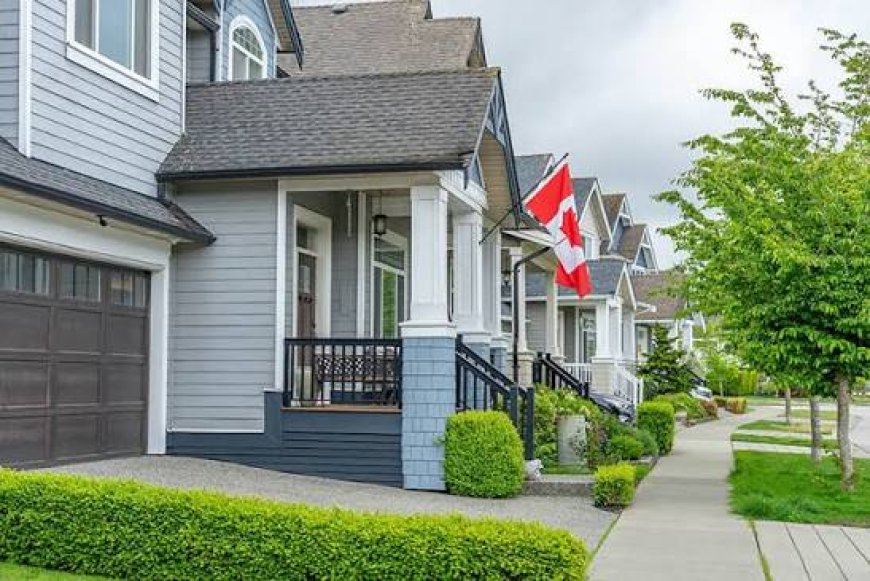
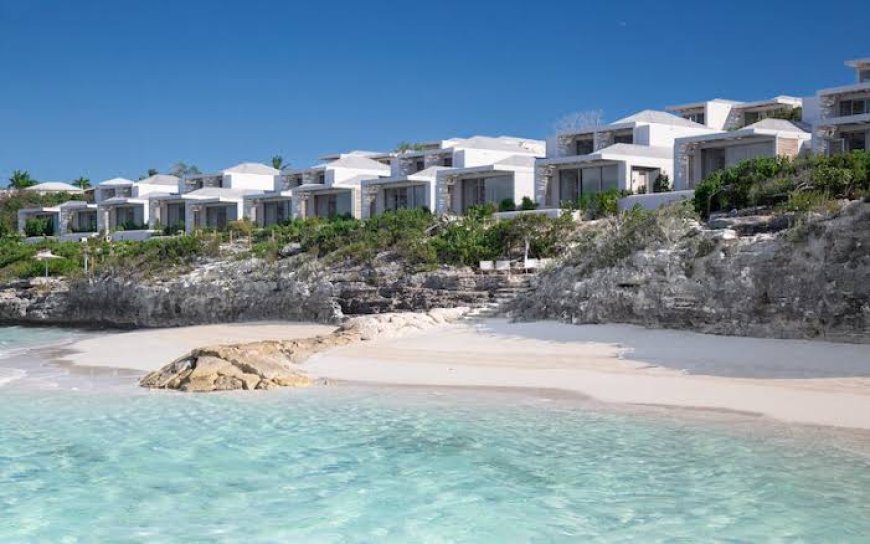
Buying a home in the Caribbean is no longer limited to people who can pay the entire purchase price in cash. U.S. and Canadian citizens can, in some Caribbean markets, obtain financing from local banks and mortgage lenders, but the process is usually different from getting a mortgage at home. The biggest issue is not simply whether foreigners are allowed to own property. In many Caribbean destinations, foreign ownership is permitted. The more important question is whether a local bank is willing to lend to a non-resident whose income, credit history, assets and employment are based outside the country.

The answer is therefore yes, in some markets, but not everywhere and not on identical terms. Local banks may offer mortgages to foreign buyers, while other destinations place restrictions on borrowing by non-residents or require approval from a central bank or investment authority. Down payments can also be substantially higher for foreign buyers, loan periods can be shorter, and lenders may request extensive financial documentation from the buyer's home country. For example, RBC's Caribbean operations currently advertise financing for non-residents in some markets, including up to 65% financing for certain owner-occupied properties in The Bahamas, while its broader Caribbean financing materials state that non-residents may obtain financing of up to 70% of a vacation-home purchase in applicable jurisdictions.
That means a U.S. or Canadian buyer should not approach a Caribbean property purchase with the assumption that a local mortgage will work exactly like a mortgage from a bank in Florida, New York, Toronto or Vancouver. The lending process is usually more conservative, the paperwork can be heavier and the bank may want a larger equity contribution before approving the loan.
Can a U.S. or Canadian Citizen Get a Caribbean Mortgage?
In several Caribbean markets, local mortgage financing is available to foreign buyers. Banks generally evaluate the buyer's income, debt, credit history, assets, source of funds and the property being offered as security. The buyer's nationality by itself is usually only one part of the assessment.
The distinction between resident and non-resident is much more important. A U.S. citizen living and working in Barbados, for example, may be assessed differently from a U.S. citizen who lives permanently in New York and wants to purchase a vacation condominium in Barbados. Similarly, a Canadian resident buying an investment property in Jamaica can face different requirements from a Canadian citizen who has established residence in Jamaica.
RBC's current Caribbean mortgage information demonstrates this distinction. In The Bahamas, its published terms say non-residents can obtain financing for owner-occupied properties with financing of up to 65%, meaning a minimum 35% down payment, with amortization of up to 15 years. Its published investment-property financing also uses lower maximum financing levels and shorter repayment periods than some resident products.
In the Eastern Caribbean, RBC currently advertises mortgage products for residential purchases and investment properties, although the precise terms depend on the jurisdiction and borrower category. Its published resident example allows up to 80% financing for certain owner-occupied homes and up to 66.7% financing for non-owner-occupied investment property.
The important point is that a foreign buyer should first identify the specific island and then ask local lenders whether they have a non-resident mortgage product. A bank's willingness to finance one Caribbean market does not automatically mean it will finance another.
Why Non-Resident Mortgages Are More Difficult
The basic reason is risk. A local bank understands the local legal system, property market, employment conditions and currency better than it understands a borrower living thousands of miles away. If the borrower works for a U.S. company and receives income in U.S. dollars, the lender may need to verify employment and tax documents from the United States. If the borrower lives in Canada, the bank may need Canadian tax returns, credit reports and banking information.
There is also the issue of enforcing the mortgage if the borrower stops paying. The property may be located locally, but the borrower and much of the borrower's financial life are abroad.
As a result, lenders often compensate for the additional risk through a larger down payment, shorter amortization period, additional insurance, stricter debt-service requirements or more extensive documentation.
RBC's current published non-resident financing in The Bahamas is a good example. A non-resident can qualify for up to 65% financing on certain owner-occupied properties, compared with higher financing percentages available under some resident products. That means the foreign buyer may need to bring at least 35% of the purchase price from personal funds before closing costs are added.
This difference can have a major effect on the budget. A $500,000 Caribbean property financed at 65% would require $325,000 of mortgage financing and $175,000 of buyer equity before taxes, legal expenses, insurance, appraisal costs and other transaction expenses.
The Bahamas: A Market Where Rules Matter
The Bahamas is one of the most interesting examples because it has an established international property market and a significant population of foreign homeowners.
Non-residents can purchase real estate in The Bahamas, but property transactions are subject to the country's investment and exchange-control framework. The Central Bank of The Bahamas states that non-resident property investments must be registered for exchange-control purposes, and approved investment status provides a mechanism for eligible investors to repatriate income from the property or proceeds from its sale, subject to the applicable requirements.
Mortgage financing, however, depends on the buyer's status. The Central Bank clarified in 2024 that temporary residents holding work or spousal permits can access Bahamian-dollar mortgages for certain first-time owner-occupied residential purchases up to BSD 1 million. The policy does not apply to non-residents or economic residents in the same way and excludes investment purchases, second homes, mixed-use rental properties and commercial purchases from that particular liberalization.
For an overseas U.S. or Canadian buyer purchasing a vacation property, the more relevant route may therefore be foreign-currency financing rather than a Bahamian-dollar resident mortgage.
RBC currently advertises financing for non-residents purchasing owner-occupied properties in The Bahamas, with up to 65% financing and amortization of up to 15 years.
This is an important distinction for buyers. The fact that a foreigner can buy a Bahamian property does not mean that every local mortgage product is available to that foreigner.
Barbados: Foreign Ownership Does Not Automatically Mean Local Financing
Barbados has a well-developed international property market and allows foreign ownership of real estate. But its exchange-control rules make financing particularly important to investigate before signing a purchase agreement.
The Central Bank of Barbados states that non-residents require permission to purchase real estate and that permission is normally granted when the non-resident remits funds to cover the full purchase price. It also states that non-residents are not normally allowed to borrow for financing property purchases. Non-residents who want to borrow from a local source require Central Bank permission.
This makes Barbados an excellent example of why a buyer should never confuse foreign ownership rights with mortgage availability. A U.S. or Canadian buyer may legally purchase a property but still find that obtaining a local mortgage is considerably more complicated than expected.
The Central Bank's rules also have implications for the movement of money into and out of Barbados. Buyers should understand how their purchase funds will be registered and how future sale proceeds, rental income or other investment funds can be repatriated.
For some buyers, the practical solution may be financing the purchase in the United States or Canada through an existing home, investment portfolio or other assets rather than attempting to obtain a local Barbados mortgage. That approach can avoid some local borrowing restrictions, although it creates its own tax, currency and financing considerations.
Jamaica: Local Mortgage Financing Is Available
Jamaica provides another example where foreign buyers can explore local financing. Current market guidance indicates that foreign nationals can purchase and finance Jamaican property, although non-resident buyers generally face more demanding qualification requirements and may need larger down payments than local borrowers.
Local banks also have established mortgage operations. NCB Jamaica, for example, currently offers mortgages for properties located in Jamaica and allows financing for both primary residences and investment properties. Its published maximums include up to J$40 million for a primary residence and J$30 million for an investment property, with repayment periods generally extending up to 35 years or the borrower's retirement age, subject to the bank's conditions.
For an overseas buyer, however, the relevant question is not simply whether the bank has a mortgage product. The buyer needs to establish whether that product is available to a non-resident foreign national and what income documentation will be accepted.
CIBC Caribbean's mortgage checklist shows the type of information lenders can request: identification, credit references, recent financial statements, proof of the down payment and closing costs, source-of-funds evidence, property valuation and the purchase agreement.
That paperwork gives potential buyers a good idea of what to prepare before approaching a lender.
The Eastern Caribbean: Different Islands, Different Lending Rules
The Eastern Caribbean should not be treated as one mortgage market. Countries such as Antigua and Barbuda, Saint Lucia, Grenada, Dominica and Saint Vincent and the Grenadines have their own banking systems, regulations and property markets. International banks may operate in several of these countries, but their mortgage terms can vary from one jurisdiction to another.
RBC's Eastern Caribbean mortgage information currently includes financing for residential purchases, residential lots, construction and investment properties. For residents, the published financing can reach 80% for certain owner-occupied purchases, while non-owner-occupied investment properties may receive up to 66.7% financing, with repayment periods of up to 20 years in that example.
CIBC Caribbean also operates across several Caribbean markets and advertises mortgage financing, including high loan-to-value financing for qualifying borrowers. However, its published materials emphasize that applications remain subject to normal lending criteria and that additional documentation can be requested.
For a U.S. or Canadian citizen, the practical lesson is to identify the island first, then identify the lenders that actually operate there. Do not assume that a mortgage offered in one Eastern Caribbean country will automatically be available under the same conditions in another.
Turks and Caicos: Expect a Larger Equity Contribution
Turks and Caicos is another important market for international buyers. Local mortgage financing is available through banks including CIBC Caribbean, RBC and Scotia bank, as well as private mortgage companies. Current local guidance says traditional income-based mortgages generally start with a down payment around 15%, but banks commonly prefer 25% or more. Equity-based mortgages can finance around 50% of the property value, meaning the buyer contributes approximately half of the purchase price.
The distinction between an income-based mortgage and an equity-based mortgage is important.
An income-based lender focuses heavily on salary, employment history, debt and the borrower's ability to make monthly payments. An equity-based lender focuses more heavily on the value of the property being used as collateral.
For a wealthy U.S. or Canadian buyer with substantial assets but complicated international income, an equity-based structure can sometimes be easier to understand, although it normally requires significantly more capital upfront.
Turks and Caicos also illustrate another issue: many mortgages are not long-term fixed-rate loans. Local guidance states that most mortgages are variable or adjustable-rate arrangements, although some lenders offer introductory fixed periods. A buyer therefore needs to model what happens if interest rates rise after the initial period.
Cayman Islands: Strong Banking Infrastructure, Detailed Documentation
The Cayman Islands has one of the Caribbean's most developed financial sectors, and local banks offer mortgage financing for homes and investment properties.
Cayman National currently advertises mortgage financing for homes, land, investment properties, construction and other purposes, including terms of up to 40 years subject to its conditions. Its application checklist includes an employment letter, passport, proof of address, bank reference, offer to purchase, proof of funds for the deposit and closing costs, life insurance, fire and hurricane insurance and a professional property valuation. For non-residents, the documentation can become even more detailed.
Scotia bank Cayman states that non-resident applicants may need a credit report from their home country, two bank references and two years of tax returns and notices of assessment. Its checklist specifically refers to obtaining U.S. and Canadian credit reports for applicants from those countries.
For a U.S. or Canadian buyer, this is actually useful information because it demonstrates that international income and credit history is not necessarily an automatic barrier. The bank has processes for reviewing foreign financial records.
The buyer should nevertheless expect the application to take longer than a straightforward domestic mortgage.
What Documents Will a Caribbean Bank Want?
A foreign buyer should expect the lender to request a much more complete financial picture than a simple mortgage application.
Typical documentation can include a passport, proof of address, employment letter, recent pay slips, bank statements, tax returns, credit reports, investment statements, details of existing debts, proof of the down payment, source-of-funds documentation and a signed purchase agreement.
Self-employed applicants generally face additional requirements. CIBC Caribbean, for example, asks self-employed applicants for three years of financial statements and tax returns in its published mortgage guidance.
RBC's Caribbean financing materials similarly list proof of income, tax returns, bank references, credit reports, financial statements where relevant, sales agreements and property appraisals. It also notes that lenders may require government or investment-board approval depending on the jurisdiction. This is why it makes sense to organize the documents before beginning the property search.
How Much Should a Foreign Buyer Put Down?
There is no single Caribbean down-payment percentage for U.S. and Canadian buyers.
The required amount depends on the country, lender, property type, residency status, income and whether the property is owner-occupied or an investment.
However, foreign buyers should generally prepare for a larger down payment than they might expect from a conventional mortgage in their home country.
RBC's current Bahamas non-resident product, for example, allows up to 65% financing on certain owner-occupied purchases, implying a 35% minimum down payment. Its broader Caribbean vacation-home financing material advertises up to 70% financing in applicable markets, implying at least 30% equity.
Investment properties can require even more equity because the lender is taking into account rental-market risk, vacancy, property management and the possibility that rental income will not consistently cover debt service.
A buyer should therefore budget for the down payment separately from closing costs.
Don't Forget Closing Costs
The purchase price is only one part of the financial commitment.
Depending on the jurisdiction, buyers may face transfer taxes, stamp duty, legal fees, valuation fees, mortgage-registration charges, insurance, bank fees and government or investment-board charges.
CIBC Caribbean's current mortgage guide lists several potential closing costs, including legal fees, appraisal fees, stamp duty, loan fees, life insurance, home insurance and mortgage indemnity insurance in applicable situations.
Turks and Caicos provides another example. Current guidance states that mortgage registration costs 1% of the mortgaged amount, in addition to a processing fee, while stamp duty is payable on the purchase price.
These expenses can change the amount of cash a buyer needs at closing. A buyer who has exactly enough money for a 30% down payment may discover that the actual cash requirement is considerably higher once all transaction expenses are included.
What about Interest Rates?
Interest rates are another area where buyers should avoid assuming that Caribbean mortgages will match rates available in the United States or Canada.
Caribbean lending markets differ from the large North American mortgage markets. Some loans are variable-rate, some have fixed introductory periods, and some are priced according to local lending conditions.
In the Dominican Republic, for example, current 2026 market analysis reports published Central Bank housing-loan rates around 8.87% in U.S. dollars and 11.90% in Dominican pesos as of June 2026, while also noting that specific non-resident pricing is not uniformly published by local banks.
The important point is not to use a headline rate from an internet advertisement as the rate for a future purchase. Ask the bank for a written quote that specifies the currency, interest rate, fixed or variable structure, amortization period, fees and conditions.
Should You Borrow in U.S. Dollars or Local Currency?
Currency is one of the most important issues for an American or Canadian buyer. If your income is in U.S. dollars and your mortgage is also denominated in U.S. dollars, the currency relationship is relatively straightforward. If your income is in Canadian dollars and your Caribbean mortgage is in U.S. dollars, exchange-rate movements can affect the effective cost of the loan.
Borrowing in a local Caribbean currency creates another layer of risk if your income is earned abroad. The right currency depends on the buyer's income, assets, expected rental income and long-term plans. A Canadian buyer who earns Canadian dollars should not assume that a U.S.-dollar mortgage is automatically cheaper simply because the property is priced in U.S. dollars.
The decision should be modelled over several years rather than based on today's exchange rate.
Can Rental Income Help You Qualify?
Some buyers purchase Caribbean property intending to rent it to vacationers when they are not using it. Rental income can make the economics of a property more attractive, but buyers should be cautious about assuming that a lender will count projected rental income in the same way it counts salary.
Banks may apply discounts to rental income, require a proven rental history or exclude projected income entirely. The rules depend on the lender.
The property also has operating costs that reduce the amount available for mortgage payments. Property management, maintenance, insurance, utilities, taxes, association fees and vacancy periods all reduce gross rental revenue.
A property that generates $40,000 in annual rental revenue does not necessarily have $40,000 available for debt service. Before using rental income in a mortgage calculation, ask the lender exactly how much of that income will be recognized.
Local Legal Advice Is Essential
Buying property in another country is not simply a mortgage transaction.
The buyer needs to understand title, ownership structure, liens, property taxes, condominium or homeowners' association rules, rental restrictions, zoning, building approvals and the procedure for registering the mortgage.
A local real-estate attorney can also help verify whether the seller actually has good title to the property and whether there are outstanding obligations attached to it.
The Bahamas, Barbados and other Caribbean jurisdictions have their own property and exchange-control systems. In some countries, foreign purchasers may need registration or government permission, while lenders may also require their own approvals.
RBC specifically notes that central-bank or investment-board approval may be required in some Caribbean jurisdictions for non-resident financing.
The cost of professional advice is therefore small compared with the potential cost of discovering a legal or financing problem after signing a purchase contract.
Local Mortgage or North American Financing?
A U.S. or Canadian buyer does not necessarily have to choose a Caribbean mortgage.
Some buyers use cash, a home-equity loan, a line of credit, investment-backed financing or another form of borrowing in their home country. Others use a combination of North American financing and a Caribbean mortgage.
The best structure depends on the buyer's financial position. Local financing has one major advantage: the loan is secured against the Caribbean property, rather than the buyer's primary home in the United States or Canada. But local financing may involve higher rates, larger deposits and more complicated documentation.
Home-country financing may be easier for someone with substantial domestic assets and strong credit, but it can put the borrower's primary residence or other assets at risk depending on the loan structure.
The comparison should therefore be made using the total cost of borrowing, not just the advertised interest rate.
A Practical Strategy for U.S. and Canadian Buyers
The smartest starting point is not the property listing. It is the financing conversation.
Before making an offer, contact at least one or two banks or mortgage specialists in the destination and explain that you are a U.S. or Canadian citizen, whether you are resident or non-resident, your intended use of the property and your approximate budget.
Ask specifically whether the bank offers mortgages to non-resident foreign nationals.
Then ask how much the bank is prepared to finance, what down payment is required, whether the mortgage is fixed or variable, how long the loan can run, what currency it will be denominated in, what documents are required and whether local government approval is necessary.
Once those questions are answered, obtain a pre-qualification or indicative approval where available.
CIBC Caribbean explains that pre-qualification can provide an estimate of borrowing capacity before the final mortgage application and gives buyers a clearer property-shopping range.
This can save a great deal of time. There is little value in negotiating over a $900,000 villa if the buyer has only been approved for $450,000 of local financing.
What's Your Reaction?
 Like
0
Like
0
 Dislike
0
Dislike
0
 Love
0
Love
0
 Funny
0
Funny
0
 Angry
0
Angry
0
 Sad
0
Sad
0
 Wow
0
Wow
0