














Night Kayaking: The Best Bioluminescent Bays in Puerto Rico.
Night kayaking in Puerto Rico’s bioluminescent bays lets visitors see glowing water caused by natural dinoflagellates. Mosquito Bay in Vieques is the brightest and most famous, while Laguna Grande in Fajardo is the easiest to reach from San Juan. La Parguera offers kayak and boat options, with occasional guided swimming experiences.

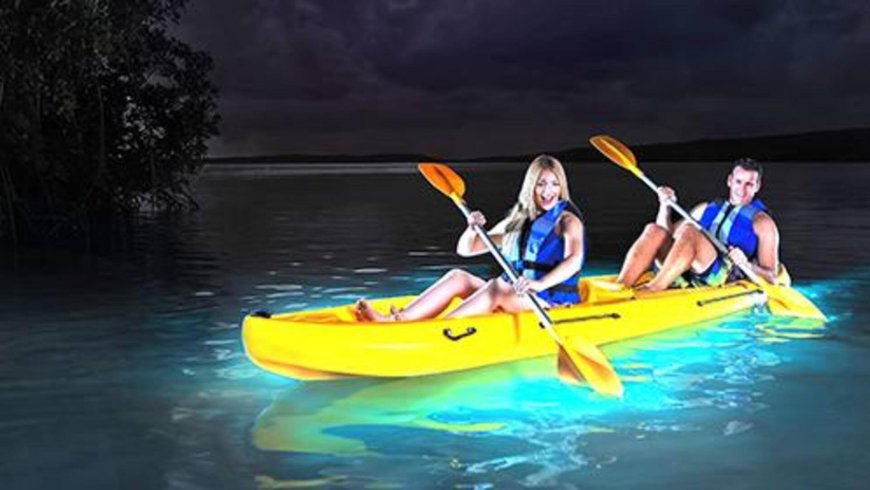
Puerto Rico has a nighttime attraction that feels completely different from the island's usual beach, food and sightseeing experiences. After sunset, kayakers can paddle into quiet coastal waters and watch tiny points of blue-green light appear around their paddles, hands and kayak. The light comes from microscopic organisms called din flagellates. When the water is disturbed, these organisms produce a brief flash of light through a chemical reaction. Puerto Rico is especially important for this type of travel because it has three of the world's five recognized bioluminescent bays: Mosquito Bay on Vieques, Laguna Grande in Fajardo and La Parguera in Lajas.

For travelers, the three locations provide different experiences. Mosquito Bay is on Vieques and is widely recognized as one of the brightest bioluminescent bays in the world. Laguna Grande is in Fajardo and is the most convenient option for many visitors staying around San Juan. La Parguera is in southwestern Puerto Rico and offers a different setting, with mangroves, small keys and a more open coastal environment. All three can be visited during the year, but the strength of the glow changes with moonlight, weather, water conditions and other environmental factors.
Night kayaking is therefore not simply a sightseeing trip after dark. It is an experience that depends on natural conditions, responsible tourism and good planning. Choosing the right bay can make a significant difference, especially for travelers who have only a few days in Puerto Rico.
What Is a Bioluminescent Bay?
A bioluminescent bay is a body of water where microscopic organisms occur in concentrations high enough to create visible flashes of light when the water moves. In Puerto Rico, the organisms responsible for the glow are din flagellates. When a paddle, hand or other object disturbs the water, the organisms react and produce a blue or blue-green flash.
The effect is easier to understand when you see it from a kayak. During the day, the bay may look like an ordinary tropical lagoon surrounded by mangroves. At night, the experience changes completely. The surroundings become dark, and each movement of the paddle can produce small flashes beneath the surface. A paddle stroke may look as if it is leaving a trail of light behind it, while water dripping from the paddle can appear to sparkle briefly.
Puerto Rico's tourism authority explains that the three bio bays have several natural characteristics that help maintain the phenomenon. Their relatively narrow entrances help maintain salinity, shallow waters help keep the organisms concentrated, and tidal movement helps replenish the systems.
This combination is part of what makes bio bays relatively rare. Bioluminescent organisms exist in many marine environments, but seeing them in sufficient concentration to produce a visible nighttime glow requires particular environmental conditions.
Why Puerto Rico Has Three Bio Bays
Puerto Rico's three bio bays are located in different parts of the island and have different physical settings.
Mosquito Bay is located on Vieques, an island off Puerto Rico's eastern coast. Laguna Grande is in Fajardo on the main island and is technically a lagoon rather than a conventional bay. La Parguera is in Lajas in southwestern Puerto Rico and forms part of a larger natural reserve containing mangroves, coral reefs and sea grass habitats.
The three locations also differ in how visitors experience them. Mosquito Bay is usually associated with guided kayak trips in Vieques. Laguna Grande is particularly accessible from the San Juan area and is commonly visited through guided nighttime kayak excursions. La Parguera provides options involving boats as well as other water activities, and swimming is permitted there under certain conditions.
The choice therefore depends partly on the type of vacation you are planning. Someone staying in San Juan for a short city break may prefer Fajardo. Someone willing to spend a night or two on Vieques may choose Mosquito Bay. Travelers exploring southwestern Puerto Rico may find La Parguera easier to incorporate into their itinerary.
Mosquito Bay: The Famous Choice on Vieques
Mosquito Bay is the best-known of Puerto Rico's three bioluminescent locations and is often described as one of the brightest bio bays in the world. It is located on Vieques, approximately 40 miles southeast of San Juan. Puerto Rico's official tourism authority notes that Mosquito Bay was recognized by Guinness World Records in 2006 as the world's brightest bioluminescent bay.
For many travelers, Mosquito Bay is the first choice because the combination of location, water conditions and concentration of din flagellates can produce a strong nighttime display. The experience is usually cantered on guided kayak tours, which take visitors onto the bay after sunset.
Vieques itself adds another dimension to the trip. The island has extensive natural areas, beaches and coastal habitats. More than 60 percent of the island is part of the Vieques National Wildlife Refuge, according to Discover Puerto Rico. Visitors can therefore turn a bio-bay trip into a longer island stay rather than making the nighttime kayak excursion the only activity.
Getting to Vieques requires additional planning. Travelers can fly or use the ferry from Ceiba on the eastern mainland. Discover Puerto Rico currently describes ferry travel from Ceiba as taking roughly 30 to 45 minutes, while flights from San Juan take around 30 minutes.
For someone staying in San Juan, this means Mosquito Bay is not simply a quick evening excursion. A Vieques trip works better as an overnight or multi-day addition to the itinerary.
What Makes Mosquito Bay Different?
The biggest attraction is the intensity of the bioluminescence. On a dark night with favourable conditions, movement through the water can produce a clearly visible glow.
But the experience depends heavily on darkness. A bright moon can make the glow harder to see, even though the organisms are still present. Puerto Rico's tourism authority recommends visiting during a moonless night because the darker surroundings make the bioluminescence easier to appreciate.
This is why visitors should look at the lunar calendar when choosing their travel dates. New-moon periods are particularly useful for travelers who want maximum darkness.
Weather also matters. Wind and rain can affect water conditions and the visibility of the glow. Puerto Rico's tourism guidance notes that warm, calm nights with little wind and rain generally provide better conditions, while brightness can fluctuate with tidal movement and salinity.
The result is that no tour operator can guarantee exactly how bright the water will look on a particular evening. Natural conditions are part of the experience.
Laguna Grande: The Convenient Option near San Juan
For travelers who do not want to travel to Vieques, Laguna Grande in Fajardo is probably the most convenient bio-bay option.
Fajardo is on Puerto Rico's north-eastern coast, and Laguna Grande is located within the Cabezas de San Juan Natural Reserve. It is technically a lagoon rather than a bay, but it is one of the island's three recognized bioluminescent waters.
The biggest advantage is accessibility. Discover Puerto Rico describes Laguna Grande as the closest bio bay to San Juan. This makes it particularly suitable for travelers who are staying in the capital and want to add a nighttime nature experience without changing hotels.
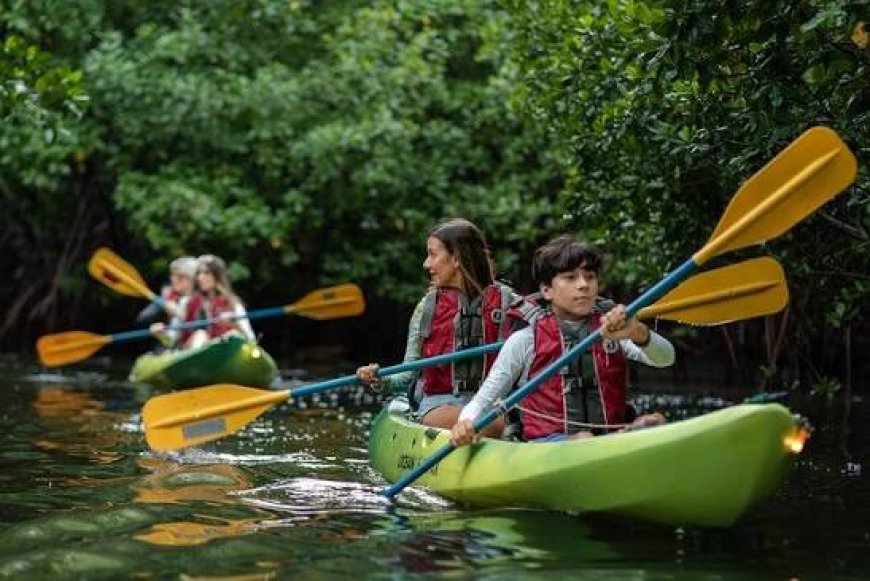
The kayaking route generally takes visitors through narrow water passages and mangrove areas before reaching the lagoon. After dark, the surrounding vegetation becomes part of the experience. The kayak moves quietly through the water, and each paddle stroke can produce flashes beneath the surface.
For first-time visitors, Laguna Grande can be an efficient choice. You can spend the day exploring San Juan or eastern Puerto Rico and then join an evening tour in Fajardo.
What to Expect at Laguna Grande
Laguna Grande is a particularly good choice for travelers who want the combination of kayaking and accessibility.
The experience is normally guided, which is useful because nighttime paddling through unfamiliar mangrove channels is different from kayaking during daylight. Tour operators provide the kayak and basic equipment and guide participants through the route.
Discover Puerto Rico currently lists guided boat and kayak tours as the primary way to visit Laguna Grande.
Travelers should also remember that nighttime kayaking requires a different level of awareness from daytime kayaking. Visibility is limited, weather can change and the route may involve narrow waterways. For this reason, beginners generally benefit from joining an established guided tour rather than attempting an independent nighttime paddle.
La Parguera: The Southwestern Alternative
La Parguera is located in Lajas in southwestern Puerto Rico and provides the third major bio-bay experience.
Its setting is different from Fajardo and Vieques. La Parguera is part of a larger coastal environment with mangroves, coral reefs, sea grass meadows and numerous small keys. Puerto Rico's Department of Natural and Environmental Resources, known as DRNA, identifies La Parguera as a Natural Reserve and notes that the marine portion was designated a protected marine area in 1979.
This wider ecosystem is important because the bio-bay experience is part of a much larger natural environment. Visitors can explore mangrove channels and coastal waters while also experiencing other marine activities.
La Parguera is also different because swimming is permitted there under certain conditions. Discover Puerto Rico states that La Parguera is the only one of Puerto Rico's three bio bays where swimming is allowed, except around full moons when restrictions are used to support conservation efforts.
Travelers should check current local instructions before entering the water because environmental rules can change.
Why Choose La Parguera?
La Parguera works particularly well for travelers exploring western or southwestern Puerto Rico.
Someone staying around Ponce, Cabo Rojo, Mayaguez or other western destinations may find it more practical than travelling to Fajardo or Vieques. It also works well for travelers who want to combine the bio-bay experience with a wider coastal itinerary.
The area is not simply a place to arrive for a one-hour kayak trip. The surrounding natural reserve includes several connected ecosystems, and the Puerto Rico government is currently developing an ecosystem-based management plan for La Parguera. DRNA says the plan is intended to support sustainable management of the reserve while considering ecological, social, cultural, economic and recreational factors. That makes responsible tourism especially important.
Which Bio Bay Is Best for Night Kayaking?
There is no single choice that works for every traveler.
Mosquito Bay is the natural choice for someone who wants to visit the location most strongly associated with Puerto Rico's bioluminescent reputation and is willing to travel to Vieques.
Laguna Grande is particularly practical for travelers staying in San Juan or exploring eastern Puerto Rico. It offers the chance to experience bioluminescent kayaking without requiring an overnight trip to Vieques.
La Parguera is useful for travelers exploring the southwest and for those interested in combining bioluminescence with mangroves, keys and other marine activities.
All three are legitimate bio-bay experiences. The best choice depends on the rest of your itinerary, transportation, available time and preferred style of activity.
When Is the Best Time to Go?
The bio bays exist throughout the year, so there is no single short season when they disappear.
However, the visibility of the glow changes. The darker the night, the easier it is to see the bioluminescence. A new moon or nights close to a new moon are therefore generally better than nights around a full moon.
Weather also plays an important role. Warm, calm conditions with limited wind and rain can provide better visibility. Heavy rain, strong winds and rough water can affect the experience.
Puerto Rico's tourism authority notes that summer and fall can provide favourable conditions because warm and calm nights are common, but it also emphasizes that brightness can fluctuate.
Travelers should therefore avoid treating a particular month as a guarantee. Checking the moon phase and local weather forecast before booking is more useful.
Why Guided Tours Make Sense
A guided tour is usually the simplest way to experience a bio bay.
The guide handles navigation, equipment and basic safety instructions, allowing visitors to concentrate on the water and surroundings. This is especially useful at night, when navigation is more difficult and unfamiliar waterways can become confusing.
Guides can also explain how the ecosystem works and provide instructions on protecting the bay.
If you are choosing a tour operator, look for clear information about the meeting location, duration, equipment, weather cancellation policy and environmental practices. Ask whether the tour uses kayaks, boats or a combination of activities.
A good operator should also explain what visitors should and should not do in the water.
What Should You Bring?
Night kayaking does not require a complicated packing list.
Comfortable clothing that can get wet is useful because paddling can produce splashes. Water shoes or secure footwear are also practical. A small waterproof bag can protect phones and other essentials.
A light jacket can be useful depending on the season and weather, although Puerto Rico's tropical climate generally means that temperatures remain relatively warm.
Visitors should avoid bringing unnecessary items onto the kayak. A phone, camera or other electronic device should be protected against water.
Photography is one of the biggest challenges. The human eye can often see the glow more clearly than a standard Smartphone camera can record it. Travelers should therefore avoid spending the entire tour trying to capture photographs. The conditions are dark, the kayak is moving and bright screens can interfere with your own night vision and the experience of other participants.
Protecting the Bio Bays
Bioluminescent bays are living ecosystems, not swimming pools designed for tourism. Responsible behaviour is essential. Visitors should follow operator instructions, avoid unnecessary splashing and refrain from using products or substances that could damage the ecosystem.
The conservation issue is especially important because thousands of visitors experience these environments each year. Puerto Rico's tourism authority actively promotes responsible visitation and emphasizes that the bays are delicate natural systems.
La Parguera's management status reinforces the importance of conservation. DRNA's current planning work focuses on sustainable management of the reserve and recognizes the area's ecological and recreational importance.
Travelers should therefore think of the tour as a visit to a living ecosystem rather than simply an entertainment activity.
Can You Swim in a Bioluminescent Bay?
The answer depends on the location. Puerto Rico's tourism authority states that the dinoflagellates responsible for the glow are non-toxic. However, swimming rules differ between the three locations. La Parguera is the only one where swimming is generally permitted, with restrictions around full-moon periods to support conservation.
Mosquito Bay and Laguna Grande are primarily experienced from kayaks or boats, and visitors should follow the current rules of the local operator and managing authorities.
Never assume that because the water appears safe, swimming is automatically permitted. Environmental rules exist to protect the ecosystem as well as visitors.
Planning a Bio-Bay Trip from San Juan
San Juan is a convenient base for many Puerto Rico vacations, and Laguna Grande is the easiest bio-bay option from the capital.
Travelers can spend the day exploring Old San Juan, beaches or other attractions before travelling toward Fajardo for an evening tour. Because the bio-bay experience takes place after dark, transportation planning is important.
For travelers who want to visit Mosquito Bay, the itinerary is different. Vieques is accessible by ferry from Ceiba or by air, so staying overnight on Vieques usually makes more sense than attempting to return to San Juan late at night.
Discover Puerto Rico recommends planning transportation in advance and notes that visitors to Vieques can use rental cars, Jeeps, scooters and other transportation options to explore the island.
La Parguera works best as part of a western or southwestern Puerto Rico itinerary.
Combining the Bio Bay with a Day of Activities
One advantage of night kayaking is that it does not take up an entire vacation day.
Travelers can use the daytime for beaches, hiking, historical attractions or food experiences and reserve the evening for the bio bay.
In Fajardo, visitors can explore the eastern coast during the day before joining a Laguna Grande tour. In Vieques, the bio-bay trip can be combined with beach visits and wildlife exploration. In La Parguera, travelers can explore the surrounding coastal area and then join an evening excursion.
This makes bio-bay kayaking particularly useful for travelers who want nature experiences without giving up their daytime itinerary.
The Experience Is Better Without Too Many Expectations
One of the easiest mistakes is expecting the water to look exactly like a heavily edited photograph.
The glow is real, but its intensity varies. Moonlight, cloud cover, water movement, weather and natural changes in the dinoflagellate population all affect what visitors see.
The best approach is to understand that the experience is natural rather than controlled. On a very dark night, the glow can be striking. On another night, it may be more subtle.
That does not mean the bay is unhealthy or that the tour has failed. It means the visitor is experiencing a natural ecosystem rather than a staged attraction.
What's Your Reaction?
 Like
0
Like
0
 Dislike
0
Dislike
0
 Love
0
Love
0
 Funny
0
Funny
0
 Angry
0
Angry
0
 Sad
0
Sad
0
 Wow
0
Wow
0