





















Cricket in the West Indies: Why It’s More Than Just a Sport.
Cricket in the West Indies is deeply rooted in the region’s history and identity, making it much more than a sport. Introduced during British colonial rule, the game was gradually adopted by local communities and became a way for Caribbean people to challenge social hierarchies and express pride. The West Indies team is unique because it represents multiple nations and territories under one banner, using cricket as a unifying force across political and cultural borders.

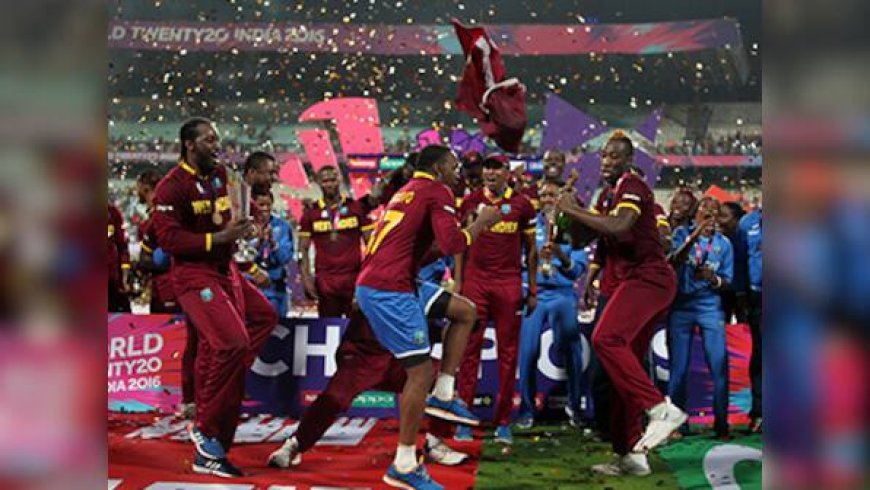
Cricket in the West Indies is difficult to explain if it is treated simply as a game played between bat and ball. Across the Caribbean, cricket has been connected with history, education, community life, music, politics, migration, identity and the long process of moving from colonial rule toward independence. A cricket match can bring together people from different islands that have their own governments, flags and national identities, yet those same people can support one West Indies team when it plays on the international stage. Cricket West Indies represents 15 English-speaking Caribbean countries and territories through its men's, women's and age-group teams, making the West Indies one of the unusual examples in international sport where a team represents a group of countries rather than a single sovereign state. Cricket West Indies itself describes cricket as being deeply connected with community life and identifies its purpose as inspiring, empowering and uniting people through the sport.

That unusual structure is one of the main reasons cricket has such a strong cultural position in the Caribbean. Barbados, Jamaica, Trinidad and Tobago, Guyana, Antigua and Barbuda, Saint Lucia, Grenada, St Vincent and the Grenadines and other Caribbean territories have their own political identities, but their cricketing history overlaps. Players from these places have historically played together under the West Indies name. When the team enters an international ground, the crowd is not simply watching representatives of one island. It is watching a regional team that has survived political changes, independence movements and the collapse of the short-lived West Indies Federation. In that sense, cricket has provided something that politics could not completely establish: a continuing symbol of Caribbean regional identity.
Cricket Arrived With Colonial Rule
The history of Caribbean cricket cannot be separated from British colonialism. Cricket was introduced and developed under British influence, and during its early years the sport reflected the social structure of colonial society. Access to grounds, clubs, education and opportunities was strongly influenced by race and class. But over time, Caribbean players began to take control of the game and use it as a way to demonstrate ability, confidence and social progress.
The transformation was gradual. First-class cricket in the West Indies dates back to the nineteenth century, while the West Indies entered official Test cricket in 1928. The early international side had talented players but did not immediately become a dominant force. By the middle of the twentieth century, however, a new generation of players began changing the relationship between cricket and Caribbean society. Frank Worrell, Everton Weekes, Clyde Walcott and later Garfield Sobers became important figures not only because of their performances but also because they represented the growing confidence of Black Caribbean people in a society that had been shaped by colonial racial hierarchies.
One of the important moments came in 1960 when Frank Worrell became the first Black captain of the West Indies. The University of the West Indies' CLR James Cricket Research Centre notes that C.L.R. James's Beyond a Boundary examined cricket alongside race, class and colonial society and discussed the political importance of Worrell's appointment. Cricket was therefore not isolated from the wider social changes taking place across the Caribbean.
C.L.R. James and the Meaning of Cricket
Few writers have explained the deeper meaning of Caribbean cricket as effectively as Trinidadian intellectual C.L.R. James. His 1963 book Beyond a Boundary is widely regarded as an important work on cricket, culture and Caribbean society. James did not treat cricket as an escape from real life. Instead, he examined how the sport reflected the society around it.
His argument remains relevant because cricket provided a structured space in which Caribbean people could compete against the representatives of the colonial power on relatively equal terms. A cricket field had rules, but those rules did not automatically determine who was socially superior. A player could walk onto the field with a bat or ball and challenge an opponent through skill.
Modern scholarship continues to connect James's work with the construction of West Indian identity. Research published in the International Journal of Cultural Studies notes that Beyond a Boundary connected the rituals and customs of cricket with the development of West Indian identity during the early postcolonial period.
This is important because the West Indies is not a single nation in the normal political sense. The West Indies Federation existed from 1958 to 1962 but collapsed before becoming a lasting political union. The individual Caribbean countries subsequently developed their own independent political identities. Yet cricket continued to provide a regional platform. Players from different territories could still wear the same maroon cap and represent the West Indies.
The Rise of the West Indies as a Cricket Power
The story changed dramatically from the 1960s into the 1980s. The West Indies developed one of the strongest teams in international cricket, combining powerful batting with fast bowling that became a defining feature of the side.
The 1975 World Cup provided one of the most important early moments. The West Indies defeated Australia by 17 runs at Lord's to win the inaugural men's Cricket World Cup. Captain Clive Lloyd scored 102 from 85 balls in the final, while the West Indies defended a total of 291.
The team then built a reputation for fast bowling and aggressive cricket. Andy Roberts, Michael Holding, Joel Garner, Colin Croft, Malcolm Marshall, Curtly Ambrose and Courtney Walsh became part of a long tradition of Caribbean fast bowlers. At the same time, batsmen such as Viv Richards, Gordon Greenidge and Desmond Haynes helped create a team capable of putting enormous pressure on opponents.
The West Indies' dominance during the late 1970s and 1980s was not just a sporting achievement. It changed the way Caribbean people saw their place in international sport. A region that had once been governed by Britain was now producing a team capable of defeating England, Australia and other established cricket nations. Lord's records the West Indies' 1975 World Cup victory, while the historical record of the period shows that the side remained one of the strongest teams in world cricket through much of the 1980s.
The famous 1984 tour of England became another symbol of that strength. West Indies won the five-Test series 5-0, the only time a touring side had whitewashed England in a five-Test series at that point in Test history.
Cricket Became Part of Everyday Caribbean Life
The influence of cricket is not limited to international matches. In many Caribbean communities, cricket has traditionally been played in schoolyards, village grounds, parks and local clubs. Children learn the game from older players, and local competitions create social networks that extend well beyond the boundary line.
A cricket ground can become a meeting place. People discuss the match, argue about selection, follow statistics and remember performances from previous generations. Families often have their own cricket stories. Someone remembers watching Viv Richards. Another remembers Brian Lara's batting. Someone else remembers a local player who never became an international star but was considered one of the best players in the community.
This local connection helps explain why cricket has survived periods when the international West Indies team has struggled. The performance of the senior team can change from generation to generation, but cricket remains embedded in schools, clubs and regional competitions.
Cricket West Indies currently oversees competitions including the West Indies Championship, the Super50 Cup and the women's T20 Blaze, alongside international men's, women's and age-group teams. Its stated mission is to grow and guide cricket from communities through to the international level.
The Caribbean Is More Than One Cricket Culture
It is easy for outsiders to talk about "West Indian cricket" as if the Caribbean has one identical cricket culture. In reality, different territories have developed their own traditions.
Barbados has a particularly strong cricket history and has produced generations of international players. Jamaica has its own deep cricket culture and has produced figures such as Michael Holding and Chris Gayle. Trinidad and Tobago has been central to West Indies cricket and produced players including Brian Lara. Guyana has also contributed many major cricketers, while the smaller islands of the Eastern Caribbean have consistently produced international talent despite having much smaller populations.
The differences between these places actually make the regional team more interesting. When a West Indies squad is selected, it brings together people with different local experiences, accents, cricketing traditions and national backgrounds. They then have to create one team.
That process reflects something larger about the Caribbean. Regional cooperation has never been simple. Geography, politics, economics and separate national identities can pull countries in different directions. Cricket provides one of the most visible spaces where regional cooperation continues to function.
The Sound of Caribbean Cricket
Cricket also became connected with Caribbean music and popular culture. Calypso, especially in Trinidad and Tobago, developed a close relationship with cricket. Songs and commentary became part of how major victories were remembered.
One famous example came after the West Indies defeated England at Lord's in 1950. Lord's records that the victory inspired a calypso by Lord Beginner, while West Indian supporters celebrated around the ground.
This relationship between cricket and music is significant because it demonstrates how sporting events can become cultural events. A match does not always end when the final wicket falls. The result can become a song, a story, a joke, a family memory or a reference repeated for decades.
That is one reason statistics alone cannot fully explain Caribbean cricket. A scorecard records runs and wickets. It does not record what happened in homes, streets, bars, schools and communities while the match was being played.
Cricket and Caribbean Heroes
Every cricket culture has its heroes, but West Indian cricket has produced an unusually large collection of figures who became symbols far beyond sport.
Sir Garfield Sobers became famous for his all-round ability. Frank Worrell became associated with leadership and regional identity. Clive Lloyd became the captain of the first World Cup-winning West Indies side. Viv Richards became known for his powerful batting and distinctive confidence. Brian Lara became one of the most technically gifted batsmen of his generation and remains a major figure in Trinidad and Tobago and the wider Caribbean.
Learie Constantine represents another side of the story. Born in Trinidad, Constantine played for West Indies and later played professional cricket in England. Lord's records that he faced racial prejudice during his career in England but eventually became a respected local figure, while also building a career as a barrister and politician.
These stories matter because Caribbean cricket has repeatedly demonstrated that sporting careers can intersect with education, law, politics, migration and social change.
Women's Cricket Has Added another Chapter
The meaning of West Indies cricket is also changing through the growth of women's cricket. The West Indies women have produced internationally recognised players such as Stafanie Taylor, Deandra Dottin and Hayley Matthews.
The women's team won the ICC Women's T20 World Cup in 2016, defeating Australia in the final. It remains the team's only Women's T20 World Cup title. In 2026, the West Indies women again reached the semi-finals before Australia defeated them by eight wickets at The Oval.
The 2026 tournament was significant because the West Indies reached the last four after a group campaign that included three wins followed by defeats against England and Ireland. They qualified ahead of Sri Lanka on net run rate.
Women's cricket also matters at the development level. In August 2026, Cricket West Indies held its Rising Stars Women's Under-19 Championship in Antigua, bringing together emerging players from Barbados, Trinidad and Tobago, Jamaica, the Windward Islands, the Leeward Islands and Guyana. The tournament was aligned with preparation for the 2027 ICC Under-19 Women's T20 World Cup.
That pathway is important because the future of Caribbean cricket depends not only on famous international players but on whether young girls and boys can see a realistic route from school cricket to professional cricket.
The Modern Challenge: Keeping Talent in the Region
Modern West Indies cricket operates in a very different sporting economy from the one that existed during the great Test era. Franchise T20 cricket has created new opportunities for Caribbean players around the world. The Caribbean Premier League has become an important part of the region's cricket calendar, while West Indian players regularly participate in major T20 competitions internationally.
This creates both opportunities and challenges. Players can earn professional income from multiple competitions, gain experience in different conditions and develop their short-format skills. At the same time, international cricket boards must find ways to keep domestic first-class and limited-overs competitions meaningful.
Cricket West Indies has acknowledged the importance of strengthening regional pathways. In 2026, it revised the format of the West Indies Championship as part of a wider review aimed at player development, talent identification, tour preparation and pathway progression while also managing costs.
This is one of the central issues facing Caribbean cricket today. The region has an extraordinary cricketing history, but history alone cannot produce the next generation of international players. Young cricketers need regular competitive matches, quality coaching, strong facilities, fitness programmes and a clear path toward professional opportunities.
The Current West Indies Team Shows the Changing Game
The present West Indies men's team is operating in a highly competitive international environment. In September and October 2026, the side toured India for three ODIs and five T20Is. Cricket West Indies announced the squads in September, with Shai Hope leading the ODI team. The T20 squad included emerging players such as Kamil Pooran, who had produced strong numbers in the Caribbean Premier League before selection.
The ODI series also demonstrated the competitive gap the current team is trying to close. India won the first ODI by eight wickets after West Indies made 295, while Justin Greaves scored his maiden ODI century. In the second ODI, West Indies scored 405/7, their highest total in men's ODIs, but India successfully chased 406. Shai Hope scored his 20th ODI century and moved past Brian Lara into second place among West Indies centurions in the format, behind Chris Gayle.
Those results illustrate an important point about modern Caribbean cricket. The story is no longer simply about whether West Indies are the world's dominant Test side. The region is trying to compete across Tests, ODIs and T20 cricket while developing new players and balancing international cricket with franchise opportunities.
Cricket and Regional Identity Still Matter
Perhaps the most interesting part of West Indies cricket is that its identity has survived changes that could have weakened it. The Caribbean is made up of independent nations and territories with different political systems, economies and cultures. Yet when the West Indies play international cricket, those separate identities can temporarily come together.
This does not mean every Caribbean person feels exactly the same about the West Indies team. Local loyalties remain powerful. Barbadians may strongly support Barbados. Jamaicans may closely follow Jamaica. Trinidadians have their own cricket traditions. But the existence of the West Indies team creates an additional layer of identity.
The West Indies cricket team is therefore more than a collection of players selected from different islands. It is one of the surviving institutions through which the idea of a wider West Indian community continues to be expressed. Modern discussions of Caribbean history and identity continue to examine this unusual relationship between cricket and regional unity.
Why Cricket Still Matters to the Next Generation
For young Caribbean players, cricket can represent opportunity. It can provide a reason to stay active, develop discipline, travel, meet people from other territories and potentially build a professional career. But its importance goes beyond professional sport.
A child learning to bat is learning timing and patience. A bowler learns repetition and control. A team learns that individual talent is not enough. A player can score a century and still lose the match. Another player may make only a small contribution but help create a winning result. These lessons are easy to connect with everyday life, which is one reason cricket remains an effective cultural language across the region.
The challenge is making sure that access to the game remains broad. Good cricket cannot depend only on children who have access to expensive equipment, private coaching or elite schools. Community clubs, public grounds, school programmes and development competitions remain important if Caribbean cricket is to continue producing talent.
What's Your Reaction?
 Like
0
Like
0
 Dislike
0
Dislike
0
 Love
0
Love
0
 Funny
0
Funny
0
 Angry
0
Angry
0
 Sad
0
Sad
0
 Wow
0
Wow
0