
































Local Fruits You’ve Never Heard Of: Soursop, Ackee, and Breadfruit explained.
Soursop is a tropical fruit with soft white flesh and a sweet-sour flavor, commonly used in juices and desserts. It is rich in vitamin C and fiber, but its seeds are not edible. Ackee is Jamaica’s national fruit and is eaten only when fully ripe and cooked. The edible flesh has a mild, savoury taste and is a key ingredient in traditional Jamaican dishes, but unripe ackee is toxic.

These fruits are everyday foods in many tropical regions but still unfamiliar to a lot of people globally. Each one has a unique taste, cultural role, and nutritional profile. Here’s a clear, point-by-point breakdown.

1. Sour sop (Graviola)
What it is
Sour sop is a large green fruit with soft spines on the outside.It grows in tropical regions such as the Caribbean, Central America, South America, and parts of Africa and Southeast Asia.Scientific name: Annona muricata.
Taste and texture
The flesh is white, soft, and fibrous.Flavour is a mix of strawberry, pineapple, and citrus with a slight sour note.Eaten fresh, blended into juices, smoothes, or made into ice cream.
Nutritional value
Rich in vitamin C, which supports immune function.Contains fibber that helps digestion.Provides potassium and small amounts of magnesium.
Traditional uses
Widely used in drinks and desserts.
Leaves and seeds have been used in traditional remedies, though these uses are not medically proven.
Important note
Seeds are not edible.Excessive consumption of supplements made from soursop leaves or extracts is not recommended without medical advice.
2. Ackee
What it is
- Ackee is a bright red fruit native to West Africa but most closely associated with Jamaica.
- Scientific name: Blighia sapid a.
- It is Jamaica’s national fruit.
- Taste and texture
- The edible part is the creamy, pale-yellow flesh inside.
- Mild, slightly nutty flavour.
- The texture is soft and similar to scrambled eggs when cooked.
How it’s eaten
- Always cook before eating.
- Commonly prepared as ackee and saltfish, a staple Jamaican dish.
- Used in savory meals, not desserts.
Nutritional value
- High in healthy fats.
- Contains protein, zinc, and vitamin A.
- Very filling and energy-dense.
- Safety facts (very important)
- Ackee is toxic when unripe.
- It must open naturally on the tree before harvesting.
- Only the flesh is eaten; seeds and red pods are poisonous.
3. Breadfruit
What it is
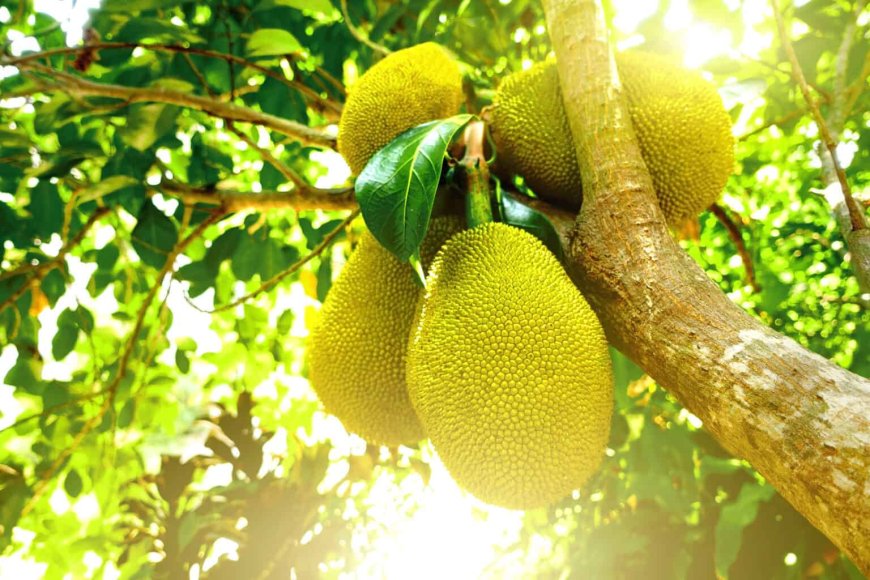
- Breadfruit is a large, round fruit with green, bumpy skin.
- Native to the Pacific Islands and widely grown in the Caribbean and tropical Asia.
- Scientific name: Artocarpus altilis.
- Taste and texture
- Mild flavour.
- When cooked, the texture is similar to bread or potatoes.
- Neutral taste makes it easy to pair with spices and sauces.
How it’s used
- Always cooked: roasted, fried, boiled, or baked.
- Used as a staple food, similar to rice or potatoes.
- Can be mashed, sliced into chips, or added to curries.
- Nutritional value
- High in complex carbohydrates.
- Good source of fiber.
- Contains vitamin C, potassium, and antioxidants.
- Naturally gluten-free.
Why it matters
Breadfruit trees produce large yields with low maintenance.
Considered a potential solution for food security in tropical regions.
Final Takeaway
Soursop stands out for its bold flavor and refreshing use in drinks and desserts.
Ackee is unique for its strict preparation rules and its role in Caribbean cuisine.
Breadfruit is valued not for sweetness, but for its ability to replace staple foods and support nutrition.
What's Your Reaction?
 Like
0
Like
0
 Dislike
0
Dislike
0
 Love
0
Love
0
 Funny
0
Funny
0
 Angry
0
Angry
0
 Sad
0
Sad
0
 Wow
0
Wow
0