










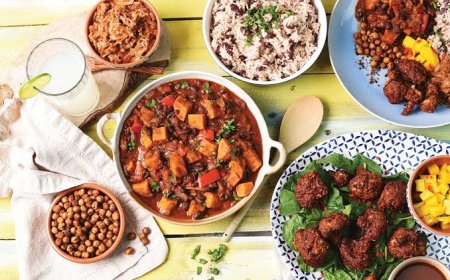





















Cooking With Caribbean Spices: A Beginner’s Guide
Caribbean cuisine is known for its rich combination of herbs, spices, fresh ingredients, and diverse cultural influences. Over centuries, the region's cooking traditions have developed through the contributions of Indigenous peoples, African communities, European settlers, Indian indentured workers, Chinese immigrants, and Middle Eastern traders. Each group introduced new ingredients, cooking methods, and seasoning techniques, creating one of the world's most diverse and recognizable regional cuisines. Today, Caribbean food is celebrated not only for its vibrant flavours but also for its balance of spices, herbs, and fresh produce.

Caribbean cuisine is recognized around the world for its bold flavours, fresh ingredients, and diverse cultural influences. The region's cooking traditions have developed over centuries through the contributions of Indigenous peoples, African communities, Europeans, Indians, Chinese immigrants, and people from the Middle East. Each group introduced ingredients, cooking methods, and spice combinations that gradually became part of the Caribbean's unique culinary identity.

Spices play a central role in Caribbean cooking. Rather than relying on a single seasoning, many traditional recipes combine several herbs and spices to create balanced flavours. Some dishes are mildly seasoned, while others feature more noticeable heat from chilli peppers. The goal is not simply to make food spicy but to build layers of flavour that complement meats, seafood, vegetables, rice, beans, and tropical fruits.
For beginners, Caribbean cooking may seem complicated because recipes often include unfamiliar spices and seasoning blends. However, once the basic ingredients are understood, preparing Caribbean meals becomes much easier. Many of the essential spices are widely available in supermarkets and specialty food stores around the world.
Learning how these spices work together allows home cooks to prepare authentic Caribbean dishes while adjusting flavours according to personal preferences.
The History of Caribbean Spices
The Caribbean has been an important center of the global spice trade for hundreds of years.
Before European exploration, Indigenous communities used local herbs, peppers, roots, and aromatic plants to season their food. These early cooking traditions emphasized fresh ingredients collected from forests, rivers, and coastal areas.
During the colonial period, European powers introduced additional herbs and spices from Africa, Asia, and the Mediterranean. African communities contributed cooking methods and seasoning traditions that remain central to Caribbean cuisine today.
Later, Indian indentured workers introduced spices such as turmeric, cumin, coriander, fenugreek, and garam masala. Chinese immigrants brought additional seasonings and cooking techniques, while Middle Eastern traders introduced other aromatic ingredients.
These cultural exchanges created one of the world's most diverse regional cuisines.
Understanding Caribbean Flavour
Many people assume Caribbean food is always extremely spicy.
In reality, Caribbean cooking focuses on balance.
Recipes often combine sweet, savoury, smoky, herbal, citrus, and mildly spicy flavours within the same dish.
Fresh herbs, garlic, onions, ginger, citrus juice, and aromatic spices work together to enhance natural ingredients rather than overpower them.
Even dishes containing hot peppers can often be adjusted to suit different heat preferences.
Understanding this balance helps beginners cook confidently without making meals excessively spicy.
Essential Caribbean Spices
Several spices appear repeatedly throughout Caribbean cooking.
These ingredients form the foundation of many traditional recipes.
Learning their individual characteristics makes it easier to understand Caribbean flavour combinations.
Allspice
One of the Caribbean's most famous spices is allspice.
Despite its name, allspice comes from a single dried berry rather than a mixture of spices.
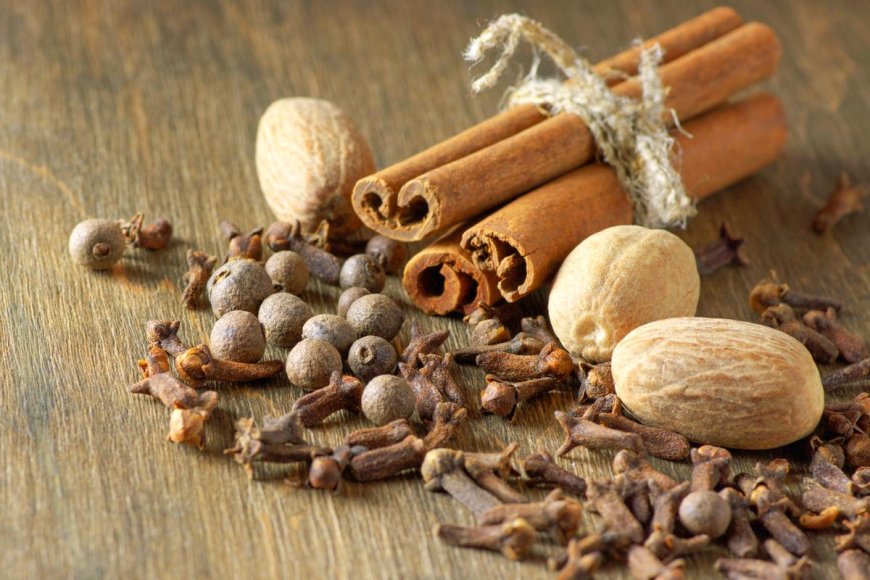
The flavour combines notes that resemble cinnamon, cloves, nutmeg, and black pepper.
Jamaica remains one of the world's leading producers of high-quality allspice.
The spice is widely used in jerk seasoning, stews, soups, marinades, baked goods, sauces, and beverages.
Whole berries are often added to slow-cooked dishes, while ground allspice blends easily into spice mixtures.
Scotch Bonnet Pepper
Although technically a pepper rather than a spice, the Scotch bonnet is one of the defining ingredients of Caribbean cuisine.
Its intense heat is balanced by fruity, slightly sweet flavours.
Scotch bonnet peppers appear in pepper sauces, marinades, stews, curries, seafood dishes, and jerk seasoning.
Beginners should use small amounts until they become familiar with its heat level.
Removing the seeds and inner membranes reduces some of the pepper's intensity.
Gloves should be worn when handling fresh peppers to avoid skin irritation.
Nutmeg
Nutmeg has a long history in Caribbean agriculture, especially on the island of Grenada.
Freshly grated nutmeg provides a warm, aromatic flavour that enhances desserts, beverages, soups, sauces, and meat dishes.
Small quantities are generally sufficient because the spice has a concentrated flavor.
Whole nutmeg retains freshness longer than pre-ground versions.
Many cooks grate it immediately before use.
Cinnamon
Cinnamon contributes warmth and subtle sweetness to many Caribbean recipes.
It appears in beverages, baked goods, rice dishes, stews, desserts, and spice blends.
Both cinnamon sticks and ground cinnamon are commonly used.
Whole sticks are often simmered in soups or drinks before being removed.
Ground cinnamon blends easily into seasoning mixtures.
Cloves
Cloves possess a strong, aromatic flavour.
Only small amounts are usually required.
Whole cloves frequently appear in marinades, rice dishes, beverages, pickled foods, and slow-cooked meats.
Ground cloves contribute warmth to spice blends used throughout the Caribbean.
Ginger
Fresh ginger provides brightness and gentle heat.
It is widely used in seafood, chicken, soups, beverages, baked goods, and marinades.
Ground ginger also appears in certain recipes, although fresh ginger delivers a more vibrant flavour.
The spice pairs especially well with garlic, citrus, and Scotch bonnet peppers.
Garlic
Although technically a vegetable rather than a spice, garlic forms one of the foundations of Caribbean seasoning.
Fresh garlic appears in nearly every savoury recipe.
It contributes depth and aroma while complementing herbs and spices.
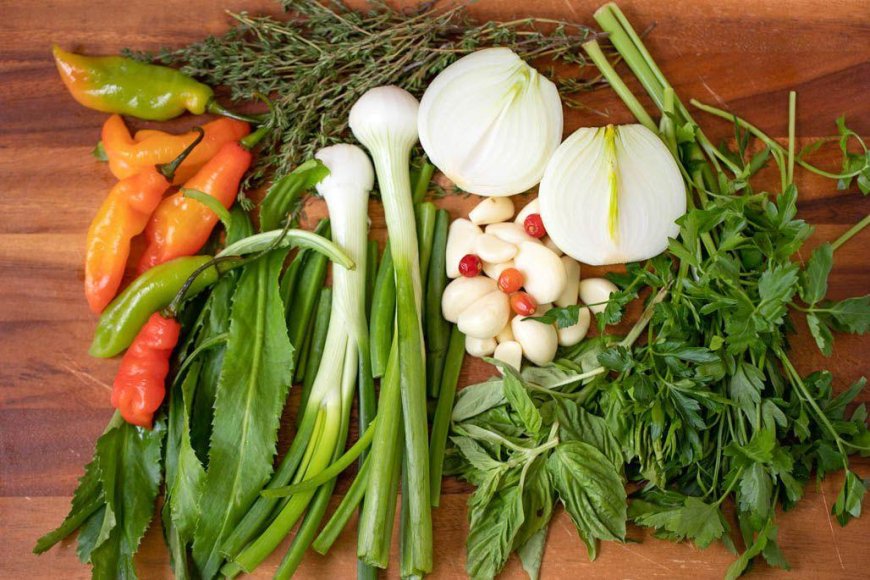
Many Caribbean marinades begin with garlic, onions, thyme, and peppers.
Onion
Like garlic, onions provide essential flavour.
White onions, yellow onions, green onions, and scallions all appear frequently.
They create a flavourful base for stews, curries, rice dishes, beans, soups, and marinades.
Thyme
Fresh thyme is perhaps the most widely used herb throughout the Caribbean.
Its earthy aroma enhances chicken, seafood, beef, goat, vegetables, rice, soups, and sauces.
Both fresh and dried thyme are suitable, although fresh thyme often provides a stronger aroma.
Many traditional recipes include whole thyme sprigs that are removed before serving.
Oregano
Certain Caribbean regions also use oregano extensively.
The herb contributes a slightly peppery flavour that complements meats, tomatoes, beans, and vegetable dishes. Fresh oregano has a stronger aroma than dried versions.
Bay Leaves
Bay leaves are frequently added to soups, stews, rice dishes, and beans.
They provide subtle herbal aroma during slow cooking.
Whole leaves are removed before serving because they remain tough after cooking.
Turmeric
Indian influence introduced turmeric into many Caribbean cuisines.
The spice contributes earthy flavour and bright yellow colour.
Curries, rice dishes, soups, and vegetable recipes frequently include turmeric.
Only moderate quantities are usually required.
Curry Powder
Caribbean curry powder differs somewhat from versions produced elsewhere.
Many regional blends include turmeric, coriander, cumin, fenugreek, mustard, black pepper, cloves, cinnamon, and additional spices.
Each island may have slightly different formulations.
Caribbean curry appears in chicken, goat, seafood, vegetables, lentils, and potatoes.
Cumin
Cumin contributes warm, earthy flavour to curries, rice dishes, beans, and spice blends.
Although more common in Indo-Caribbean cooking, it now appears throughout the region.
Whole cumin seeds may be lightly toasted before grinding to increase aroma.
Coriander
Ground coriander provides citrus-like notes that balance stronger spices.
It complements cumin, turmeric, garlic, ginger, and peppers.
Fresh coriander leaves are also used as garnish in certain Caribbean dishes.
Black Pepper
Freshly ground black pepper adds gentle heat without overwhelming other spices.
It appears in nearly every savoury Caribbean recipe.
Whole peppercorns also flavour soups and slow-cooked stews.
Building Your First Caribbean Spice Collection
Beginners do not need dozens of ingredients.
A practical starter collection includes:
- Allspice
- Nutmeg
- Cinnamon
- Thyme
- Garlic
- Onion
- Black pepper
- Ginger
- Curry powder
- Scotch bonnet peppers
- Bay leaves
- Cloves
With these ingredients, home cooks can prepare many traditional Caribbean recipes.
Fresh versus Dried Spices
Fresh herbs generally provide brighter flavours, while dried spices offer convenience and longer storage life.
Whole spices maintain quality longer than ground spices because aromatic oils remain protected until grinding.
Proper storage is equally important.
Spices should be kept in airtight containers away from direct sunlight, moisture, and excessive heat.
Most ground spices gradually lose flavour after several months, while whole spices remain fresh considerably longer.
Conclusion
Caribbean cuisine is built on centuries of cultural exchange, and spices are at the heart of its distinctive flavours. By understanding the role of essential ingredients such as allspice, thyme, ginger, garlic, nutmeg, cinnamon, curry powder, and Scotch bonnet peppers, beginners can confidently start preparing authentic Caribbean dishes at home. Building a small, well-chosen spice collection and learning how each ingredient contributes to flavour makes Caribbean cooking approachable, enjoyable, and rewarding.
In Part 2, the guide will explore traditional Caribbean seasoning blends, jerk seasoning, green seasoning, curry pastes, marinades, spice combinations, and beginner-friendly recipes that demonstrate how these spices work together in everyday cooking.
What's Your Reaction?
 Like
0
Like
0
 Dislike
0
Dislike
0
 Love
0
Love
0
 Funny
0
Funny
0
 Angry
0
Angry
0
 Sad
0
Sad
0
 Wow
0
Wow
0