

































Caribbean Commercial Space Investment Opportunities
The Caribbean has traditionally been known for tourism, agriculture, shipping, and financial services, but the region is increasingly exploring opportunities within the global commercial space economy. While Caribbean nations are not major space-launching countries, they have the potential to benefit from investments in satellite technology, Earth observation, telecommunications, geospatial services, research, education, and digital infrastructure. These sectors can support economic diversification while addressing regional challenges such as climate change, disaster management, and connectivity. The global commercial space industry has grown significantly due to lower launch costs, reusable rocket technology, small satellite development, and increased private investment. As space technology becomes more affordable, smaller countries and private businesses have greater opportunities to participate in the industry without developing their own launch vehicles or space programs.


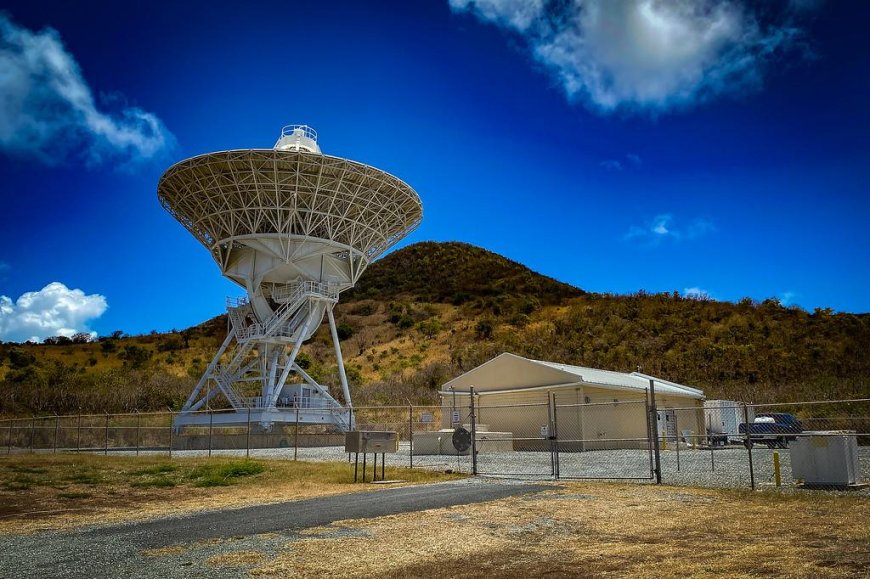
The Caribbean is widely recognized for tourism, agriculture, maritime trade, and financial services. However, new industries are gradually creating additional opportunities for economic growth across the region. One of the emerging areas attracting attention is the commercial space economy. While the Caribbean is not traditionally associated with the space industry, governments, private companies, universities, and international organizations are increasingly exploring opportunities connected to satellite technology, space-based communications, Earth observation, and aerospace infrastructure.

The global commercial space industry has expanded rapidly over the past decade. Private investment, reusable launch technology, small satellites, and lower manufacturing costs have created opportunities for countries that previously had little involvement in space-related activities. Caribbean nations may not become major launch centers immediately, but they can benefit from investments in satellite services, ground infrastructure, data analysis, research, education, and supporting industries.
Rather than competing directly with large space powers, the Caribbean can identify specialized areas where geography, strategic location, skilled professionals, and regional cooperation provide competitive advantages.
The Growth of the Global Space Economy
The commercial space sector has evolved beyond government-led exploration.
Today, private companies develop satellites, launch vehicles, communication systems, navigation services, remote sensing technologies, and data platforms. Industries including agriculture, shipping, disaster management, telecommunications, banking, insurance, logistics, and environmental monitoring all depend increasingly on satellite-based services.
Lower launch costs have encouraged the development of smaller satellites that are less expensive to build and operate. This has opened opportunities for smaller countries and private investors to participate in space-related businesses without developing complete launch programs.
As technology becomes more accessible, countries throughout the world are evaluating how they can participate in this growing industry.
Why the Caribbean Has Potential
The Caribbean occupies an important geographic position between North America, South America, and the Atlantic Ocean.
Many islands already possess modern telecommunications networks, international airports, seaports, and expanding digital economies. Several countries also have political stability, investment incentives, and financial sectors that can support technology businesses.
The region's vulnerability to hurricanes, coastal erosion, climate change, and natural disasters also creates demand for satellite-based monitoring systems.
Rather than focusing solely on launching spacecraft, Caribbean economies can develop businesses that use space technology to improve local industries while serving international markets.
Satellite Communications
Satellite communications represent one of the strongest investment opportunities for the Caribbean.
Many islands depend on reliable telecommunications for tourism, finance, education, healthcare, and emergency response.
Investment opportunities include satellite broadband services, backup communication systems, maritime connectivity, aviation communications, and remote island internet infrastructure.
As digital economies continue growing, reliable satellite connectivity becomes increasingly valuable.
Private companies can partner with governments and telecommunications providers to expand services throughout the region.
Earth Observation Services
Earth observation satellites collect valuable information about land, oceans, forests, weather, agriculture, and urban development.
Caribbean governments increasingly rely on satellite imagery to monitor:
- Coastal erosion
- Coral reef health
- Hurricane impacts
- Flooding
- Deforestation
- Agricultural productivity
Private companies can develop businesses that analyze satellite imagery and provide customized information for government agencies, insurance companies, construction firms, and environmental organizations.
Demand for these services is expected to continue increasing.
Disaster Management Technologies
The Caribbean experiences hurricanes, tropical storms, floods, earthquakes, volcanic activity, and other natural hazards.
Satellite technology plays an important role before, during, and after disasters.
Commercial investment opportunities include early warning systems, emergency communication platforms, satellite mapping, damage assessment software, and recovery planning services.
Governments increasingly seek advanced technologies that improve disaster preparedness and response.
Private companies that specialize in geospatial data and emergency management can find growing opportunities within the region.
Maritime Monitoring
Shipping is essential to Caribbean economies.
Thousands of commercial vessels, cruise ships, fishing boats, and cargo ships operate throughout Caribbean waters each year.
Satellite technology supports vessel tracking, navigation, weather forecasting, illegal fishing detection, maritime security, and port management.
Investment in maritime data services can improve shipping efficiency while supporting environmental protection and regional security.
As international trade grows, demand for these services is expected to increase.
Agriculture and Precision Farming
Agriculture remains an important industry across many Caribbean nations.
Satellite imagery helps farmers monitor crop health, irrigation needs, drought conditions, and soil quality.
Commercial businesses can provide subscription-based agricultural monitoring services that improve productivity while reducing costs.
These technologies may become increasingly valuable as climate variability affects agricultural production.
Environmental Monitoring
Protecting natural resources is essential for Caribbean tourism and sustainable development.
Satellite systems help monitor:
- Coral reefs
- Mangrove forests
- Coastal pollution
- Marine protected areas
- Water quality
- Beach erosion
Companies specializing in environmental analytics can work with governments, conservation organizations, universities, and tourism businesses.
Growing environmental awareness is likely to support continued demand for these services.
Tourism Applications
Tourism remains the Caribbean's largest economic sector.
Space technology contributes indirectly through:
- Weather forecasting
- Navigation systems
- Environmental monitoring
- Aviation management
- Cruise operations
- Mapping services
Hotels, airlines, cruise companies, and tour operators increasingly rely on satellite-enabled technologies to improve customer experiences and operational efficiency.
Technology investments supporting tourism infrastructure can produce long-term economic benefits.
Education and Workforce Development
Developing a space-related economy requires skilled professionals.
Universities throughout the Caribbean are expanding programs in engineering, computer science, environmental science, geospatial analysis, and information technology.
Investment in education creates opportunities for future entrepreneurs and technology companies.
International partnerships with research institutions can strengthen regional expertise.
Building local talent is essential for long-term growth.
Satellite Ground Stations
Ground stations receive and transmit information between satellites and Earth.
These facilities require secure locations, reliable electricity, telecommunications infrastructure, and trained technical personnel.
Some Caribbean islands may provide suitable locations for additional satellite communication facilities serving regional or international markets.
Ground station investments can create skilled employment opportunities while supporting broader digital infrastructure.
Data Analytics Businesses
Collecting satellite information represents only part of the commercial opportunity.
Analyzing large volumes of satellite data has become an expanding industry.
Businesses can develop software that transforms satellite imagery into useful information for:
- Agriculture
- Insurance
- Construction
- Urban planning
- Environmental protection
- Transportation
Artificial intelligence further increases the value of satellite-generated data.
Insurance Industry Applications
Insurance companies increasingly use satellite imagery to assess property damage following hurricanes and other natural disasters.
Satellite-based risk analysis also assists insurers in evaluating flood exposure, coastal risks, and agricultural claims.
Commercial companies providing these analytical services may find growing demand throughout the Caribbean.
Renewable Energy Planning
Many Caribbean countries are expanding renewable energy production.
Satellite information supports:
- Solar energy planning
- Wind resource assessment
- Land suitability analysis
- Environmental impact studies
Companies specializing in renewable energy consulting can incorporate satellite technology into project development.
Government Partnerships
Many commercial opportunities involve collaboration with governments.
Public-private partnerships can support:
- National mapping projects
- Digital infrastructure
- Emergency response systems
- Environmental monitoring
- Educational programs
Government cooperation often helps reduce investment risks while improving public services.
Challenges Facing Investors
Despite growing opportunities, several challenges remain.
Some Caribbean markets are relatively small, requiring regional cooperation to achieve commercial scale.
Infrastructure improvements, skilled workforce development, regulatory modernization, and financing remain important priorities.
International competition is also increasing as more countries enter the commercial space sector.
Investors should carefully evaluate both opportunities and potential risks before committing capital.
Future Outlook
The global commercial space economy continues expanding.
Lower satellite costs, increasing demand for Earth observation, improved communications technology, and artificial intelligence are creating new business opportunities across many industries.
The Caribbean is unlikely to become a major launch region in the near future, but it can become an important participant in satellite services, digital infrastructure, environmental monitoring, maritime technologies, and geospatial analytics.
Continued investment, education, innovation, and regional cooperation will determine how successfully Caribbean economies participate in this growing global industry.
Conclusion
Commercial space investment opportunities in the Caribbean extend far beyond rocket launches. Satellite communications, Earth observation, disaster management, agriculture, maritime services, environmental monitoring, tourism technology, education, and digital infrastructure all present realistic areas for investment and economic growth.
By focusing on sectors where regional needs align with global technological advances, Caribbean countries can strengthen their economies, improve public services, support environmental protection, and attract international investment. As the commercial space industry continues to evolve, the Caribbean has the potential to become an increasingly valuable participant in the broader space economy through innovation, partnerships, and practical applications of space-based technologies.
What's Your Reaction?
 Like
0
Like
0
 Dislike
0
Dislike
0
 Love
0
Love
0
 Funny
0
Funny
0
 Angry
0
Angry
0
 Sad
0
Sad
0
 Wow
0
Wow
0