



































Caribbean Citizenship by Investment Programs
Caribbean Citizenship by Investment programs allow individuals to obtain a second passport by investing $200,000 or more in five countries: Dominica, Antigua & Barbuda, Grenada, St Kitts & Nevis, and St Lucia. These programs offer visa-free travel, tax benefits, and fast processing, making them a popular option for global investors.


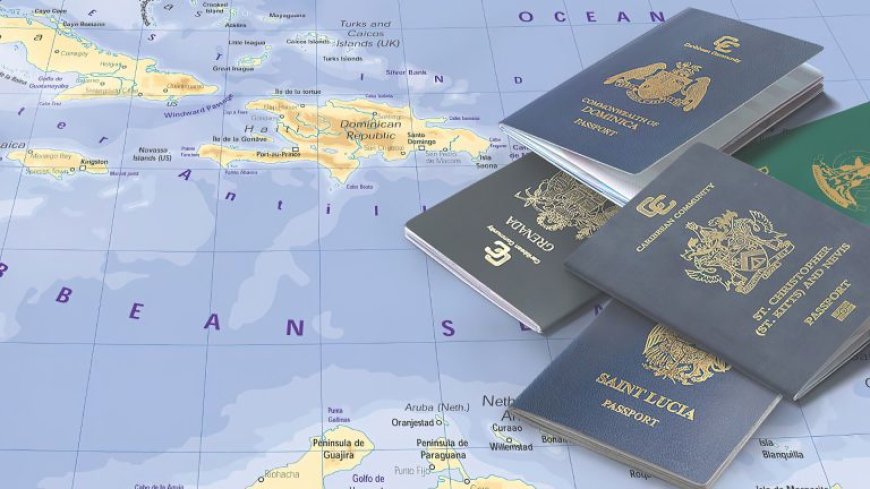
Introduction: Why the Caribbean Dominates the Second Passport Market

There is a reason high-net-worth investors from Mumbai to Moscow, from Lagos to London, keep circling back to the Caribbean when they think about second citizenship. The five island nations that run formal Citizenship by Investment (CBI) programs Antigua and Barbuda, Dominica, Grenada, Saint Kitts and Nevis, and Saint Lucia have collectively built one of the most efficient, legally grounded, and globally respected pathways to a second passport that exists anywhere in the world.
The numbers tell part of the story. Minimum qualifying investments start at $200,000. Processing times range from four to eighteen months depending on the program. Successful applicants gain visa-free or visa-on-arrival access to between 140 and 167 countries, including the United Kingdom, the Schengen Area, Singapore, and several Gulf states. And the entire process, in most cases, can be completed without the applicant ever setting foot in the country.
But the bigger story is structural. In late 2025 and early 2026, the Caribbean CBI sector underwent its most significant reform in four decades of operation. The five nations signed an agreement establishing ECCIRA, the Eastern Caribbean Citizenship by Investment Regulatory Authority, a binding regional watchdog headquartered in Grenada. The era of each island operating its own loosely monitored program is over. What comes next is more rigorous, more transparent, and ultimately more durable.
This article walks through every active Caribbean CBI program, the investment options available, the costs involved, the due diligence processes, the benefits delivered, and the regulatory landscape shaping the sector in 2026. Whether you are an investor evaluating your first application or a professional advising clients on global mobility, the detail that follows is what you need.
A Brief History: From St. Kitts to a Five-Nation Industry
The Caribbean CBI industry began in 1984 when Saint Kitts and Nevis launched the world's first formal Citizenship by Investment program. At the time, the concept was novel: a small island nation, economically constrained and dependent on agriculture, offered foreign investors the opportunity to acquire full legal citizenship in exchange for economic contributions to the country. The model worked. Revenue flowed in, infrastructure improved, and the program became a template.
Over forty years, these programs generated billions of dollars in government revenue, funded hospitals, schools, hurricane recovery efforts, and national development projects. For Saint Kitts and Nevis, CBI revenue at its peak represented over 26 percent of GDP. For Dominica, it financed the country's recovery after the catastrophic destruction caused by Hurricane Maria in 2017. The programs are not peripheral revenue streams. For most of these nations, they are fiscal lifelines.
The Five Active Programs: Investment Options, Costs, and Requirements
1. Saint Kitts and Nevis The World's First and Oldest
Saint Kitts and Nevis holds the distinction of running the oldest CBI program on the planet, and it remains one of the most respected. The program has been continuously operational since 1984, has been reformed multiple times to increase transparency, and currently offers four investment routes.
Sustainable Island State Contribution (SISC): The primary non-refundable government fund option. The minimum contribution is $250,000 for a single applicant or a family of up to four. This fund supports renewable energy, healthcare, and education projects across the federation.
Approved Real Estate Development: Investment of at least $325,000 in government-approved condominium units or shares in approved resort developments. The holding period is seven years before the property can be resold.
Processing time runs between four and nine months. The Saint Kitts and Nevis passport currently offers visa-free access to 147 or more countries. According to the Global Citizen Solutions Global Passport Index, it ranks 45th globally, the highest position among all five Caribbean CBI passports. In April 2026, Saint Kitts introduced biometric data collection fingerprints and facial recognition for all CBI applicants, with new ePassports to be fully rolled out by July 2026. There is no residency requirement to obtain or maintain citizenship, though ECCIRA's planned 30-day residency rule within any five-year period is expected to take effect by mid-2026.
2. Dominica The Most Affordable Entry Point
Dominica's program, operational since 1991, consistently positions itself as the most cost-effective Caribbean CBI option. For a single applicant, the minimum investment through the government fund is $200,000, making it the lowest threshold in the region.
3. Antigua and Barbuda Best Value for Large Families
Antigua and Barbuda launched its program in 2013 and has positioned itself firmly as the best option for large families, particularly through the University of the West Indies (UWI) Fund option.
Business Investment: A minimum of $1.5 million, either as a sole investor or jointly with others, where each investor contributes at least $400,000.
The Antigua and Barbuda program stands out for including siblings in the family application, a feature not offered by most competing programs. Parents aged 58 and above can also be included. A minimal five-day residency requirement in the five years following citizenship applies, which in practice is barely a restriction at all. Processing runs six to eight months. The passport grants visa-free access to over 140 countries.
4. Grenada The E-2 Treaty Advantage
Grenada's program, launched in 2013, occupies a specific strategic niche that sets it apart from every other Caribbean CBI option: it is the only Caribbean nation with an E-2 Investor Visa Treaty with the United States. American E-2 visas allow treaty nationals to enter the US to manage or develop a business in which they have invested substantially. This is a significant draw for investors, particularly those from countries that do not otherwise have E-2 treaty access with the United States.
National Transformation Fund (NTF): A non-refundable contribution of $235,000 or more for a single applicant. Funds support health, education, and agriculture.
Approved Real Estate: Investment starting at $270,000 in government-approved properties. The real estate option has historically been the more popular route. After a five-year holding period, the property can be resold, and the new owner may also apply for citizenship. Average rental yields on approved properties run around four percent annually.
Grenada's CBI program takes approximately eight months to process. Family members covered include a spouse, children under 30, dependent parents, grandparents, and unmarried siblings. The passport grants visa-free access to over 140 countries, including Schengen members, the UK, and China. ECCIRA's headquarters are located in Grenada, a reflection of the country's role in leading the regional reform effort.
5. Saint Lucia The Most Recent and Most Flexible
Saint Lucia launched its program in 2015 and was the last of the five Caribbean nations to do so. What it lacks in longevity it makes up for in flexibility, offering the widest variety of investment routes, including a government bond option unique among Caribbean CBI programs.
Approved Real Estate: From $300,000 in approved projects, with a five-year holding period.
Business Investment: A minimum of $3.5 million in a qualifying enterprise, with job creation requirements.
Saint Lucia has the longest processing time of the five programs, running twelve to eighteen months. Its passport provides visa-free or visa-on-arrival access to over 140 countries. The family inclusion structure covers spouses, dependent children, dependent parents, and grandparents. Saint Lucia's program is typically recommended for investors who want the bond structure, who have a particular interest in a relatively newer program, or who find the investment projects in Saint Lucia specifically appealing.
Investment Options: Fund Donations vs. Real Estate vs. Bonds
Government Fund Donations
The government fund or national development fund route is the simplest, cleanest, and fastest pathway in any Caribbean CBI program. The investor makes a non-refundable contribution. There is no property to manage, no asset to insure, no rental income to account for, and no exit strategy to plan. The money goes in, citizenship comes out. This is the route most commonly chosen by applicants who are primarily interested in the passport and not interested in acquiring a Caribbean asset.
The downside is the permanent loss of capital. Unlike real estate, the contributed funds are not recoverable. This matters more for investors in lower cost-of-capital environments. For high-net-worth individuals where $200,000 to $250,000 represents a manageable sum, the non-refundable nature is less consequential. For family units where the total contribution rises significantly when dependents are included, the numbers deserve careful attention.
Real Estate Investment
Real estate investment routes exist in all five programs and are broadly popular because the investment retains the form of an asset. Properties approved under CBI programs are typically resort developments, hotel shares, condominium units, or luxury villas, often operated by internationally recognized hotel brands. After the mandatory holding period (five years in most programs, seven years for Saint Kitts real estate), the property can be resold. Crucially, in programs like Grenada, the new buyer can also apply for citizenship through the same investment, creating a secondary market for CBI-eligible properties.
The practical complication with real estate is property management. An investor in a Caribbean resort development needs to factor in maintenance fees, property management costs, and the realities of holding a physical asset in a distant jurisdiction. Returns of around four percent annually on Grenada-approved properties have been cited, but investors should approach projected yields with appropriate skepticism and conduct independent due diligence on individual developers before committing.
Government Bonds (Saint Lucia Only)
Saint Lucia's bond option is unique in the Caribbean CBI market. Investors purchase $300,000 in government-issued bonds at zero interest, held for five years, after which the principal is returned. This means the investor recovers the face value of the bond, though the opportunity cost five years of foregone returns on $300,000 is the real price paid. For investors who prioritize capital preservation over yield, and who plan to hold for the full term, the bond route converts an outright grant into a five-year interest-free loan to the government, with citizenship as the consideration.
The ECCIRA Revolution: The Most Significant Reform in Caribbean CBI History
What Is ECCIRA?
In September 2025, representatives of all five Eastern Caribbean CBI nations signed an agreement establishing the Eastern Caribbean Citizenship by Investment Regulatory Authority ECCIRA. The signing was followed by rapid domestic legislative action. Saint Kitts and Nevis became the first to pass enabling legislation in October 2025. Dominica followed days later. Grenada did the same. Antigua and Barbuda advanced its own bill through Parliament, and Saint Lucia publicly committed to completing its ratification before year-end. By December 2025, all five nations had formally translated the ECCIRA treaty into domestic law.
ECCIRA is headquartered in Grenada, operates under the direction of a Council of Ministers from each member state, and is supported by a professional board and secretariat. Its mandate covers every aspect of the CBI industry across participating nations: due diligence standards, agent and developer licensing, application processing standards, compliance reporting, cross-border information sharing, and enforcement. The new regulatory body is expected to begin full operations around June 2026, having been originally scheduled for April 2026 with slight delays due to post-election ratification timelines in Saint Lucia.
What ECCIRA Changes in Practice
Before ECCIRA, each of the five nations managed its own CBI program independently. Due diligence standards varied. Agents licensed in one country were not necessarily known to regulators in another. Applicants denied in one jurisdiction faced no automatic barrier to applying in a neighboring one. The system, while not lawless, lacked the kind of unified oversight that gives international financial regulators and foreign governments confidence in the integrity of the passports issued.
ECCIRA introduces several specific structural changes:
- Mandatory biometric data collection, including fingerprints and facial recognition, for all applicants across all five programs.
- Mandatory in-person or virtual interviews for all principal applicants and dependents aged 16 and older.
- A centralized, biometric-enabled encrypted database maintained in partnership with CARICOM IMPACS and the Joint Regional Communications Centre (JRCC), tracking all applicants and denial records.
- Cross-border denial registers an applicant rejected in one jurisdiction will be flagged across all five systems.
- Unified agent and developer licensing, with a consolidated regional registry replacing the fragmented national registries.
- Annual compliance reporting and risk-based audits of CBI units, agents, and developers.
- A planned 30-day residency requirement within any five-year period post-naturalization, intended to establish genuine connection with the issuing nation.
Why ECCIRA Exists: The Pressure Behind the Reform
ECCIRA did not emerge in a vacuum. It is a direct response to sustained international pressure from the United States, the United Kingdom, and the European Union. Beginning in 2023, US-Caribbean roundtables produced explicit principles on due diligence, information sharing, and program governance. European and British counterparts framed their expectations in similarly direct terms. By early 2025, US officials were openly warning that countries failing to meet security benchmarks risked facing visa restrictions on their passport holders, an existential threat to the value proposition of Caribbean CBI passports.
The Caribbean governments read the room correctly. The choice was binary: accept externally imposed consequences, including potentially catastrophic restrictions on passport mobility, or build a credible regional framework that addressed international concerns before those consequences materialized. The March 2024 Memorandum of Agreement among all five nations provided the foundation. The September 2025 ECCIRA Agreement formalized it. The domestic legislative ratifications sealed it.
Prime Minister Roosevelt Skerrit of Dominica described the ECCIRA bill as a major step in strengthening the governance and integrity of Dominica's CBI program, ensuring it continues to meet the highest international standards. Prime Minister Terrance Drew of Saint Kitts and Nevis was similarly emphatic, characterizing the legislation as a commitment to ensuring that the nations mean business when it comes to regulating citizenship programs throughout the OECS.
What ECCIRA Means for Investors
For legitimate investors, ECCIRA is net positive. The reforms increase the credibility of Caribbean passports, reduce the reputational risk associated with programs that have faced criticism, and strengthen the long-term value of citizenships obtained through these routes. A passport from a program with robust, externally recognized due diligence standards is worth more in global mobility terms than one from a program operating under looser oversight.
The practical implications include slightly longer processing timelines as biometric collection and mandatory interviews are integrated, potentially higher administrative costs as regional compliance infrastructure is built and maintained, and stricter vetting that will make successful applications harder for marginal or high-risk applicants. For clean-profile, well-documented investors, these changes add friction but not obstruction.
Due Diligence: What Actually Happens During the Review
Every Caribbean CBI program requires all applicants to pass multi-layered background checks before citizenship is granted. This is not a formality. CBI programs that have faced international scrutiny have often done so because due diligence processes failed to flag problematic applicants. The reforms under ECCIRA are specifically designed to close those gaps.
The standard due diligence process in all five programs covers criminal background screening, verifying that applicants have no serious criminal convictions; financial source-of-funds verification, establishing that the investment funds come from legitimate sources and have not been laundered; international sanctions and watchlist checks, including databases maintained by OFAC, Interpol, the EU, and the UN; PEP screening, identifying politically exposed persons who may carry elevated corruption risk; and media and reputational screening, analyzing publicly available information for red flags not captured in formal databases.
Most programs use third-party due diligence firms alongside internal government review. Top-tier firms currently operating in the space include Kroll, Control Risks, and similar specialists. The cost of due diligence is passed on to applicants as part of the government fee schedule, typically running $5,000 to $10,000 or more per applicant depending on nationality and program.
Under ECCIRA, due diligence will be conducted at both the national and regional level. National CBI units retain first-stage responsibility. ECCIRA adds a regional compliance layer, with access to the shared biometric database and the cross-jurisdiction denial register. An application denied in Dominica will be visible to regulators in Grenada, Antigua, Saint Kitts, and Saint Lucia.
Who Actually Applies: The Investor Profile in 2025 and 2026
Caribbean CBI programs attract a specific and identifiable investor profile. The typical applicant is a high-net-worth individual aged 35 to 65, often from a country with limited passport mobility or from a jurisdiction experiencing political instability, currency instability, or elevated tax exposure. The decision to invest in a second citizenship is almost never impulsive it is strategic, often years in the making, and driven by a combination of factors.
Key sending markets have historically included Russia, the Middle East, China, India, Nigeria, and Turkey. Following geopolitical disruptions, the Russian invasion of Ukraine, tensions in the Gulf, and the evolving regulatory environment for wealthy individuals in China demand from each of these markets has shifted. Applications from US nationals seeking a geopolitically neutral second passport have also grown, particularly following electoral cycles that generate anxiety about domestic policy direction.
The motivations are consistent across nationalities: passport mobility, the ability to travel more freely with fewer visa obstacles; tax planning, since Caribbean nations impose no inheritance tax, wealth tax, or capital gains tax on foreign-sourced income; asset diversification, spreading personal or family assets across multiple jurisdictions; and optionality, maintaining the ability to relocate to the Caribbean or use the passport as a base for future moves.
Families are a large component of the applicant pool. The extended family inclusion structures in programs like Antigua and Barbuda, which includes siblings, and Dominica, which includes adult children up to age 30 and dependent grandparents, make these programs particularly relevant for multi-generational wealth planning. Citizenship obtained through CBI programs is heritable, meaning the next generation carries the passport as a birthright.
Tax Treatment: What Caribbean Citizenship Does and Does Not Mean
One of the most persistent misconceptions about Caribbean CBI programs is the assumption that obtaining citizenship in these jurisdictions confers automatic tax advantages. The reality is more nuanced and depends heavily on the applicant's current country of residence and tax obligations.
None of the five Caribbean CBI nations impose income tax on foreign-source income for non-resident citizens. They have no inheritance tax, no wealth tax, and no capital gains tax applicable to overseas assets. For an individual who also establishes tax residency in the Caribbean which requires physical presence and meeting local residency rules the tax environment can be highly favourable.
However, obtaining Caribbean citizenship does not itself change an individual's tax residence. A United States citizen who acquires a Grenada passport remains a US person for tax purposes regardless of Caribbean citizenship, because the United States taxes based on citizenship rather than residency. Citizens of most other countries, who are taxed on the basis of residency rather than citizenship, may find Caribbean citizenship more immediately useful as part of a broader relocation or residency restructuring plan.
Professional tax advice from advisors familiar with both the applicant's home jurisdiction and Caribbean tax law is essential before making investment decisions based on anticipated tax outcomes.
The Application Process: Step by Step
The formal process for applying under any Caribbean CBI program follows a consistent structure across all five nations, with variations in specific documentation requirements, government fees, and processing times.
Step 1 Select a Licensed Agent: All applications must be submitted through a government-authorized agent. Self-representation is not permitted. Choosing an experienced, licensed agent is the single most important practical decision in the process. Agents are listed in national registries and, following ECCIRA implementation, will be consolidated into a regional registry.
Step 2 Initial Eligibility Assessment: The agent conducts a preliminary review of the applicant's background, documentation, and investment capacity. This stage typically takes two to four weeks.
Step 3 Document Preparation: Applicants compile a comprehensive document package including certified copies of passports, birth certificates, marriage certificates if applicable, medical certificates, police clearance certificates from every country of residence, bank statements, source-of-funds documentation, and professional references.
Step 4 Government Submission: The agent submits the completed application to the relevant national CBI unit along with payment of government fees and due diligence fees. The government initiates background screening.
Step 5 Interview: Under ECCIRA rules now being implemented, all principal applicants and dependents aged 16 and above are required to complete either an in-person or virtual interview. This is a significant change from prior practice where interviews were not universally required.
Step 6 Approval and Investment: Upon approval in principle, the applicant completes the qualifying investment transferring funds to the government fund, purchasing the approved real estate, or executing the bond purchase.
Step 7 Citizenship and Passport Issuance: Following confirmed receipt of the investment, the government issues the certificate of citizenship and the passport. The full process from submission to passport ranges from four months (Saint Kitts under the fastest track) to eighteen months (Saint Lucia at the upper end).
The True Cost: Beyond the Headline Investment Figure
Investors who anchor on the headline investment figure $200,000 for Dominica, for example often underestimate the total cost of obtaining Caribbean citizenship. The full picture includes several additional layers.
- Government application fees: Ranging from $1,000 to $2,000 per applicant across most programs. Grenada charges a $1,500 application fee per applicant.
- Due diligence fees: Typically $5,000 to $10,000 or more for the principal applicant, with additional fees per dependent. These cover the cost of background screening.
- Interview fees: Under ECCIRA, mandatory interview fees of around $1,000 per applicant apply in most programs. Antigua and Barbuda charges $1,500.
- Passport and naturalization fees: $250 to $500 for passports. Naturalization certificate fees apply in some programs, including Dominica at $250 per applicant.
- Agent fees: Authorized agents charge professional fees for managing the application. These vary widely and are subject to negotiation based on complexity and family size.
- Legal fees: Many applicants retain independent legal counsel in addition to working with an agent.
- Real estate transaction costs: For real estate routes, applicants must also budget for legal conveyancing, title insurance, property taxes, and ongoing maintenance fees.
For a family of four applying through the Dominica government fund route, total costs including fees can reach $250,000 to $270,000 despite the $200,000 headline investment. For larger families applying via real estate in Saint Kitts, total outlays can exceed $500,000 when all costs are included. Working with an experienced agent to map out total costs before commitment is standard practice.
The Benefits: Mobility, Security, and Legacy
Global Mobility
Visa-free or visa-on-arrival access to between 140 and 167 countries is the most tangible and immediate benefit of Caribbean CBI passports. For an investor from a country with a weak passport Nigeria, Pakistan, Iran, or similar the travel freedom upgrade is substantial. Business travel without visa appointments, tourism without visa queues, and emergency travel without bureaucratic obstruction all become practical realities with a Caribbean second passport.
The Saint Kitts and Nevis passport is the strongest performer on global indexes, ranked 45th globally and covering 147 or more countries. All five Caribbean CBI passports grant access to the Schengen Area, the United Kingdom, Singapore, and a range of Gulf states. Grenada's unique E-2 treaty access means Grenada passport holders can also apply for a specific US business visa category that is unavailable to citizens of most other countries.
Security and Optionality
A second citizenship functions as insurance. Political instability, currency crises, deteriorating rule of law, or sudden changes in tax regimes can dramatically affect the practical value of a single nationality. An investor with a Caribbean second passport has the option to relocate, to use the Caribbean nation as a base for onward movement, or simply to keep the passport available for emergencies. The value of that optionality is difficult to quantify in advance but is practically significant in a world where geopolitical conditions shift rapidly.
Family Legacy
Caribbean CBI citizenship is granted for life and is heritable. Children born to Caribbean CBI citizens typically acquire citizenship by descent. This means that an investor who acquires Grenada citizenship today is potentially establishing a multi-generational asset for their family, not a personal travel document. In jurisdictions where inheritance planning and inter-generational wealth transfer are priorities, the lifetime and hereditary nature of Caribbean citizenship is a material consideration.
Business and Banking
A Caribbean passport can expand banking and business options for individuals from countries where having a single nationality creates practical obstacles. Opening accounts in certain jurisdictions, accessing international financial services, establishing businesses in new markets, or simply presenting a document that does not trigger automatic enhanced scrutiny can all be facilitated by holding a second citizenship from a stable, internationally recognized jurisdiction.
Risks, Limitations, and Things to Watch
Caribbean CBI programs are legitimate legal instruments. They are not loopholes, not workarounds, and not shortcuts. They are government programs operating under national law with all of the associated rights and responsibilities. But they carry real considerations that any informed investor should weigh carefully.
Reputational Scrutiny: Holding a Caribbean second passport alongside one's birth nationality can trigger questions from banks, governments, and counterparties in some contexts. Due to past misuse of CBI programs by a small number of high-profile bad actors, enhanced scrutiny is not uncommon, particularly in European banking contexts.
US Reporting Requirements: US persons acquiring foreign citizenship must continue to comply with all US tax reporting obligations, including FBAR, FATCA, and all other applicable requirements. Caribbean citizenship does not change these obligations.
Program Changes: Investment amounts, investment options, family inclusion rules, and other program features change over time as governments respond to international pressure, fiscal needs, and regulatory reforms. ECCIRA is introducing significant changes to residency requirements, interview requirements, and biometric collection. Investors who act under current terms may find that the program evolves after their citizenship is granted.
Agent Quality: The quality and integrity of licensed agents vary considerably. Working with an authorized, well-established agent with verifiable references and a track record is essential. ECCIRA's consolidated regional agent registry, once operational, will improve transparency in the agent market.
Real Estate Risk: CBI-eligible real estate is not without development risk. Projects have been delayed, developers have failed, and approved projects have sometimes not delivered on projected returns. Independent due diligence on specific real estate investments is important.
The Outlook for 2026 and Beyond
The Caribbean CBI sector in 2026 is more regulated, more transparent, and more credible than at any point in its four-decade history. ECCIRA's operational launch, expected around June 2026, marks the beginning of a genuinely new era. The combination of unified oversight, biometric identification, mandatory interviews, cross-jurisdiction denial registers, and increased international cooperation addresses the core criticisms that have been leveled at these programs for years.
For investors, this means the programs are safer from abrupt external shocks. A Caribbean passport backed by ECCIRA-standard due diligence is better insulated from the threat of visa restrictions by the US, UK, or EU than it was under the fragmented prior regime. The long-term value proposition improves as credibility improves.
The immediate practical implication is that applications submitted before ECCIRA's full operational phase in spring 2026 still benefit from existing terms without the 30-day residency requirement and with processing timelines that predate full interview integration. Investors who have been considering Caribbean CBI have practical reasons to move promptly rather than wait.
Costs are unlikely to fall. If anything, the investment and infrastructure required to run ECCIRA-compliant programs will put upward pressure on fees. Processing times will likely extend modestly as interview requirements are implemented universally. Due diligence standards will tighten further. These are the predictable consequences of a maturing regulatory environment.
What will not change is the fundamental proposition: five island nations, legally and institutionally stable, offering a legally sound pathway to second citizenship with genuine global mobility benefits, beginning at investment levels accessible to a broad class of high-net-worth individuals. The Caribbean CBI market did not become one of the world's leading second passport sectors by accident. It built that position over forty years, and the regulatory reforms of 2025 and 2026 are best understood as the foundation for the next forty.
Conclusion
Caribbean Citizenship by Investment programs represent a mature, legally grounded, and strategically valuable category of investment immigration. Saint Kitts and Nevis, Dominica, Antigua and Barbuda, Grenada, and Saint Lucia each offer distinct advantages, different cost structures, different processing timelines, and different strategic benefits. The best program for any individual investor depends on their specific profile: family size, investment capacity, primary motivation, nationality, and timeline.
The 2025–2026 period is a genuine inflection point. ECCIRA changes the regulatory architecture of the entire sector. Biometric collection, mandatory interviews, cross-jurisdiction denial registers, and unified agent licensing are all changes that increase both the integrity and the durability of the programs. Investors who engage with Caribbean CBI in 2026 are working within the most structured and credible version of these programs in their history.
Approached with proper professional guidance, accurate information, and realistic expectations, Caribbean CBI programs deliver on their core promise: a second citizenship from a stable nation, a passport with genuine global reach, and a legal status that lasts for life and extends to your children.
What's Your Reaction?
 Like
0
Like
0
 Dislike
0
Dislike
0
 Love
0
Love
0
 Funny
0
Funny
0
 Angry
0
Angry
0
 Sad
0
Sad
0
 Wow
0
Wow
0