















Eco-Tour Adventures in Caribbean Rainforests
Eco-tour adventures in Caribbean rainforests focus on responsible travel that protects nature while offering immersive experiences. Islands like Dominica, Puerto Rico, Belize, and Guyana are leading destinations, offering activities such as rainforest hiking, wildlife observation, ziplining, river exploration, and cultural interactions with local communities.

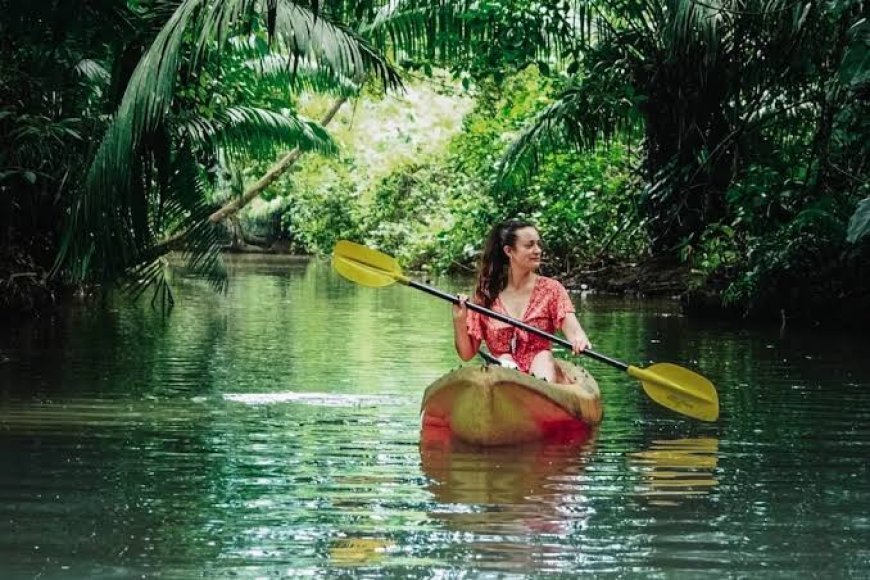
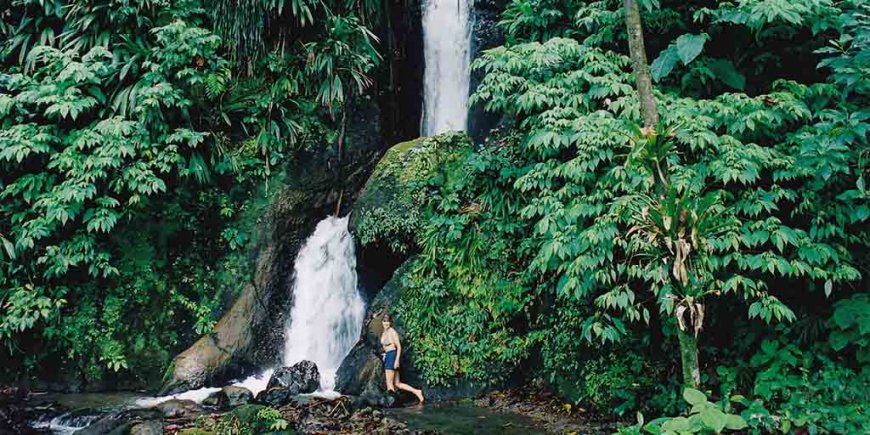
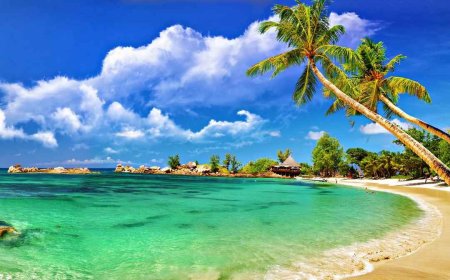
The Caribbean is not just beaches. That image white sand, clear water, a rum cocktail is real and deserves its reputation. But there is another Caribbean that most tourists miss entirely. It is vertical, green, wet, and alive in a way that no beach can match. It is the rainforest, and right now, it is at the center of the fastest-growing travel segment in the region.

Eco-tourism in the Caribbean has moved well past niche status. It now represents approximately 18% of total regional visitor spending, and the sector is growing at 12 to 15 percent annually. Investment in sustainable accommodations reached $420 million in 2024 alone, and industry projections put eco-tourism expenditures across the Caribbean at $8.2 billion by 2026. Those numbers reflect a real shift in what travelers want: direct contact with nature, experiences that feel authentic, and some assurance that their visit does more good than harm.
The rainforests are where all of that comes together. They are also where the stakes are highest. The Caribbean is a globally recognized biodiversity hotspot, and its rainforests face real pressure from deforestation, unsustainable land use, and the compounding effects of climate change. Understanding what these forests contain and what threatens them is the starting point for any serious eco-tour adventure.
What Caribbean Rainforests Actually Are
Before getting into specific destinations and tour experiences, it helps to understand what you're walking into. Caribbean rainforests are not identical to the Amazon. They are island ecosystems, meaning they evolved in relative isolation. That isolation produced extraordinary levels of endemism species found nowhere else on the planet.
Tropical rainforests globally contain more than 50% of the world's animal species and more than 250 plant species per hectare. In the Caribbean, that concentration of life is compressed further onto islands, some small enough to drive across in two hours. The result is extraordinary biodiversity packed into tight geography.
The forests range in character. Lower elevations feature dense tropical forest with large-leafed plants, buttress-root trees, and high humidity. As you climb, the vegetation shifts. Cloud forests appear above 1,000 meters, shrouded in mist and dominated by mosses, ferns, and trees draped in epiphytes. These upper montane forests are some of the most biodiverse environments on earth, and they are also the most climate-sensitive. Research from the U.S. The Forest Service identifies species in wet upper mountain cloud forests as among the most vulnerable to climate change in the entire Caribbean region because rising temperatures change the cloud condensation zone, and these species have nowhere higher to go.
The threats are real and documented. A 2024 World Bank brief on Caribbean conservation noted that unsustainable land use, deforestation, and illegal logging are driving biodiversity loss across the region. Latin America and the Caribbean recorded a 95% decline in monitored wildlife populations since 1970, according to the WWF Living Planet Index 2024 the sharpest regional drop in the world. These are not abstract figures. They describe a genuine crisis playing out in the same forests where eco-tours operate.
That context matters because it connects tourism directly to conservation outcomes. The fees you pay for a guided rainforest hike, the lodge you sleep in, the certified guide you hire, these generate income streams that give local communities and governments a financial reason to protect forest rather than clear it.
Dominica: The Baseline for Caribbean Rainforest Eco-Tourism
If you are going to pick one Caribbean island for rainforest eco-touring and nowhere else, Dominica is the rational choice. The island has no significant beach tourism. What it has instead is 290 square miles of volcanic terrain covered in some of the least-disturbed forest in the Caribbean. That is the whole value proposition.
Dominica carries the official designation "Nature Island of the Caribbean," and unlike many tourism slogans, this one holds up to scrutiny. More than 60% of the island is forested, and large sections fall within national parks and protected reserves. The Morne Trois Pitons National Park is a UNESCO World Heritage Site and covers the island's central volcanic highlands.
The signature hike on Dominica is the trek to Boiling Lake. This is not a leisurely walk. The route covers approximately 13 kilometers round-trip with significant elevation gain through the Valley of Desolation, a geothermally active landscape of steaming fumaroles, sulfurous pools, and bare volcanic rock that gives way to dense rainforest on either side. The Boiling Lake itself is the second-largest hot spring on the planet, a flooded volcanic crater where water temperatures at the edges reach 82 to 92 degrees Celsius. The center of the lake is too hot to measure accurately. On clear days, the steam column rising from it is visible from a distance. This is not a tourist attraction in the conventional sense, it is a genuine geological event you walk through four hours of jungle.
The Waitukubuli National Trail is the other defining feature of Dominica's eco-tourism infrastructure. It is 185 kilometers long and covers the island from north to south in 14 segments, making it the first long-distance hiking trail in the entire Caribbean. The trail passes through different ecological zones, coastal scrub, plantation land, river valleys, montane cloud forest and connects to indigenous Kalinago territory, giving hikers direct access to communities that have lived in Dominica's forests for centuries. Certified guides through the Dominica Discovery Authority accompany hikers on all segments, and their knowledge extends well beyond trail navigation into plant identification, local history, and ecological interpretation.
Wildlife on Dominica rewards patient observers. The Syndicate Rainforest in the island's northwest is the primary habitat for two endemic parrot species: the Sisserou, or Imperial Amazon, which is Dominica's national bird and one of the largest Amazon parrots in existence, and the Jaco, or Red-necked Amazon. Both are threatened; the Sisserou's wild population is estimated at fewer than 1,000 individuals. Guided morning birding tours in Syndicate give you the best chance of seeing both, along with a range of other forest birds including hummingbirds, kingfishers, and forest thrushes.
For whale watching, Dominica is almost without peer in the Caribbean. The island's offshore geography and rapid drop to extreme ocean depths provides ideal habitat for sperm whales year-round. Around 200 resident sperm whales feed in Dominican waters, and cetacean diversity is high, with spinner dolphins, bottlenose dolphins, and occasional orca sightings added to the mix. Half-day and full-day whale-watching tours operate from Portsmouth and Roseau.
Accommodation options in Dominica cover a significant range. Jungle Bay Dominica, a locally owned eco-lodge on the island's east coast, sits on forested grounds with views of the Atlantic and operates according to genuine sustainable principles. It sits at the higher end. For independent travelers, guesthouses throughout the island offer basic but clean lodging close to major trail heads.
Getting to Dominica is a constraint worth noting. There is no direct service from North America's major hubs. Most visitors connect through Barbados, Antigua, or another regional airport. That inaccessibility has, paradoxically, been a conservation benefit, mass tourism has not developed, and the island has retained an authenticity that more accessible destinations often lose.
El Yunque: The United States' Only Tropical Rainforest
Puerto Rico's El Yunque National Forest occupies a singular position in Caribbean eco-tourism: it is the only tropical rainforest within the United States National Forest System. That status means federal management, trail maintenance standards, and accessibility infrastructure that other Caribbean rainforests cannot match but it also means the place is genuinely popular and requires advance planning.
El Yunque covers approximately 28,000 acres (around 11,300 hectares) in northeastern Puerto Rico, rising from lowland tropical forest through several distinct ecological zones to elfin cloud forest near the summit of El Toro, the highest peak at 1,075 meters. More than 240 tree species grow within its boundaries, including 23 found nowhere else in the world. The forest receives between 100 and 200 inches of rain per year, distributed fairly evenly which means you should expect to get wet regardless of season.
Access from San Juan takes about 40 minutes by car, heading east via PR-66 and PR-3 to PR-191. There are no direct public buses, so visitors without rental vehicles need to book with a tour operator that provides transportation. The El Portal Visitor Center at the main entrance on PR-191 charges $8 per adult and serves as the orientation hub, with exhibits on forest ecology, the history of the Taíno people who considered the mountain sacred, and current conservation work. Entry to the trails themselves is free, but the main recreation area requires advance reservations a system introduced to manage visitor pressure.
Guided tours starting at around $26 bring considerable value here. El Yunque's ecology is layered in ways that are easy to walk past if you do not know what you are looking at. Licensed guides explain the coquí frog Puerto Rico's iconic small tree frog whose calls define the forest's soundscape the Puerto Rican parrot (one of the most endangered birds in the world, with ongoing recovery programs operating within the forest), and the ecological story of hurricane recovery. Hurricane Maria hit Puerto Rico in 2017 and devastated portions of El Yunque. The forest's regrowth since then provides a visible, real-time lesson in tropical resilience and disturbance ecology.
Adventure-oriented tours incorporate natural features that make El Yunque unusual among rainforest destinations. Several operators run tours to off-trail swimming holes, natural water slides carved into smooth bedrock by centuries of water flow, and cliff-jumping spots above deep pools. These experiences are physically engaging in a way that separates them from conventional nature walks. El Yunque Tours, a licensed outfitter operating since 2006, runs both daytime and night tours, the latter giving access to a forest that transforms after dark, with coquí calls at full volume, bioluminescent fungi in some areas, and a completely different roster of active wildlife.
The Yokahú Tower, a stone observation structure built by the Civilian Conservation Corps in the 1930s, provides one of the better views into the forest canopy from above, a different perspective from trail-level observation. La Mina Falls, one of the most visited features in the park, is accessible via a well-maintained trail and offers a straightforward introduction to the forest for first-time visitors or those with limited hiking experience.
Night tours at El Yunque deserve specific mention because they represent a genuinely different experience. The forest at night is not quieter, it is louder. Frogs, insects, and nocturnal birds fill the acoustic space. Guides use red-light flashlights to minimize disturbance to wildlife and point out species that are completely invisible during daylight hours. If you have one evening free in Puerto Rico and you are within range of El Yunque, this is a legitimate use of it.
Saint Lucia: Canopy Access and Industrial-Grade Ziplining
Saint Lucia is further up the eco-tourism sophistication curve than most Caribbean islands. The island has a working infrastructure for rainforest experiences that ranges from gentle nature walks to high-adrenaline canopy adventures, and the operator that built most of it Rainforest Adventures St. Lucia has run it for over 12 years.
The operation sits on the Castries Waterworks Reserve, a protected forest area first designated as a national forest in 1916. The site is approximately 2,000 feet above sea level on La Sorcière Mountain, about 30 minutes from Castries and the island's main resort area. Rainforest Adventures, which operates across several Caribbean locations, owns and manages 2,700 acres of rainforest that it holds as a conservation asset, reporting over 1,000 bird species and 2,000 exotic plant varieties across its Caribbean properties.
The flagship experience at the Saint Lucia site is the Aerial Tram an open gondola that carries visitors through the forest canopy on a slow, narrated ascent. This is specifically designed for people who want immersive observation without significant physical exertion. Naturalist guides accompany each tram car and provide commentary on the trees, plants, birds, and ecological relationships visible from within the canopy layer. The tram gives you a perspective unavailable from any trail eye-level with the mid-canopy, where most of the forest's biodiversity actually concentrates.
For the more physically inclined, the canopy zipline courses at Saint Lucia are genuinely technical. Multiple lines run through the forest at height, with the longest providing sustained aerial views of the canopy. These are not beginner rides constructed primarily for spectacle; they move fast and require engagement. The Jacquot Trail, named for Saint Lucia's national bird, the Saint Lucia Parrot (Amazona versicolor), is a guided hiking option through the reserve that focuses specifically on natural history interpretation.
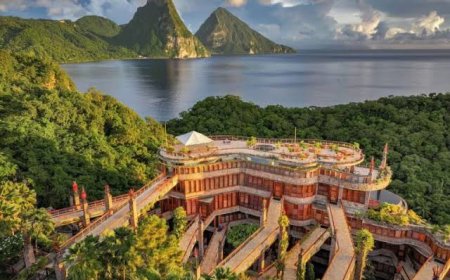
The Piton Management Area in the south of the island offers a different but complementary experience. The two Piton peaks Gros Piton at 798 meters and Petit Piton at 743 meters rise dramatically from the Caribbean Sea and are surrounded by tropical forest. The Gros Piton Nature Trail is a UNESCO-recognized hiking route that climbs through forest to the summit, with views across the island and sea. Guides are mandatory and can be arranged through the Fond Gens Libre village cooperative, which manages the trail with direct community benefit.
Saint Lucia has also developed significant capacity in sustainable accommodation. Several properties operate with genuine environmental commitments solar energy, rainwater collection, farm-to-table dining using produce from on-site gardens. These are not just marketing claims; they are operational systems that reduce the ecological footprint of visitor stays.
Jamaica: Mountains, Birds, and Community-Led Tourism
Jamaica's eco-tourism credentials center on two main ecosystems: the Blue Mountains in the east, and Cockpit Country in the northwest interior. Both are significant, and both are currently at the center of active conservation debates.
The Blue Mountains rise to 2,256 meters at Blue Mountain Peak, the highest point in Jamaica and the third-highest in the Caribbean. The Blue and John Crow Mountains National Park, which encompasses both ranges, was designated a UNESCO World Heritage Site in 2015. The park covers approximately 41,000 hectares of forest that provides habitat for more than 800 species of flowering plants, hundreds of bird species including 27 endemic to Jamaica, and over 50 species of orchid.
Hiking in the Blue Mountains is conducted through a network of licensed guides based primarily in the community of Section and several lodges that have built their businesses around responsible access. The summit hike to Blue Mountain Peak is typically done as a predawn ascent, departing around 2 am to reach the peak at sunrise before cloud cover rolls in. The trail is approximately 8 kilometers each way and gains about 800 meters of elevation through cool, mist-laden montane forest. Coffee cultivation Jamaica's famous Blue Mountain coffee occupies the lower slopes, and several eco-lodges incorporate coffee farm visits into their programs, connecting visitors directly to the agricultural systems that coexist with the forest.
Bird watching in the Blue Mountains is world-class by Caribbean standards. The Jamaican Tody, the Jamaican Blackbird (currently a conservation priority species under the Critical Ecosystem Partnership Fund), the Rufous-tailed Flycatcher, and several hummingbird species are among the targets. Experienced local guides maintain a level of knowledge about specific bird locations that significantly improves sighting rates.
Cockpit Country in the northwest is less developed for tourism but ecologically significant. It is Jamaica's largest contiguous rainforest, a karst landscape of steep-sided hills and deep sinkholes covered in dense forest. The Jamaica Environment Trust, with funding from the Critical Ecosystem Partnership Fund, is working to strengthen conservation management of the area as a Key Biodiversity Area. Community tourism in Cockpit Country includes connections with the Maroon communities descendants of African people who escaped slavery and established independent communities in the forest's interior, successfully resisting British colonial forces through guerrilla warfare. Their knowledge of the forest landscape was the foundation of that resistance, and guided tours with Maroon community members integrate cultural history with ecological education.
Mystic Mountain in Ocho Rios offers a more accessible, family-oriented entry point into rainforest eco-tourism. An aerial gondola carries visitors up into the forest canopy above Ocho Rios, where ziplines, a bobsled track, and a rainforest swimming pool are set within genuine jungle. The Mystic Pavilion includes displays on Jamaican environmental history and forest ecology alongside the cultural and sports history exhibits. It functions as a gateway experience not the deepest possible rainforest engagement, but a well-organized introduction that works for mixed groups and families with children.
Belize: The Regional Border Case Worth Including
Belize is technically Central American rather than Caribbean by strict geographic definition, but it occupies the same cultural and tourism space as the English-speaking Caribbean islands, and its rainforest eco-tourism infrastructure is the most developed in the broader region. For anyone building a Caribbean eco-tour itinerary, Belize belongs in the conversation.
The Cockscomb Basin Wildlife Sanctuary in southern Belize is the world's first jaguar reserve, established in 1986. It protects approximately 150 square miles of lowland tropical rainforest where jaguar populations have been documented at some of the highest densities in Central America. Tour operators run guided night walks and camera-trap monitoring programs that give visitors a structured, scientific way to engage with the reserve's large mammal population. Jaguar sightings are rare but real; tapir, peccary, and mountain lion encounters are more common.
The Cayo District in western Belize contains several significant rainforest destinations including Caracol, a major Maya archaeological site set within the Chiquibul National Park and the Mountain Pine Ridge Forest Reserve. The contrast between lowland jungle and highland pine forest within a short driving distance makes Belize unusually diverse for a country of its size.
Blancaneaux Lodge, owned by filmmaker Francis Ford Coppola, operates in the Mountain Pine Ridge on hydroelectric power with an organic farm and has been cited as a benchmark sustainable lodge model in Caribbean eco-tourism analysis. It demonstrates that high-quality accommodation and serious environmental commitment can coexist financially, a model now being replicated across the broader region.
The Economics: Who Benefits and How
The financial structure of eco-tourism matters enormously for conservation outcomes. Revenue that flows to external operators and leaves the local economy provides little incentive for host communities to maintain forest. Revenue that circulates locally through community guides, family-owned lodges, craft markets, and local food suppliers creates the economic foundation for conservation.
The Caribbean eco-lodge sector as a whole has matured significantly, with investment in sustainable accommodations reaching $420 million in 2024. That investment is increasingly concentrated in properties with genuine operational sustainability solar power, rainwater collection, composting, locally sourced food. These properties tend to employ more local staff, pay better wages, and maintain tighter connections to the communities around them.
Certification matters as a guide to quality, but verification varies. The Caribbean Tourism Organization's Reimagine 2025–2027 Plan explicitly targets capacity building for sustainable practices across the sector, encouraging conservation investment and expanding nature-based economic models. The CTO's partnership with conservation organizations focuses on building community-led tourism that keeps revenue local while maintaining ecological standards.
Local guides represent the most direct economic benefit path. A licensed, certified guide in Dominica, Jamaica, or Saint Lucia earns income directly from visitor fees, often supplements that income through knowledge-sharing at the community level, and has a direct personal and professional stake in the condition of the forest. When hiring guides, seek those with government or authority certification in Dominica, the Dominica Discovery Authority certification; in El Yunque, U.S. Forest Service authorization lists. These credentials mean something: they involve training in ecology, first aid, and responsible tourism practices.
Planning an Eco-Tour: Practical Considerations
Timing matters in Caribbean rainforests. Most islands have a dry season roughly from December through April and a wet season through the rest of the year. Counter intuitively, the wet season is not necessarily a poor time to visit. Waterfalls are fuller, the forest is greener and more active, and tourist numbers are lower. The main practical issue is trail conditions; some routes become slippery and potentially dangerous in heavy rain. Ask guides about current conditions before committing to technical hikes.
Physical preparation is worth taking seriously. Boiling Lake in Dominica and Blue Mountain Peak in Jamaica are full-day physical commitments with significant elevation gain. Bring waterproof boots with ankle support, not trail runners. Trekking poles reduce fatigue and improve stability on muddy descents. Sun protection matters less inside forest cover but becomes important at exposed summits and on water-based activities.
Pack light and use moisture-wicking fabrics. Cotton holds moisture and becomes uncomfortable quickly. Carry more water than you think you need; humid environments make it easy to underestimate fluid loss. Insect repellent containing DEET is standard; some forest environments have mosquito populations that make it essential rather than optional.
Book guides and tours in advance for peak season (December through April). For destinations like El Yunque, where the main recreation area requires reservations, this is not optional. For Dominica's Boiling Lake hike, guide availability can be limited during busy periods. Many operators offer small-group tours with fixed ratios of guides to visitors; these provide better experiences than large bus tours and are worth the premium if the option exists.
What Responsible Eco-Tourism Actually Looks Like
The distinction between genuine eco-tourism and tourism labelled as eco-friendly for marketing purposes is real and worth knowing. A few markers of the genuine article:
Small group sizes. Legitimate eco-tour operators limit group numbers to reduce trail impact and improve the quality of natural observation. Groups of eight to twelve are common; larger groups disrupt wildlife, compact soil on sensitive trails, and dilute the interpretive experience.
Local economic integration. Guides, lodge staff, food suppliers, and transport operators should be from the host community when possible. Ask tour operators directly about their employment and procurement practices.
No wildlife interaction. Legitimate wildlife tours observe animals in their natural behaviour without feeding, touching, or habituating them to human presence. Any operator offering close-contact wildlife experiences handling wild animals, feeding primates, riding elephants (not a Caribbean issue, but the principle applies) is not operating by conservation standards.
Leave-no-trace practices. Good guides model waste management, stay on designated trails, and explain why those practices matter. This is education as well as rule enforcement.
Contribution to protected areas. Entry fees to national parks fund management, ranger salaries, and infrastructure maintenance. Paying them matters. Some operators also contribute a percentage of tour fees directly to conservation organizations; this is worth asking about when comparing providers.
The Bigger Picture
The Caribbean's rainforests are under genuine pressure. Climate change is shifting cloud zones, intensifying hurricanes, and warming the ocean temperatures that influence island precipitation. The forests that exist today are already smaller than they were fifty years ago, and the species populations within them have declined sharply. This is not a doom narrative, it is context.
Well-designed eco-tourism is one of the more credible tools available for forest conservation because it creates economic alternatives to logging and agriculture. When a family in Dominica's interior earns income from tourism, the forest has a different value than if the only option is to clear it for crops. When a Jamaican Blue Mountains community runs a bird-watching cooperative, the birds are an economic asset. These are small-scale interventions, but they scale across communities and accumulate into meaningful landscape-level conservation outcomes.
The travellers who do this best are the ones who go with knowledge, engage seriously, hire local, and leave the forest better than they found it. Not symbolically literally. The trail is cleaner, the guide was paid fairly, the lodge bought food from the village market, and the fee went to the park. That is the full circuit of responsible eco-tourism, and the Caribbean's rainforests are one of the best places on earth to run it.
Quick Reference: Key Destinations
Dominica Waitukubuli National Trail (185 km, 14 segments), Boiling Lake hike (full day, strenuous), Sisserou parrot birding in Syndicate Forest, year-round whale watching offshore. Dry season December to April. Connect via Barbados, Antigua, or Guadeloupe.
Puerto Rico El Yunque Only U.S. tropical rainforest, 28,000 acres, 240+ tree species. Reservation required for the main recreation area. Guided tours from $26; night tours available. 40 minutes from San Juan by car.
Saint Lucia Rainforest Adventures at Castries Waterworks Reserve: Aerial Tram, canopy zipline, Jacquot Trail. Gros Piton hiking via Fond Gens Libre cooperative. 30 minutes from Castries.
Jamaica Blue Mountains: predawn summit hike, world-class birding, coffee farm integration. Cockpit Country: Maroon community tours, Key Biodiversity Area. Mystic Mountain Ocho Rios: family-accessible canopy gondola and ziplines.
Belize Cockscomb Basin Jaguar Reserve, Cayo District ruins and forest, Mountain Pine Ridge. Best developed eco-lodge infrastructure in the broader region.
What's Your Reaction?
 Like
0
Like
0
 Dislike
0
Dislike
0
 Love
0
Love
0
 Funny
0
Funny
0
 Angry
0
Angry
0
 Sad
0
Sad
0
 Wow
0
Wow
0