










Reggae, Soca & Calypso: What to Expect at Each Festival
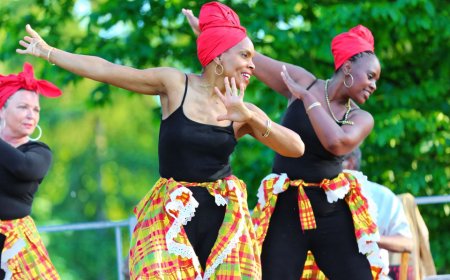
Reggae, soca, and calypso festivals reflect different sides of Caribbean culture. Reggae festivals are slower and cantered on live music, lyrics, and a relaxed audience that listens and connects with the message. Soca festivals are the opposite in energy they are built for constant movement, with loud, fast music, street parades, and crowds actively dancing and participating for hours, especially during Carnival. Calypso festivals focus on storytelling and social commentary, often in a structured setting where performers compete and audiences listen closely to the lyrics and meaning. The main difference comes down to experience: reggae is about feeling and reflection, soca is about energy and participation, and calypso is about words and interpretation. Events like Trinidad Carnival show how all three can come together, with soca driving the action, calypso shaping the narrative, and reggae adding musical depth.
Introduction: Three Genres, One Heartbeat

Walk through any Caribbean neighbourhood in festival season and you'll hear a bass line crawling up through the pavement, a horn section cutting through the heat, a crowd that doesn't need much encouragement to move. But what you're hearing isn't a single music. It's three distinct traditions, each with its own roots, its own rules, and its own kind of festival.
Reggae, Soca, and Calypso are not interchangeable terms. They come from different places, different historical moments, and different creative impulses. Reggae grew out of 1960s Jamaica, built on the rhythmic legacy of ska and rocksteady, shaped by Rastafarian philosophy and social protest. Calypso has roots that go back centuries in Trinidad, developed by enslaved Africans who used song as commentary, satire, and resistance. Soca emerged in the 1970s as Calypso's faster, floor-shaking cousin still Trinidadian in spirit, but stripped of the long-form political narrative and loaded instead with pure physical energy.
The festivals built around these three genres reflect those differences. A reggae festival and a soca carnival are not the same experience. The sounds are different. The structure is different. The crowd culture is different. What you eat, when you arrive, what you wear, how you dance all of it shifts depending on which one you're attending.
This guide breaks down what each genre's festival circuit actually looks like, what's happening in 2025 and 2026, and what you can realistically expect when you show up.
Part One: Reggae Festivals
The Music
Reggae is built on the offbeat. The rhythm guitar hits on the "and" the upstroke between the beats and everything else locks around that. The tempo is typically slow to mid-paced, and the bass plays a dominant melodic role rather than just keeping time. Lyrically, reggae covers a wide range: Rastafarian spirituality, anti-colonial politics, romance, social commentary, and increasingly, global consciousness.
Over the decades, reggae has branched. Roots reggae stays close to the original 1970s sound artists like Burning Spear, Culture, and Israel Vibration. Dancehall, which exploded in the 1980s, is faster, more digital, and driven by DJs and deejaying culture. Then there's lovers rock, dub, reggaeton (a distant Latin American cousin), and the wave of American reggae-rock bands that emerged in California in the 1990s and 2000s Sublime, Slightly Stoopid, Rebelution, and others who have built their own massive festival audience.
A reggae festival might feature all of these, or it might focus on one strand. That distinction matters when you're choosing which one to attend.
Major Festivals: What's Happening in 2025–2026
Reggae Sumfest Montego Bay, Jamaica
This is the biggest. Reggae Sumfest is held annually in July at the Catherine Hall Entertainment Complex in Montego Bay, and it has been running since 1993. The 2025 edition, the 34th staging, ran from July 13–19 and was described by the Jamaica Hotel and Tourist Association as record-breaking in both crowd size and economic impact.
The 2025 lineup showed what Sumfest can do when it puts its mind to it. Night One was a dancehall showcase featuring Vybz Kartel (making his first Sumfest appearance in over 14 years following his release from prison), Masicka, Tommy Lee Sparta, Skeng, Govana, and Shaneil Muir. Night Two blended reggae and R&B, with Tarrus Riley, Protoje, Lila Iké, and American R&B legend Toni Braxton rounding out the bill.
The week around the main festival nights includes a free Street Dance, an All White Party, a Global Fete, Family Fun Day, and industry seminars meaning even fans who can't afford the main event tickets still get something.
The Jamaica Tourist Board projected a US$12 million economic impact for the 2025 event, with 8,000 international visitors expected. The actual numbers appeared to exceed that of hotels from Trelawny to Negril were reported fully booked, and Airbnb occupancy across Hanover and Trelawny was described as very strong. International visitors made up roughly 43% of arrivals during Sumfest week in 2024 and contributed an estimated US$25 million to Montego Bay's economy that year.
Sumfest 2026 is scheduled for July 12–18, 2026, and is expected to again anchor the Montego Bay tourism calendar.
What to expect at Sumfest: It's a large-venue outdoor concert experience. Catherine Hall is a proper event complex with professional sound, lighting, and multiple bars and food vendors. The crowd is local and international and expects a significant Jamaican diaspora presence from New York, Miami, Toronto, and London. The dress code is casual to smart-casual. Arrive on time for the acts you want to see, as the lineup runs through the night and sets can run long. Security is present but the venue is large, so stay with your group.
Rototom Sunsplash Benicàssim, Spain
Europe's largest reggae festival, running August 16-22, 2026. Rototom is held on Spain's eastern coast and draws artists and attendees from across the world. The festival is structured around multiple stages, a Reggae University stage for panels and talks, a sound system arena for dub and dancehall, a roots stage, and a main stage for headline acts. It runs for a full week and includes cultural activities, food markets, and activist programming alongside the music.
This festival skews toward roots reggae and Rastafarian culture, though it covers the full spectrum. Expect conscious lyrics, natural food vendors, and a crowd that takes the culture seriously alongside the party.
California Roots Monterey, California
Scheduled for May 22–24, 2026, California Roots is the biggest reggae festival in the United States and the anchor event of the American reggae-rock scene. Acts like Rebelution, Stick Figure, SOJA, Slightly Stoopid, Iration, and Fortunate Youth dominate the lineup year after year. The sound here is guitar-driven, melodic, and positive in tone, this is not the sound of Kingston in 1975, but it draws tens of thousands of fans who have grown up on this style and are genuinely devoted to it.
The setting is outdoors, the weather in Monterey in May is cool and often foggy, and the crowd is predominantly American and young-to-mid-age. It's well-organised, family-friendly, and has a strong vendor market with food, clothing, and accessories.
Reggae Rise Up Multiple US Cities
Reggae Rise Up is a production company running festivals across the United States throughout the year. Their 2026 schedule includes events in Arizona (April 17–19), Austin TX (April 17–19), Oregon (June 12–14), and Florida. The Florida edition historically held at Vinoy Park in St. Petersburg features artists like Slightly Stoopid, Rebelution, Sublime, 311, Iration, SOJA, and Cypress Hill for its 2026 edition.
These festivals are all-ages, outdoor, and run for two to three days. They're accessible entry points to the live reggae experience for American audiences.
Rebel Salute Jamaica
Held each January in St. Ann, Jamaica, Rebel Salute is a roots reggae festival with a strict no-alcohol, no-meat policy. It was founded by artist Tony Rebel and is held around his birthday on January 17. The focus is firmly on conscious reggae, no dancehall, no skin-out dancing, no alcohol sales on site. The atmosphere is deeply reverent toward the music and the culture. Artists have included Morgan Heritage, Sizzla, Luciano, Jah Cure, and Buju Banton.
If you're coming specifically for Rastafarian roots music and want a more sober, culturally focused environment, Rebel Salute is worth the trip.
What to Bring to a Reggae Festival
Comfortable footwear is essential, most reggae festivals are outdoor events with large grounds. Bring cash as not all vendors take cards. Check the lineup schedule in advance, as large festivals run multiple stages simultaneously. Arrive early for headline acts, particularly at Jamaican venues where late-night shows can draw massive, late-arriving crowds.
Part Two: Soca Festivals
The Music
Soca was created in Trinidad. The name comes from "soul of calypso," coined by artist Lord Shorty (Ras Shorty I) in the early 1970s. The goal was to inject new energy into calypso by speeding it up, blending it with Indian rhythmic traditions (which Shorty called "Indian Soca"), and making it more dance-floor friendly.
By the 1980s and 1990s, soca had fully separated from calypso. It had its own stars David Rudder, Arrow, Byron Lee and its own sound: punishing bass, rapid-fire horn stabs, and percussion arrangements designed specifically to move bodies in the street. Today, soca has two primary sub-genres: Power Soca (fast, high-energy, for jumping and waving) and Groovy Soca (slower, melodic, for winning and dancing). Every Carnival season, the International Soca Monarch competition in Trinidad crowns winners in both categories.
Major soca artists working today include Machel Montano (the undisputed King of Soca, with a career spanning over 35 years), Kes, Bunji Garlin, Fay-Ann Lyons, Nailah Blackman, Patrice Roberts, and Erphaan Alves. A generation of younger artists Swappi, Terri Lyons, Shal Marshall are pushing the genre into new territory.
Trinidad Carnival: The Mother Festival
Everything in the soca world orbits around Trinidad Carnival. All other soca events globally Miami Carnival, Notting Hill Carnival, Toronto Carnival trace their format, their music, and their cultural logic back to Port of Spain.
Trinidad Carnival 2026 took place on February 16–17, but the season began months before that. The National Carnival Commission officially launched the 100-day countdown on November 7, 2025, with events at Brian Lara Promenade in Port of Spain. By January 2026, fetes were already running Sokah Origins: T.G.I.C. (Thank God It's Carnival) on January 4 featured artist Nailah Blackman in a one-night concert marking the unofficial start of the season.
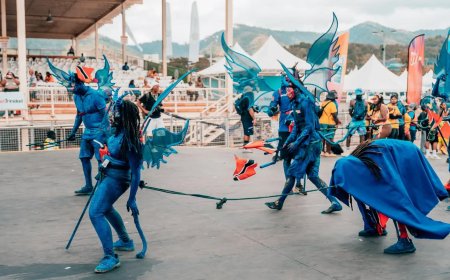
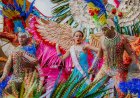
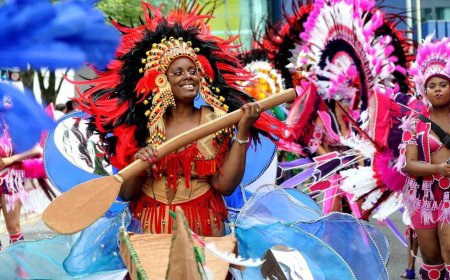
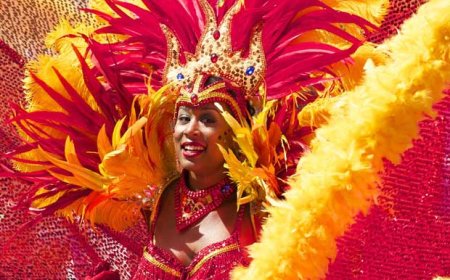
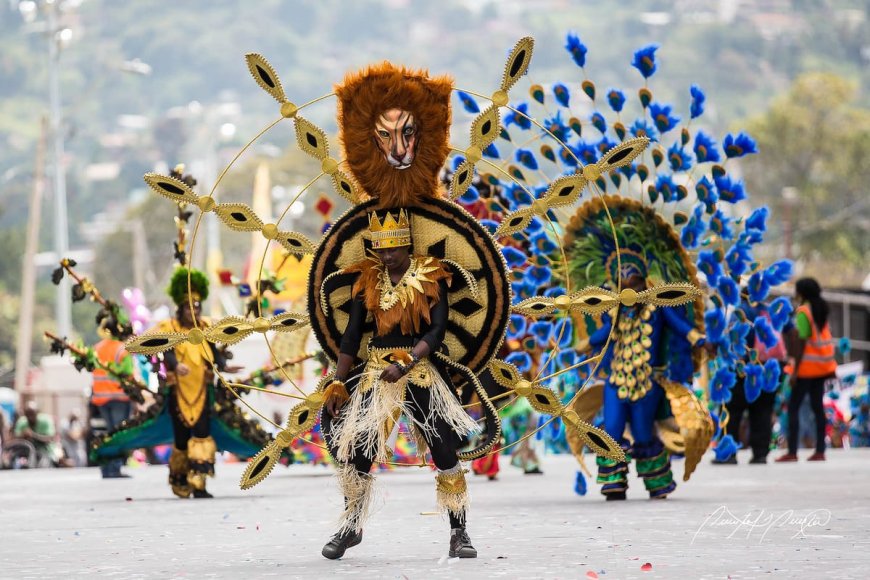
The structure of Trinidad Carnival is dense and layered. The main two days (Carnival Monday and Tuesday) are the street parade masqueraders in feathered, beaded, jewelled costumes dancing behind music trucks through Port of Spain. But the weeks before are where much of the real experience happens:
J'Ouvert Carnival Monday morning begins before dawn with J'Ouvert (from the French "jour ouvert" daybreak). Revellers cover themselves in paint, mud, oil, and powder, and dance through the streets from around 4 AM. It's loud, chaotic, and deliberately stripped of glamour. It's considered the purest expression of the Carnival spirit.
Panorama The steelpan competition. Steelbands, some with over 100 musicians each, perform elaborately arranged versions of the season's most popular soca tunes. The Panorama final at Queen's Park Savannah draws huge crowds and is a festival in itself.
Dimanche Gras The Sunday before Carnival Monday features the National Calypso Monarch competition and the Kings and Queens competition, where costume designers present their largest, most extravagant creations.
Throughout the season, dozens of ticketed parties (fetes) are held across the island. These range from beach parties to all-inclusive events to paint parties and boat rides. Some of the most well-known include Soca Brainwash, Stink & Dutty, and Fete with the Saints. Ticket prices vary significantly; one of the 2026 all-inclusive events, the Hyatt Lime, had Platinum tickets priced at US$399.
Other Major Soca Carnivals
Crop Over Barbados Dates 2026: July 29 – August 4 (Kadooment Day: August 3)
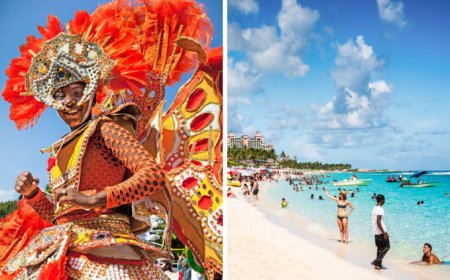
Crop Over is Barbados's premier cultural festival, originally marking the end of the sugarcane harvest in the 17th century, formally revived in 1974. The six-week season includes the Pic-O-De-Crop calypso competition, the Soca Monarch finals, Foreday Morning (a paint and powder jump-up), Junior Kadooment, and the main Kadooment Day parade the climax of the celebration, where masquerade bands in feathered and sequined costumes march down the Mighty Gruner Highway in Bridgetown.
Accommodation during Crop Over typically costs US$200–500 per night and should be booked months in advance. Fetes and parties are separately ticketed and most are all-inclusive. One practical note: wearing camouflage clothing or accessories is illegal in Barbados and will be confiscated.
Saint Lucia Carnival Castries, St. Lucia Dates 2026: July 17–22
St. Lucia Carnival includes the full Caribbean Carnival structure Soca Monarch, Calypso competitions, King and Queen of the Bands, Panorama, and J'ouvert. It's smaller than Trinidad but has a strong local music scene and a beach-side setting that draws both regional and international visitors.
Grenada Carnival SpiceMas Dates 2026: August 5–12
Grenada's carnival is known for its "Jab Jab" tradition masqueraders covered in oil or paint, often carrying horns or whips, dancing in the streets during J'ouvert. The SpiceMas Soca Monarch competition and Monday Night Mas are major draws. The island's small size makes it an intimate festival experience compared to Trinidad.
Vincy Mas St. Vincent and the Grenadines Dates 2026: June 27 – July 8
Vincy Mas is the largest cultural celebration in St. Vincent. It includes street jump-ups, calypso contests, and the Parade of the Bands. The island's creative costume traditions are well-regarded across the region.
What to Expect at a Soca Carnival
Soca carnivals are physically demanding; you'll be dancing, waving, and jumping in often intense heat for hours. Comfortable, lightweight clothing is essential. Costumes for the main parade are purchased in advance through the various mass bands, and prices vary significantly depending on the level of costume. Mas band registration typically opens months before the event.
J'Ouvert is a separate experience from the daytime parade dress in old clothes or buy a J'Ouvert costume, as you will end up covered in paint or mud. Drink plenty of water. The music trucks are enormous and loud the soca trucks carry the DJ and performers and move through the streets while revellers follow.
Part Three: Calypso Festivals
The Music
Calypso is the oldest of the three genres covered here. Its roots lie in West African griot traditions brought to the Caribbean by enslaved people in the 17th and 18th centuries. By the 19th century, calypso had developed in Trinidad as a form of social commentary and oral journalism calypsonian tents (performing spaces) were where the community gathered to hear satirical songs about politicians, scandals, and social issues. Calypsonians competed for the title of Calypso Monarch.
The form is fundamentally political. The great calypsonians Lord Kitchener, Mighty Sparrow, David Rudder used the art to engage directly with current events, land disputes, independence movements, race relations, and the hypocrisy of power. A well-crafted calypso is built on wit, wordplay, and social observation.
Today, calypso competes with soca for attention during Carnival season, and often loses the popular contest. But serious calypso competitions still draw devoted audiences, and the Calypso Monarch competition remains a prestigious crown in Trinidad and across the Caribbean.
Where to Find Calypso
National Calypso Monarch Trinidad
The premier calypso competition is held annually as part of Trinidad Carnival's Dimanche Gras show. The competition has multiple rounds, tents, semi-finals, and the final. Calypsonians perform two songs each in the final and are judged on melody, lyrics, social commentary, and performance. The competition is broadcast nationally and followed closely by the public.
Antigua Carnival Calypso Competition Dates 2026: July 27 – August 5
Antigua Carnival, running since 1957, includes calypso and soca competitions alongside pageants, fetes, and the grand parade. The calypso competition is a central event in the season's calendar.
World Creole Music Festival Dominica Dates 2026: Late October/November
Dominica's World Creole Music Festival is a three-night event celebrating a wide range of Creole music traditions, including Cadence-lypso (Dominica's own blend of calypso and African rhythms), Afrobeat, Kompa, Zouk, and reggae. It's a culturally rich event that goes beyond pure entertainment into a serious celebration of Creole identity. Artists from across the French Caribbean, Haiti, Martinique, Guadeloupe, and the Anglophone Caribbean appear together.
Batabano Cayman Islands Dates 2026: May 2–9 (Adult Parade)
Batabano is the Cayman Islands' annual carnival, featuring calypso and soca dancing, steel drums, elaborate costume parades, and food. It's smaller in scale than the major Trinidad-style carnivals but is well-organised and draws visitors from the Caribbean and North America.
Case Study: Reggae Sumfest 2025 How One Festival Moves an Entire Economy
Reggae Sumfest is not simply a concert series. Over 34 years, it has become a cultural, commercial, and political and the 2025 edition offered the clearest illustration yet of what a well-executed Caribbean music festival can do.
The Setup
The Jamaica Tourist Board projected a US$12 million economic impact before the festival started. The projection was based on an expected 8,000 international visitors attending the July 13–19 staging. That number, as it turned out, was exceeded.
Promoter Joe Bogdanovich's company, Downsound Entertainment, deployed over 150 staff in Montego Bay alone; the figure doesn't include the hotel workers, taxi drivers, food vendors, hairdressers, and supermarket staff who benefit indirectly every year the festival runs.
The Vybz Kartel Factor
The 2025 edition had an unusual headline. Vybz Kartel, widely considered Jamaica's most popular dancehall artist and one of the most influential Caribbean artists of the 21st century, had been imprisoned since 2011. His release in 2024 and subsequent return to public life created enormous demand for a live performance. Sumfest gave it to him.
Tourism Minister Edmund Bartlett called the 2025 crowd "the largest I've seen at Reggae Sumfest," directly crediting Kartel's appearance as a significant factor. Security and crowd management were tested; some patrons reported being caught in crowd surges on Night One and, in some cases, encountering pickpockets. The venue size and the exceptional demand created conditions that organisers will need to address in future editions.
Night Two with Tarrus Riley, Protoje, Lila Iké, and Toni Braxton offered a different atmosphere entirely, blending conscious roots acts with R&B, and was praised for its balance.
The Economic Ripple
The JHTA (Jamaica Hotel and Tourist Association) Second Vice-President Kerry Ann Quallo Casserly described the impact in direct terms: every hotel in the region was completely sold out, villas and Airbnbs were full, and the full chain of businesses transportation companies, craft vendors, bars, restaurants, attractions all reported significantly increased activity.
Diaspora participation was a key driver. Visitors came primarily from the United States, with significant numbers from Canada, the UK, and continental Europe. This translates directly into foreign exchange earnings for Jamaica, an economy where tourism is a central pillar.
In 2024, international visitors made up approximately 43% of arrivals during Sumfest week, contributing an estimated US$25 million to Montego Bay's economy. The 2025 figures, when calculated, were expected to exceed that.
What Changed Under Down sound
Downsound Entertainment acquired Reggae Sumfest in 2016. One of the significant decisions made under CEO Joe Bogdanovich was to phase out the "International Night" format that had previously featured non-Jamaican acts hip hop, R&B, pop and replace it with a full focus on Jamaican reggae and dancehall talent.
This was a risk. International acts had served as a mainstream draw for years. But the decision proved correct. Record attendance followed, and the festival is now understood globally as a showcase specifically for Jamaican music which makes it more commercially valuable to both tourism authorities and international audiences who want an authentic cultural experience, not a generic pop bill.
The Community Commitment side is real too. The free Street Dance allows local residents who cannot afford main event tickets to participate. Family Fun Day offers free health checks and educational activities for children. Bogdanovich has said consistently that the festival's community responsibility is not just marketing, it's a structural commitment.
Lessons from Sumfest
The 2025 edition illustrates three things that apply broadly to Caribbean music festivals:
First, a festival with a clear cultural identity outperforms one that tries to be everything to everyone. Sumfest's pivot to Jamaican talent only made it stronger.
Second, the economic value of a major festival extends far beyond ticket sales. The accommodation, transport, food, and service sectors all benefit substantially, particularly in smaller economies where a single week of elevated tourist activity can be transformative.
Third, crowd management and safety need to scale alongside popularity. The pick pocketing and crowd surge incidents at Night One in 2025 were documented in the press and pointed to areas where future planning needs to improve. A festival's reputation is partly built on how safely it operates, not just how well it sounds.
Case Study Reggae Sumfest 2025 goes deep: international visitors made up about 43% of arrivals during Sumfest week in 2024, contributing an estimated US$25 million to Montego Bay's economy. The case study also looks at the Vybz Cartel effect, the crowd management challenges, and what Down sound Entertainment do creative decisions reveal about running a culturally grounded festival.
The comparison table near the end is useful if you want to quickly contrast the three festival types for a reader.
Practical Planning: Before You Go
Reggae festivals are generally the most accessible for international visitors with no prior knowledge of the scene. Most are ticketed events at fixed venues, with hotel accommodation available in nearby towns. The biggest risk is missing acts you want to see because of long lineups or multiple-stage scheduling conflicts do your research before you arrive.
Soca carnivals require more advanced work. Costume packages for the main parade can sell out months before the event. All-inclusive fee tickets are limited and can be expensive. Flights and accommodation during Carnival week in Trinidad, during Crop Over in Barbados, or during Saint Lucia Carnival fill up fast and at premium prices. Book early, budget carefully, and decide in advance whether you're playing mas (in costume, in the parade) or watching.
Calypso competitions are the easiest to attend spontaneously; they're ticketed events, usually held in stadiums or savannah grounds, and don't require costume or advance planning beyond getting a ticket. They're also the deepest cut culturally; calypso lyrics are layered, topical, and sometimes written in dialect. A little background reading on the competing artists and the current political context of the host nation will make the experience much richer.
Where the Genres Are Going
All three genres are in a period of evolution and some tension.
Reggae has globalised in ways Bob Marley could not have predicted. Japan has a significant roots reggae scene. Spain hosts the largest reggae festival in Europe. American bands like Slightly Stoopid and Rebelution regularly outsell Jamaican acts on the US touring circuit. This spread is both a testament to the music's power and a source of debate about authenticity and ownership.
Soca has pushed aggressively into cross-genre collaboration. Fay-Ann Lyons collaborated with US rapper Maino for the 2026 season. Machel Montano has consistently worked with hip hop and Afrobeats producers. The tempo of soca has also accelerated, some current Power Soca tracks are nearly as fast as UK garage or drum and bass. Whether this expansion strengthens the genre or dilutes it is a conversation that continues in every tent and radio station across the Caribbean.
Calypso is the one fighting hardest for survival. The Calypso Monarch competition still exists still produces extraordinary performances, and still commands respect but its audience is aging, and soca has taken the popular energy that calypso once commanded. Some calypsonians have adapted by addressing issues that soca won't touch: corruption, poverty, gender violence. Others have simply continued in the tradition, trusting that the form's depth will outlast the era of speed and volume.
All three genres are worth your time. They're not museum pieces. They're living traditions that are changing in real time, shaped by the communities that created them and the global audiences that have adopted them.
Show up. Listen properly. Move when the music tells you to.
Conclusion
Reggae, soca, and calypso festivals offer three distinct experiences:
- Reggae festivals emphasize listening and message
- Soca festivals prioritize energy and participation
- Calypso festivals focus on storytelling and competition
Understanding these differences helps set realistic expectations and improves the overall experience.
Caribbean festivals are not interchangeable. Each genre creates its own environment, shaped by history, music style, and audience behaviour. Attending them with this context allows for a deeper appreciation of what is happening beyond the surface.
What's Your Reaction?
 Like
0
Like
0
 Dislike
0
Dislike
0
 Love
0
Love
0
 Funny
0
Funny
0
 Angry
0
Angry
0
 Sad
0
Sad
0
 Wow
0
Wow
0