
























All-Inclusive Options for Digital Nomads
All-inclusive options for digital nomads in the Caribbean are becoming more practical, but the best choice is not simply the resort with the most meals and activities. A good long-stay package needs reliable internet, a proper workspace, stable electricity, accommodation, food, and a clear visa or stay arrangement. Barbados, Curaçao, Dominica, the Bahamas and Montserrat remain among the Caribbean destinations associated with remote-work or digital-nomad programs in 2026. For remote workers, Barbados and Curaçao stand out for infrastructure and connectivity, while Dominica can appeal to people who want a quieter, nature-focused lifestyle. Resort-style packages can simplify accommodation, meals and services, while monthly rentals, serviced apartments and coiling arrangements may provide better value for someone staying several weeks or months. Current Caribbean long-stay listings include month-to-month accommodation options across destinations such as Barbados, Antigua, Aruba, Bonaire and the Cayman Islands.


The idea of working remotely from the Caribbean has moved beyond the traditional picture of a laptop on a beach. For a digital nomad, the real challenge is not finding a beautiful destination. It is finding a place where accommodation, reliable internet, food, workspace, transportation and everyday services can work together without creating a complicated monthly routine. This is where all-inclusive accommodation can become useful.

An all-inclusive stay can remove many of the decisions that normally come with living abroad. Instead of renting an apartment, arranging utilities, buying groceries, finding restaurants and paying separate bills, a remote worker can choose a property where accommodation, meals, Wi-Fi and some activities are included in one price. That convenience can be especially useful for people staying for several weeks or a few months.
However, a traditional seven-night all-inclusive holiday is not necessarily suitable for someone who has to work eight hours a day. A resort may provide excellent food and a beach but have unreliable Wi-Fi, noisy common areas, limited desks or poor conditions for video calls. The best options for digital nomads therefore need to be evaluated differently from ordinary vacation resorts.
In 2026, the Caribbean has a growing range of remote-work options, from traditional resorts offering extended stays to furnished apartments, coliving properties and work-friendly accommodation in destinations such as Barbados, Curaçao, the Dominican Republic and other islands. Several Caribbean jurisdictions also operate remote-work or digital-nomad immigration programmes, although the rules and availability vary and should be verified with the relevant authorities before making long-term plans.
What Does “All-Inclusive” Mean for a Digital Nomad?
For a vacation traveler, all-inclusive usually means accommodation, meals, drinks and selected activities are included in the room rate. For a digital nomad, that definition needs to be expanded.
A useful work-friendly package should ideally include dependable internet, a comfortable room, electricity, air conditioning, a proper workspace and access to meals without requiring the guest to leave the property several times a day. Some properties may also include laundry, airport transfers, fitness facilities, coworking areas or organized activities.
The most important point is to check exactly what the price includes. “All-inclusive” does not automatically mean unlimited internet, premium Wi-Fi, international calls, laundry, minibar items, airport transfers or access to every resort facility.
A remote worker should also distinguish between included Wi-Fi and work-quality internet. Streaming a movie and conducting a two-hour video conference are not the same test. A property may advertise high-speed internet while still experiencing congestion during busy periods.
This is why digital nomads should ask about actual connection speed, backup internet, power reliability and whether the Wi-Fi reaches the room or workspace before booking a long stay.
Why All-Inclusive Accommodation Can Work Well
The biggest advantage is predictability.
A remote worker who spends several months moving between destinations may not want to deal with utility deposits, internet installation, furniture purchases and short-term rental agreements every few weeks. An all-inclusive property can reduce those administrative tasks.
It can also make budgeting easier. If accommodation and meals are included, a nomad can estimate the majority of monthly living expenses before arrival. This is particularly useful for freelancers and independent professionals whose monthly income may vary.
There is also a social advantage. Traditional hotels can feel isolating for someone staying alone for several weeks. A resort, coliving property or long-stay community can create opportunities to meet other remote workers, travelers and local residents.
But convenience comes with a price. Caribbean destinations can be expensive compared with established digital-nomad hubs in Southeast Asia or parts of Latin America. A 2026 Caribbean digital-nomad analysis notes that the region generally carries higher accommodation costs than lower-cost remote-work destinations, although expenses vary substantially between islands and lifestyles.
Barbados: A Strong Choice for Longer Remote Stays
Barbados remains one of the most established Caribbean destinations for remote workers. Its importance comes partly from its Welcome Stamp programme, which was introduced specifically for remote workers and allows eligible applicants to live and work remotely from the island for an extended period.
Current 2026 information lists the Welcome Stamp as a 12-month programme, with a reported income requirement of more than US$50,000 annually and a US$2,000 application fee for an individual. Applicants should verify current requirements directly with Barbados authorities because immigration rules and fees can change.
For a digital nomad, Barbados offers something that a purely resort-based destination may not: a functioning local environment outside the hotel. There are restaurants, cafés, coworking facilities and established residential communities where remote workers can create a normal weekly routine.
That makes Barbados particularly suitable for someone who wants to combine resort convenience with ordinary island life.
A nomad could spend part of the week in a resort or serviced apartment and use coworking facilities when important meetings require a professional environment. This can be more practical than trying to work every day from a poolside table.
Barbados is not among the cheapest Caribbean options. Accommodation, imported products and restaurant prices can add up quickly. But for remote professionals who value infrastructure, English-language services and a mature tourism industry, the higher cost may be easier to justify.
Curaçao: A Practical Mix of Tourism and Remote Work
Curaçao offers another interesting model for digital nomads. The island combines a developed tourism industry with residential areas, restaurants and services that operate beyond traditional resort zones.
Its @HOME in Curaçao programme has been promoted as a remote-work option, making it possible for eligible foreign workers to spend an extended period on the island while continuing their overseas employment or business activities. Current 2026 comparisons continue to list Curaçao among the Caribbean destinations with a remote-work route, although applicants should confirm the current rules before applying.
For all-inclusive travelers, Curaçao has an important advantage: you do not have to stay in a large resort for the entire trip. A digital nomad can choose between hotels, serviced accommodation and residential rentals, depending on how much convenience they want.
This creates a useful middle ground. Someone who needs meals and housekeeping can choose a hotel, while someone staying for several months may prefer an apartment with a kitchen and occasional housekeeping.
The island can therefore suit remote workers who want the convenience of tourism infrastructure without spending every day inside a resort.
Dominican Republic: More Flexible Accommodation Choices
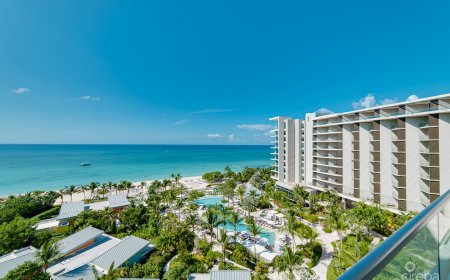
The Dominican Republic is one of the more interesting Caribbean markets for digital nomads because accommodation comes in many different forms. Punta Cana, Bávaro, Las Terrenas, Santo Domingo and other locations offer hotels, resorts, furnished apartments and villas.
Punta Cana is particularly relevant for people looking for an all-inclusive environment. Long-stay offers exist in the market, including monthly resort packages and furnished apartments. One current 2026 listing, for example, reports extended-stay all-inclusive rates in the Bávaro area of roughly US$2,800–$3,600 per month, although rates vary by property, season and package.
That kind of arrangement can be attractive to someone who wants to stay for four to eight weeks without committing to a conventional lease.
The disadvantage is that resort life can become repetitive for someone working remotely. A person who spends most of the day inside the room may discover that the all-inclusive package provides excellent vacation facilities but not the working environment they expected.
Las Terrenas provides a different model. Recent 2026 local guides describe fiber internet, coworking spaces, cafés and furnished monthly accommodation as part of the town's growing remote-work ecosystem.
For many nomads, that combination may be more useful than a traditional resort because work and local life are mixed together.
Antigua and Barbuda: Check the Current Immigration Position
Antigua and Barbuda has historically been associated with its Nomad Digital Residence programme, which was designed for people able to work remotely. Some current websites still describe the programme as available, but 2026 sources conflict on its present status. One recent 2026 comparison states that the programme has closed and points applicants toward the official programme website for confirmation.
This is an important lesson for digital nomads: never rely on an old blog post when planning immigration.
Visa and residence programmes can change, close, reopen or modify their income requirements and fees. A person planning to spend several months in the Caribbean should check the official immigration authority of the specific country before purchasing a non-refundable long-term package.
From an accommodation perspective, Antigua remains relevant because of its established tourism sector and resort infrastructure. However, a remote worker should evaluate internet, workspace and long-stay pricing separately from immigration status.
Dominica: Work and Nature
Dominica takes a different approach from heavily resort-oriented islands. Its Work in Nature programme has been designed to attract remote workers and longer-term visitors while connecting them with a less urban environment.
For a digital nomad who wants nature, hiking and a slower pace rather than nightlife and large resort complexes, Dominica can be appealing.
The trade-off is that all-inclusive options may be less extensive than in destinations such as Punta Cana. This means the best arrangement may involve a guesthouse, furnished apartment or small hotel rather than a large all-inclusive resort.
The remote worker needs to be particularly careful about internet reliability and backup power when choosing accommodation outside major tourism areas. A beautiful location is of little practical value if an important client call is interrupted.
The Difference between a Resort and a Coliving Property
Traditional resorts and digital-nomad coliving properties solve different problems. A resort is designed primarily around hospitality. Food, housekeeping, pools, entertainment and recreation are usually central to the experience.
A coliving property is designed around longer stays and shared community. It may provide private bedrooms, shared kitchens, workspaces, fast internet and organized social events.
For a digital nomad staying one or two weeks, a resort may be the easier option. For someone staying two or three months, coliving can provide a better balance between cost, work and community.
Some modern coliving properties use monthly packages that include accommodation, meals and internet. Outside the Caribbean, these models are becoming more common, demonstrating the direction of the broader remote-work accommodation market. One current example in Costa Rica offers monthly all-inclusive accommodation with meals and high-speed Wi-Fi from around US$1,200, although this is not a Caribbean property and should be viewed only as a comparison.
The Caribbean market is gradually developing similar long-stay concepts, but availability varies greatly between islands.
Internet Should Be Your First Question
For a digital nomad, internet is not a luxury. It is the infrastructure that makes the trip possible.
Before booking, ask four questions. What is the advertised download and upload speed? Is there a backup connection? Does the property have backup power? Can the Wi-Fi handle multiple guests during peak hours? Upload speed is particularly important for video meetings, cloud-based work and large file transfers.
A good setup should ideally have a second connection, such as mobile data or another internet provider. A portable hotspot or local SIM can serve as a backup when the main network fails.
Recent 2026 guides for destinations such as Las Terrenas and Cabarete report fiber availability and relatively strong internet infrastructure in many properties, but individual accommodation still needs to be checked rather than assuming the entire destination has identical service.
Power Reliability Matters Too
Internet is only useful when the electricity is working.
A remote worker should ask whether the property has a generator, battery backup or another emergency power system. This is particularly important during storms or periods of heavy demand.
Air conditioning also affects the working environment. A room can become uncomfortable quickly in a tropical climate if the air conditioning fails.
If you have important meetings, consider having a laptop with good battery life, a power bank and a backup internet connection.
These may sound like small preparations, but they can prevent a single power outage from turning into a lost workday.
Workspace: Do Not Work From the Beach Every Day
The image of answering emails from a beach chair is attractive, but it is not necessarily practical.
Bright sunlight makes screens difficult to read. Wind creates noise during calls. Sand is bad for electronics. Nearby music and conversations can make professional meetings difficult.
A proper desk and comfortable chair are far more valuable for someone working several hours every day. When evaluating accommodation, look for a dedicated workspace with a suitable chair, power outlets and adequate lighting.
If the room does not have a good desk, check whether the property has a business center, coworking room or quiet lounge. The ideal setup is often a combination: work from the room for routine tasks, use a coworking space for important meetings and spend the afternoon enjoying the destination.
Food Packages Can Save Time but May Not Always Save Money
All-inclusive meals are convenient, but they are not automatically cheaper.
A digital nomad should calculate how much food they would actually consume. Someone who works long hours may appreciate breakfast, lunch and dinner being available without cooking.
But someone staying for two or three months might eventually prefer a kitchen and local grocery shopping.
Another consideration is dietary flexibility. Resort restaurants may offer multiple choices, but people with specific dietary requirements should check menus before booking.
For long stays, a hybrid package can sometimes make more financial sense: accommodation with breakfast and housekeeping, combined with occasional restaurant meals and groceries.
Calculate the Monthly Cost, Not Just the Nightly Rate
A property advertised at US$150 per night sounds different from one priced at US$3,500 per month.
But 30 nights at US$150 equals US$4,500 before taxes and additional fees.
This is why digital nomads should calculate the actual monthly cost.
Include accommodation, food, internet, electricity if separate, transportation, laundry, coworking, insurance and visa or residence costs.
Then compare the total with a conventional furnished apartment.
An all-inclusive package may cost more but eliminate several unpredictable expenses. That can be worthwhile for someone who values simplicity.
The key is to pay for convenience consciously rather than assuming that the package is automatically good value.
Consider Your Work Schedule
Time zone can be more important than scenery.
A remote employee working for a company in New York may find Barbados, Curaçao or the Dominican Republic easier to manage than a destination many hours ahead.
Caribbean destinations generally work well for professionals serving North American clients because many are in or near Atlantic and Eastern Time zones.
But European clients create different scheduling requirements.
Before booking, write down your normal working hours in both your home time zone and the destination's local time. Then consider whether the schedule leaves enough time for meals, exercise and social activities.
Working from 3 p.m. until midnight may be perfectly manageable for a freelancer but frustrating for someone who wants traditional daytime activities.
The Visa Question
An all-inclusive package does not give you the right to work in a country. This distinction is critical.
Tourist entry permission and a digital-nomad residence programme are not necessarily the same thing. Whether remote work is permitted while physically present in a country depends on local immigration rules and the circumstances of the work.
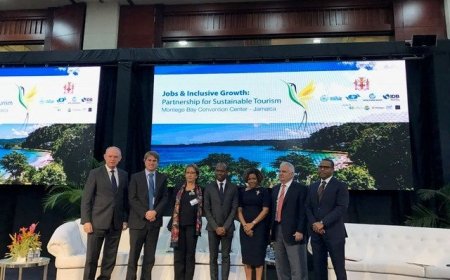
Several Caribbean countries have created remote-work programmes, but the list and conditions change. Current 2026 comparisons identify Barbados, Curaçao, Dominica and Grenada among active remote-work routes, while the status of other programmes has changed.
Before planning a long stay, verify the current immigration rules directly with the government or relevant consular authority. Do not assume that a visa described in a 2022 travel blog is still available in 2026.
Safety and Healthcare
Digital nomads should also consider practical safety and healthcare. An all-inclusive resort can provide security, reception staff and organized transportation, which may be useful for someone arriving alone.
But travelers should still understand the local area, transportation options and emergency procedures.
Healthcare availability also varies between islands. Someone with a medical condition should research appropriate medical facilities before making a long-term booking.
Travel or international health insurance should be reviewed carefully. A standard travel policy may not cover every situation, and long-term stays can have different requirements.
Hurricanes and Seasonal Planning
The Caribbean's hurricane season is another factor for long-term digital nomads.
The official Atlantic hurricane season runs from June 1 through November 30, although tropical systems can occur outside those dates. Remote workers planning a stay during this period should consider flexible accommodation and cancellation policies.
The issue is not simply whether a hurricane will directly hit the island. Tropical weather can affect flights, electricity, internet, ferries and supply chains even when a storm does not make a direct landfall. A remote worker who depends on daily internet access should therefore have a backup plan.
This is another reason why accommodation with reliable power backup and strong telecommunications infrastructure can be worth paying more for.
Which All-Inclusive Model Is Best?
There is no single best option for every digital nomad. A traditional resort is best for someone who wants maximum convenience, meals, housekeeping and recreation with minimal planning.
A long-stay resort package is more suitable for someone staying for several weeks and wanting predictable monthly costs. A serviced apartment works better for a nomad who wants privacy, a kitchen and more control over daily expenses.
A coliving property is often the strongest option for someone who wants community, shared workspaces and opportunities to meet other remote workers. A hybrid approach can be the most practical. Spend the first week in an all-inclusive resort to settle in, and then move into a furnished apartment or coliving property for the remainder of the stay.
How to Choose the Right Package
Start by calculating your monthly budget. Then decide how much convenience you actually need.
If you work long hours, prioritize internet, power, desk quality and quiet surroundings. If you have a flexible schedule, beach access and recreation may matter more.
Next, check the length of stay. A seven-night resort package should not automatically be used as a benchmark for a three-month stay.
Ask about monthly discounts, housekeeping frequency, Wi-Fi limits, workspace access, laundry, airport transfers and cancellation policies.
Read recent reviews specifically looking for comments about internet and noise. A five-star review saying “beautiful beach” tell you nothing about whether the Wi-Fi can handle a three-hour video meeting. Finally, confirm the immigration position before committing to a long stay.
What's Your Reaction?
 Like
0
Like
0
 Dislike
0
Dislike
0
 Love
0
Love
0
 Funny
0
Funny
0
 Angry
0
Angry
0
 Sad
0
Sad
0
 Wow
0
Wow
0