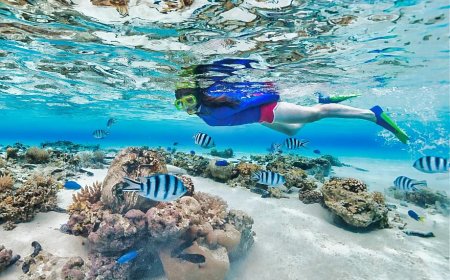



































Best Apps for Caribbean Travel Planning
The article explains how travel apps can make Caribbean trips easier to plan, organize, navigate, and manage. Instead of depending on one app, travelers can combine different tools for specific needs. Navigation apps such as Google Maps help with directions and offline maps, while itinerary apps such as TripIt and Wander log keep flights, hotels, activities, and reservations organized. For island-hopping trips, route-planning tools such as Rome2Rio can help compare different transportation options, including flights, ferries, buses, and other connections.



Planning a Caribbean vacation used to mean opening several browser tabs, saving hotel confirmations in an email folder and carrying a printed map in case the phone lost signal. Today, travel apps can put most of that information in one place. You can compare routes, organize flights, save restaurants, check weather, build daily itineraries, find attractions and keep important booking information available on your phone.

But Caribbean travel requires a slightly different approach to travel apps. The region includes more than a dozen independent countries and territories, multiple languages and currencies, and very different transportation systems. Some islands have reliable public buses and taxis, while others are easier to explore with a rental car. Some trips involve ferries or short regional flights between islands. Connectivity can also vary, particularly when you leave major resort areas.
That means the best travel app is not necessarily the one with the longest list of features. The useful app is the one that solves a specific problem during your trip. A mapping app can help you find a beach or restaurant, while a flight-tracking app can alert you to a delay. An itinerary app can keep hotel and flight details together, while an official tourism app can provide information that a global travel platform may not have.
In 2026, official destination apps are also becoming more relevant. Jamaica's XploreJamaica, developed by the Tourism Product Development Company, provides listings of approved accommodation, restaurants, attractions and activities, while Barbados offers its own online trip-planning system. Aruba's official my Aruba app is another example of a tourism authority using a dedicated mobile platform to help visitors plan a trip.
Google Maps for Everyday Navigation
Google Maps remains one of the most useful basic tools for a Caribbean vacation because it handles a problem every traveler eventually faces: finding out where something actually is.
Before travelling, you can use it to check the location of your hotel, airport, ferry terminal, restaurants, beaches, supermarkets and attractions. Saving important places before departure can make the first day much easier, especially if you arrive after dark or have limited mobile data.
Google Maps is particularly useful when comparing accommodation locations. A hotel may advertise itself as being close to a beach or town center, but looking at the map gives you a better understanding of the actual distance. You can also check nearby grocery stores, pharmacies, fuel stations and restaurants.
Offline maps are important when travelling in areas where mobile coverage may be unreliable. Downloading the relevant map area before departure means you are not completely dependent on a live connection for basic navigation.
The app should not, however, be treated as the final authority for every road or travel condition. Caribbean roads can change, construction can affect routes, and map information may not always reflect local conditions. Use the app as a planning tool and confirm important transportation details locally.
Rome2Rio for Island-Hopping
Island-hopping is one of the situations where a specialized transport-planning app can be particularly useful. Rome2Rio lets travelers compare different transportation options between destinations, including flights, ferries, buses and other forms of transport. Its current app listing says it covers more than 10 million destinations and can compare routes, estimated fares and journey times.
This can be helpful when a traveler is trying to understand whether moving from one Caribbean island to another is practical.
Suppose you are considering a trip that includes two or three islands. Instead of searching separately for flights, ferry services and ground transportation, you can first use Rome2Rio to understand the available route combinations.
The important word here is "planning." Travelers should still confirm schedules directly with the airline, ferry company or transportation provider before booking. Regional services can operate on limited schedules, and weather or operational conditions can affect transportation.
Rome2Rio is therefore most useful at the research stage. It helps answer questions such as whether a route exists, how different transport options compare and approximately how long the journey may take.
TripIt for Keeping Reservations Together
A Caribbean vacation can quickly produce a long list of confirmations. There may be an international flight, a connecting flight, a hotel, airport transportation, a rental car, a ferry, restaurant reservations and excursions. TripIt is designed around this exact problem: organizing travel reservations into one itinerary.
Instead of searching through email every time you need a confirmation number, travelers can use an itinerary-management app to keep flight, accommodation and other booking information together. This becomes particularly useful for multi-island trips. A simple seven-day vacation to one resort may not require a dedicated itinerary application, but a trip involving Jamaica, the Cayman Islands and another destination can become complicated quickly.
The biggest advantage of an itinerary app is not that it creates an exciting vacation plan. It is that it reduces the amount of information you have to remember.
Flight-Tracking Apps for International and Regional Flights
Flight-tracking apps can be useful before and during a Caribbean trip because air travel is often the first and last major part of the journey. An app such as Flight Aware can help travelers monitor flight status and receive information about delays or schedule changes. This is particularly useful if you are connecting through a major airport before continuing to a Caribbean destination.
Flight tracking becomes even more important when a trip involves separate tickets. If your first flight is delayed, you may need to know quickly whether your next flight is still operating on schedule.
Travelers should still check their airline's official app and notifications. Third-party flight trackers are useful as an additional source of information, but the airline remains the key source for check-in, boarding passes, baggage rules and official disruption instructions.
Weather Apps Matter More in the Caribbean
Weather is one of the most important factors in Caribbean travel planning. A weather app can help you plan beach days, boat excursions, hiking, sightseeing and outdoor dining. It can also help you understand whether you should rearrange your itinerary because of rain or strong winds.
For travelers visiting during hurricane season, weather monitoring becomes especially important. The official National Hurricane Center should be used for tropical cyclone information affecting the Atlantic, Caribbean and Gulf of Mexico. A general weather app is useful for daily conditions, but official weather services are more appropriate for serious weather systems.
The Caribbean also has significant differences in weather between islands. A forecast for Barbados does not tell you what is happening in Jamaica, Puerto Rico or the Bahamas. Travelers moving between destinations should check each location separately.
A weather app is therefore not just something to open on the morning of a beach day. It can help determine how much flexibility you should build into your itinerary.
Official Tourism Apps Can Provide Local Information
One of the biggest improvements in Caribbean travel planning is the growing use of official tourism apps and digital destination platforms. These can be valuable because they are designed specifically for visitors to a particular island rather than for global travel.
Jamaica's XploreJamaica is a good example. The platform is developed by the Tourism Product Development Company and focuses on TPDCO-approved tourism businesses. Visitors can search for accommodation, restaurants and attractions, save places, view reviews and receive tourism-related notifications. The platform also supports offline access to places in resort areas.
This type of app can be useful when travelers want to move beyond major international booking websites. It can also provide reassurance that businesses listed on the platform are connected to the destination's tourism regulatory system.
Barbados offers a different model through its My Trip planning system. Travelers can enter trip details, select activities and attractions, and organize them by day and set times and reminders. The completed itinerary can also be sent to the traveler by email.
Aruba's official my Aruba app is another example. It is operated by the Aruba Tourism Authority and is designed around planning holidays and weekend trips. The app was updated in August 2026, showing that destination-specific mobile planning remains an active area of development.
The lesson is simple: before downloading ten different travel apps, check whether the tourism authority for your destination already has an official app or digital trip planner.
Cruise Line Apps for Caribbean Cruises
Cruise travelers have a different set of planning needs. If you are visiting the Caribbean by cruise ship, the cruise line's own app may be more important than many general travel apps. These apps can provide boarding information, daily schedules, dining options, shore excursions and onboard activities.
Royal Caribbean, for example, encourages passengers to download its app before sailing. Its current app information includes mobile check-in, shore excursion browsing and pre-cruise purchases such as specialty dining and internet packages.
The same basic principle applies to other cruise lines. Download the official app for your cruise company before leaving home and complete as much of the required check-in process as possible.
Cruise travelers should also save important port information separately. A cruise itinerary may show that a ship arrives at an island at a particular time, but shore excursion schedules and transportation arrangements still need careful planning.
Currency Apps for Multi-Island Trips
The Caribbean is not a single currency zone. Depending on your destination, you may encounter the Eastern Caribbean dollar, Jamaican dollar, Bahamian dollar, Barbadian dollar, U.S. dollar and other currencies. Some islands use the U.S. dollar widely even when it is not the official currency. A currency-conversion app can therefore be useful when comparing prices.
This is especially important for travelers moving between several islands. A restaurant bill, taxi fare or excursion price can look very different when displayed in different currencies. A currency app is most useful for understanding the approximate value of a price. It should not be assumed that every business uses the current interbank exchange rate when charging customers. Travelers should also understand whether their bank adds foreign transaction fees. That information can have a bigger impact on the final cost of a trip than small differences in exchange rates.
Google Translate and Language Tools
English is widely used across much of the Caribbean, but it is not the only language travelers will encounter. Spanish is important in destinations such as Puerto Rico, the Dominican Republic and Cuba. French is widely used in places such as Martinique and Guadeloupe, while Dutch is used in parts of the Dutch Caribbean. A translation app can help with basic communication, menus, signs and transportation questions.
Even when a traveler speaks English, translation tools can be useful for reading local information or communicating outside major tourist areas. The most useful feature may be camera translation. Instead of typing every word, travelers can point their phone at a menu or sign and receive a translated version.
Still, travelers should not assume that translation apps understand every local expression or Caribbean dialect perfectly. A simple translation is often enough for practical communication, but patience and basic courtesy remain more useful than technology.
WhatsApp for Communication
WhatsApp can be extremely useful for Caribbean travel because many hotels, tour operators, drivers and small businesses use messaging rather than formal booking platforms.
A traveler may receive a pickup confirmation, ask a tour operator about departure time or communicate with a villa host through WhatsApp.
This can be particularly useful for independent travelers who book smaller excursions rather than large organized tours.
The important point is to verify the business before sending payment or personal information. A WhatsApp conversation by itself does not prove that a person or business is legitimate.
Use official tourism directories, hotel websites or established booking platforms to verify contact details whenever possible.
RYDR and Emerging Caribbean Transport Apps
The Caribbean is also developing its own regional technology platforms. RYDR, for example, describes itself as a Caribbean "super app" covering rides, deliveries and connectivity. Its website currently lists Barbados as a live market and identifies additional Caribbean destinations for planned expansion. It also says its transportation service uses verified taxi drivers.
This kind of platform could become useful for travelers who want local transportation without switching between multiple services. However, travelers should always check availability for their specific island before depending on a regional app. Caribbean technology services can have different launch dates and coverage levels from one country to another.
The broader trend is important, though. Local technology companies are increasingly trying to build travel and transportation services specifically around Caribbean conditions rather than simply copying platforms designed for larger markets.
Apps for Saving Restaurants and Attractions
Travelers often discover more places than they can fit into a daily schedule. Apps that allow users to save restaurants, attractions and points of interest can help create a practical shortlist before arrival. Google Maps can handle much of this through saved places, but travelers can also use travel planning platforms and destination apps.
The best approach is to avoid building an itinerary that is too rigid. For example, instead of scheduling six activities for one day, save ten possibilities and choose among them based on weather, energy levels and opening hours.
This is especially useful in the Caribbean because transportation times can be less predictable than they appear on a map. A short distance can take longer because of traffic, road conditions or limited transportation options.
Apps for Travel Documents and Important Information
Travelers should also think about apps as storage tools. Your phone should contain digital copies of important information such as flight confirmations, hotel bookings, travel insurance details, emergency contacts and relevant entry documents. Cloud storage can provide an additional backup, but travelers should also keep important information available offline.
Do not depend entirely on one app or one online account. If the phone is lost, damaged or unable to connect to the internet, you should still have access to the information you need. A simple offline folder containing essential documents can be more useful than another travel-planning app.
How Many Apps Do You Actually Need?
The answer is probably fewer than you think. A practical Caribbean travel setup could include a mapping app, the airline's app, a weather app, an itinerary or document-storage app and the official tourism app for your destination.
If you are island-hopping, add a transportation-planning tool such as Rome2Rio. If you are taking a cruise, add the cruise line's official app. If you are visiting a destination where another language is common, add a translation app. The goal is not to turn your phone into a travel-control center. The goal is to solve the problems that are most likely to occur.
Check Apps before You Leave Home
Downloading an app at the airport is not the best way to start a Caribbean vacation. Install important apps before departure. Sign in while you have reliable Wi-Fi. Download offline maps where possible. Save hotel addresses. Store confirmation numbers. Check whether the destination app works in your country and whether its information is current.
Also check battery usage. Navigation, GPS, camera translation and mobile data can drain a phone quickly. A portable power bank is therefore a practical companion to travel apps. If you are visiting several islands, prepare each destination separately rather than assuming one app will provide complete coverage across the entire region.
The Best App Depends on the Trip
There is no single best Caribbean travel app for every traveler. A family staying at one resort may need little more than a map, weather service and hotel app. A couple planning an independent road trip may need navigation, restaurant and activity tools. A traveler moving between several islands may benefit more from transport and itinerary applications. A cruise passenger will probably get the most value from the cruise line's own app.
Official destination platforms deserve special attention because they can provide local information that broad international apps may miss. Jamaica, Barbados and Aruba are already examples of Caribbean destinations using dedicated digital tools to support visitors.
The Caribbean tourism market continues to grow, with the Caribbean Tourism Organization estimating international tourist arrivals increased by 3.9% in the first part of 2026 and forecasting annual growth within a 3% to 4% range. As visitor numbers and travel options increase, digital planning tools are likely to become an increasingly normal part of preparing for a Caribbean vacation.
What's Your Reaction?
 Like
0
Like
0
 Dislike
0
Dislike
0
 Love
0
Love
0
 Funny
0
Funny
0
 Angry
0
Angry
0
 Sad
0
Sad
0
 Wow
0
Wow
0