






























Money & Currency Tips for Caribbean Trips
Money & Currency Tips for Caribbean Trips explains how travelers can manage cash, cards, exchange rates and everyday spending across the Caribbean in 2026. Because different islands use different currencies, travelers should check the official currency of every destination before departure rather than assuming that US dollars will work everywhere. The article covers US dollars, Eastern Caribbean dollars, Jamaican dollars, Dominican pesos, Barbadian dollars, Bahamian dollars, Aruban florins and Caribbean guilders, along with practical advice for multi-island trips.

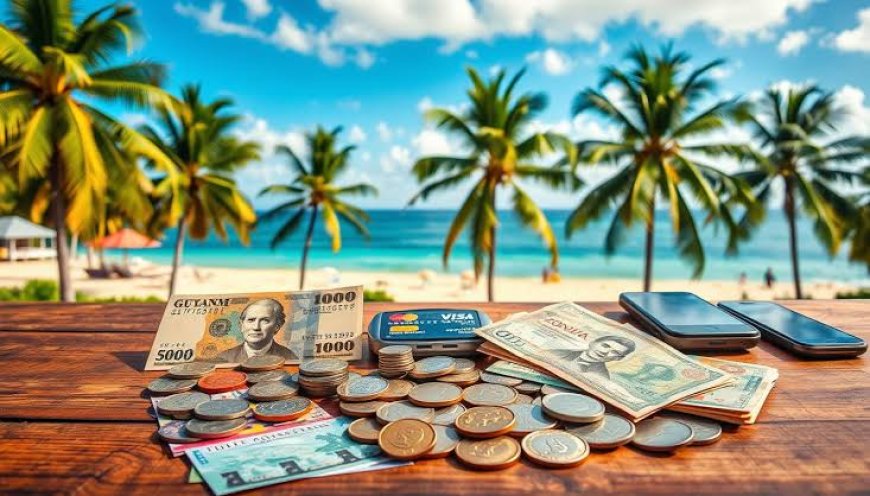
Money can make a Caribbean holiday easy or surprisingly complicated. The region is made up of many independent countries and territories, and there is no single currency used everywhere. One island may use the US dollar another may use an Eastern Caribbean dollar, while others have their own national currency. Some destinations also widely accept US dollars even though they have a different official currency.

For travelers, the most important lesson is simple: do not assume that the currency you use on one Caribbean island will work the same way on another.
Understanding local currency before departure can help you avoid unnecessary exchange charges, poor conversion rates, ATM problems and confusion when paying for taxis, restaurants, tours or small purchases.
In 2026, cards and contactless payments are common in many Caribbean hotels, restaurants and tourist businesses, but cash remains useful. Smaller shops, markets, local transport providers, beach vendors and independent businesses may still prefer cash. A sensible trip therefore uses a combination of cards and cash rather than depending completely on either one.
Current exchange rates also change constantly. As an example, on August 10, 2026, a live indicative conversion showed US$1 at about ₹95.29, but travelers should check the rate immediately before making a transaction because exchange rates move continuously.
Why Caribbean Currency Can Be Confusing
The Caribbean is not a single monetary zone. Different countries have different currencies and banking systems. Some countries use currencies that are closely linked to the US dollar, while others have floating exchange rates. The Eastern Caribbean dollar is used in several countries and territories within the Eastern Caribbean Currency Union. The Eastern Caribbean Central Bank maintains the EC dollar at EC$2.70 to US$1, a fixed rate that has been maintained since 1976.
This is useful for travelers visiting places such as Antigua and Barbuda, Dominica, Grenada, Saint Kitts and Nevis, Saint Lucia and Saint Vincent and the Grenadines. But the system is different elsewhere.
Jamaica uses the Jamaican dollar. The Dominican Republic uses the Dominican peso. Barbados uses the Barbadian dollar. The Bahamas uses the Bahamian dollar. Aruba uses the Aruban florin, while Curaçao and Sint Maarten use the Caribbean guilder. Bonaire is different again. The US dollar is the official currency there, while Curaçao and Sint Maarten use the Caribbean guilder. Knowing these differences before departure is one of the easiest ways to avoid unnecessary costs.
Should You Carry US Dollars?
US dollars are extremely useful for Caribbean travel, but they should not automatically be treated as the official currency everywhere. In destinations where the US dollar is legal tender, carrying dollars can be straightforward. Bonaire, for example, uses the US dollar as its official currency.
In other destinations, US dollars may be widely accepted by hotels, resorts, restaurants, tour operators and taxi drivers even though the local currency is different.
This can be convenient, but the exchange rate offered by the merchant may not be as good as the rate available through a bank or card network. For example, if a restaurant accepts US dollars but sets its own conversion rate, you may effectively pay more than you would by paying in local currency. Before handing over dollars, ask which exchange rate is being used. If the price is listed in local currency, calculate the approximate dollar equivalent yourself.
Learn the Local Currency before Arrival
Before travelling, spend a few minutes learning the local currency, its symbol and the approximate exchange rate. You do not need to memorize every conversion. Knowing the approximate value of common amounts is enough.
For example, if you are visiting the Dominican Republic, understanding roughly what RD$100, RD$500 and RD$1,000 represent in US dollars makes shopping and budgeting much easier.
The official Dominican Republic tourism website currently gives approximate reference points of RD$100 = US$2, RD$500 = US$10 and RD$1,000 = US$20, while noting that exchange rates vary by day and location. These figures should be treated as quick mental references rather than guaranteed transaction rates.
Do Not Exchange All Your Money at the Airport
Airport currency exchange counters are convenient, but convenience can come at a cost.
The exchange rate may include a wider spread or additional charges compared with other options.
If you need cash immediately after landing, exchange or withdraw only enough for the first part of your journey.
You may need money for transportation, a small meal, tips or other immediate expenses.
Once you reach your destination, compare the rates offered by banks, licensed exchange offices and ATMs.
Jamaica's official tourism guidance recommends comparing rates before converting cash and notes that licensed cambios and commercial banks are available in resort areas.
The same principle applies across the region: do not exchange a large amount simply because the first counter you see is convenient.
Using ATMs in the Caribbean
ATMs can be one of the easiest ways to obtain local currency.
They can also become expensive if you use the wrong machine or accept unnecessary conversion options.
Your own bank may charge a foreign ATM fee, while the local ATM operator may add a separate fee. Your card network may also apply currency-conversion costs depending on the card.
Before travelling, check your bank's international withdrawal charges.
Also check whether your card has daily withdrawal limits.
It is useful to have at least two payment cards from different accounts or financial institutions. If one card is blocked, lost or rejected, the second card gives you another option.
Jamaica's tourism authority says most Jamaican ATMs accept international cards carrying Visa, MasterCard, Cirrus and Plus logos.
The Dominican Republic's tourism authority similarly advises travelers that established-bank ATMs are widely available and can provide local-currency withdrawals. It recommends using ATMs in secure locations and during daytime.
Always Check the ATM Screen Carefully
One of the most important ATM rules is to read the conversion screen before accepting the transaction.
Some ATMs offer to convert the withdrawal into your home currency. This is often called dynamic currency conversion.
If you accept that option, the ATM operator may determine the exchange rate instead of allowing your card network or bank to perform the conversion.
In many cases, selecting the local currency allows your card network to handle the conversion instead.
The exact wording varies between ATMs, so read every screen carefully.
If an ATM asks whether you want to proceed with a conversion offered by the machine, check the displayed exchange rate and fee before accepting.
Why Paying in Local Currency Usually Helps
When using a card abroad, merchants may sometimes offer to charge your card in your home currency.
This can look convenient because you immediately see the amount in familiar currency.
However, the merchant's conversion rate may be less favourable than the rate applied by your card issuer or payment network.
For many travelers, choosing the local currency is therefore the better option.
For example, if a restaurant in Jamaica gives you the choice between Jamaican dollars and Indian rupees, pounds, euros or US dollars on the card terminal, check the transaction carefully and generally choose the local currency unless you have a specific reason to do otherwise.
The same principle applies when withdrawing cash.
Credit Cards or Debit Cards?
Both can be useful.
Credit cards are often convenient for hotels, car rentals, restaurants, excursions and larger purchases.
Debit cards are useful for ATM withdrawals and everyday spending.
The important issue is not simply whether a card is a credit or debit card. The fees and exchange-rate terms matter more.
Some cards charge foreign transaction fees. Others offer no foreign transaction fee but may charge for ATM withdrawals.
Before departure, check your cards:
- Foreign transaction fee.
- International ATM fee.
- Currency-conversion rate.
- Cash withdrawal limit.
- Daily spending limit.
- Fraud protection procedures.
- Card replacement arrangements.
If you are travelling from India, also check the card's foreign exchange markup and any applicable international transaction charges before departure.
Carry Two Cards
- Taking only one card on an international trip is risky.
- A card can be blocked because of suspected fraud, damaged by water, lost or retained by an ATM.
- Carry at least two cards and keep them separately.
- For example, keep one card in your wallet and another securely stored in your accommodation.
- Do not keep both cards, all your cash and your passport in the same place.
- This simple arrangement can make a major difference if something goes wrong.
Tell Your Bank About Your Trip
Some banks allow customers to register travel plans or enable international transactions through their banking app.
Even when formal travel notification is not required, check that international transactions and overseas ATM withdrawals are enabled.
Jamaica's official travel guidance recommends advising your financial institution about travel plans and monitoring card activity through banking apps.
You should also make sure your mobile number and email address connected to your bank account will work while abroad so that you can receive security alerts or verification messages.
Keep Some Emergency Cash
A card-only strategy can fail when a payment terminal is offline.
Power interruptions, network problems, equipment failures and small businesses that do not accept cards can all create problems.
Keeping a modest amount of emergency cash is therefore sensible.
Do not carry your entire travel budget in cash.
Instead, keep enough for transportation, food and basic expenses for at least part of a day or two.
Separate your emergency cash from the wallet you use regularly.
Cash Is Still Useful for Small Purchases
Cash remains particularly useful for smaller transactions.
Local markets, roadside food sellers, small shops, beach vendors, independent taxis and tips may be easier to handle with cash.
Even in destinations where cards are widely accepted, smaller businesses may have minimum card amounts or may prefer cash.
In Saint Lucia, for example, recent traveler reports indicate that cards are widely used in hotels and tourist businesses, while cash remains common for tips, smaller operators and water taxis.
This is why carrying a reasonable amount of small notes can be more useful than carrying a single large denomination.
Keep Small Denominations
Large banknotes can create problems when buying inexpensive items.
A vendor may not have enough change for a large note, particularly early in the day or at a small roadside business.
Ask your bank or exchange provider for smaller denominations when possible.
Once you arrive, use larger notes at established businesses and retain smaller notes for taxis, tips, snacks and markets.
Understand Tipping Customs
Tipping practices vary across the Caribbean.
In many tourist destinations, tipping is common for hotel staff, restaurant workers, taxi drivers, guides and other service providers.
The expected amount depends on the destination and type of service.
Before your trip, check local tipping customs rather than assuming that the system is identical to the United States or your home country.
Also check whether a service charge has already been added to a restaurant bill.
If a service charge is included, you may not need to leave the same additional amount you would if no service charge had been added.
When in doubt, ask the restaurant or hotel.
Watch for Double Conversion
Travelers from countries such as India, the United Kingdom, Canada and Europe need to be particularly careful when using foreign cards.
Suppose your home currency is INR and the merchant charges in US dollars.
Your card issuer converts USD to INR.
If the merchant first converts a local Caribbean currency into US dollars using its own exchange rate and then your bank converts USD to INR, you may lose money through multiple conversions.
This is another reason to understand the currency being charged before approving a card transaction.
Use a Currency Conversion App
A currency-conversion app can make everyday decisions much easier.
You do not need to calculate every purchase manually.
Enter the local price and compare it with your home currency.
For example, if you are from India and the price of a tour is US$200, you can quickly check the approximate INR value before booking.
Live exchange rates change, so app figures should be treated as estimates.
Your actual card transaction may differ because of the card network's rate, your bank's foreign-exchange markup and any applicable fees.
Current Exchange Rates Are Not Your Final Cost
This is an important distinction.
Suppose an online currency tool says US$1 = ₹95.29.
That does not necessarily mean your bank will charge exactly ₹95.29 for every dollar.
The final amount may depend on:
- The card network exchange rate.
- Your bank's foreign exchange markup.
- Taxes or regulatory charges applicable to your country.
- ATM fees.
- Merchant conversion fees.
- Other card-specific charges.
- So use the live market rate as a benchmark, not a guaranteed price.
How Indian Travelers Can Plan Their Currency
For travelers departing from India, planning currency before the trip can reduce stress.
First decide whether you will primarily use a card, cash or a combination.
For most Caribbean trips, a combination is sensible.
Carry some US dollars if your itinerary includes destinations where dollars are widely accepted, but do not assume they are always the cheapest way to pay.
Use a low-foreign-exchange-cost card for larger purchases where cards are accepted.
Withdraw local currency when necessary.
Avoid exchanging large amounts at airports unless there is no practical alternative.
Keep receipts for significant transactions until you confirm that the correct amount has been charged.
Should You Buy Caribbean Currency in India?
This depends on the destination.
For some smaller Caribbean currencies, obtaining cash before departure may be difficult or may involve poor rates.
US dollars are often easier to obtain in India and can be useful across multiple Caribbean destinations.
However, travelers should not buy a large quantity simply because they are worried about running out.
A better strategy is to carry a reasonable emergency amount in a widely accepted currency and use cards or local ATMs for additional needs.
Before departure, check whether you’re specific destination has restrictions or practical limitations around foreign cash.
Currency Tips for Jamaica
Jamaica uses the Jamaican dollar.
US dollars are also commonly used in tourism areas, but travelers should understand the conversion rate when paying in dollars.
Jamaica's official tourism authority states that exchange rates vary daily and recommends comparing licensed cambios and commercial banks before exchanging money. It also confirms that international bank cards are accepted at many ATMs.
If you are staying in a resort area, card payments may cover many major expenses.
However, local markets, taxis, small food businesses and independent vendors may still require cash.
Keep some Jamaican dollars available for everyday spending.
Currency Tips for Barbados
Barbados uses the Barbadian dollar.
The US dollar is also commonly encountered in tourism transactions.
Travelers should still check the exchange rate used by individual businesses rather than assuming that every dollar transaction uses the same rate.
Cards are useful for hotels, restaurants and established businesses, while cash can help with smaller purchases and tips.
If your trip includes local buses, markets or independent vendors, carrying smaller amounts of cash is useful.
Currency Tips for the Eastern Caribbean
The Eastern Caribbean dollar is used in several countries within the Eastern Caribbean Currency Union.
It’s fixed rate of EC$2.70 per US$1 makes mental conversion relatively straightforward.
For example:
- US$10 = EC$27.
- US$50 = EC$135.
- US$100 = EC$270.
These are based on the official fixed exchange relationship and do not account for any fees a bank, card issuer or merchant may add.
The fixed peg makes the EC dollar different from currencies whose exchange values fluctuate freely against the US dollar.
Currency Tips for the Dominican Republic
The Dominican peso is the official currency.
US dollars and Euros can be exchanged through banks and authorized exchange offices.
The Dominican Republic tourism authority recommends established-bank ATMs for local-currency withdrawals and advises travelers to use secure locations and daytime hours.
For everyday purchases, using pesos can make pricing clearer.
If a business quotes a price in dollars, ask whether the dollar price is based on a fixed exchange rate.
Currency Tips for the Dutch Caribbean
- The Dutch Caribbean requires special attention because neighboring islands do not necessarily use the same currency.
- Bonaire uses the US dollar as its official currency.
- Curaçao and Sint Maarten use the Caribbean guilder.
- Aruba uses the Aruban florin.
- That means a traveler visiting several Dutch Caribbean islands should not assume that one local currency will work everywhere.
- A multi-island itinerary requires more preparation than a single-island holiday.
Currency Tips for Multi-Island Trips
Island hopping is one of the best ways to explore the Caribbean, but it makes money management more complicated.
If you are visiting three or four destinations, make a currency plan before departure.
Create a simple table on your phone showing:
- Destination.
- Official currency.
- Whether US dollars are commonly accepted.
- Whether cards are widely accepted.
- ATM availability.
- Approximate exchange rate.
- Typical cash requirements.
- This takes only a few minutes and can prevent confusion during the trip.
Do not exchange a large amount of one island's currency immediately before leaving for another island unless you know you can use it there. You may lose money converting it back.
Avoid Over-Exchanging Local Currency
A common mistake is converting too much cash.
You might estimate that you will spend US$300 worth of local currency during a five-day trip but only spend US$180.
If you then need to convert the remaining amount back into your home currency, you can lose money through two exchange transactions.
It is better to withdraw or exchange smaller amounts as needed.
The exception is destinations where ATM access is limited or unreliable. In that situation, carrying enough cash for basic needs is more important.
Keep Track of Your Spending
- Caribbean holidays can become expensive because many costs are small.
- A taxi here, a beach chair there, a few drinks, tips, snacks and souvenirs can add up quickly.
- Set a daily spending limit.
- For example, divide your discretionary budget by the number of days you will be travelling.
- Keep accommodation, flights and prepaid tours separate from daily spending.
- This makes it easier to see how much money is actually available for food, shopping and activities.
Watch Resort Charges
An all-inclusive resort can make budgeting easier, but not everything is necessarily included.
Premium restaurants, spa treatments, excursions, private transfers, motorized water sports, premium drinks and certain services may cost extra.
Before arrival, read the resort's package details.
If you are staying at a conventional hotel rather than an all-inclusive resort, check whether taxes, resort fees or service charges are included in the advertised room price.
These additional costs can change the final budget considerably.
Be Careful With Foreign Transaction Fees
A card with a poor foreign transaction fee can make frequent small purchases expensive.
If your card charges a percentage for every international transaction, the cost can accumulate over a two-week holiday.
Before travelling, compare the fee structure of your existing cards.
Do not choose a new financial product only because it advertises "zero forex fees." Read the full terms, including ATM charges, exchange-rate policies, eligibility requirements and other costs.
For Indian travelers, the foreign-exchange mark-up is particularly important because even a small percentage can add up on a large holiday budget.
What to do if you’re Card Is Declined
Do not panic.
First check whether the transaction was rejected because of insufficient funds, an international-transaction restriction or a security block.
Try the card again only if you understand the reason for the decline.
If it still fails, use your backup card.
Check your banking app for notifications.
If necessary, contact your bank through the official international support number or secure app.
This is another reason to keep two cards and some emergency cash.
Protect Your Cards
- Do not hand your card to an unfamiliar person and allow it to disappear from your sight unnecessarily.
- When paying at a restaurant, hotel or shop, watch the transaction where practical.
- Check the amount on the terminal before approving it.
- Keep transaction notifications enabled.
- If your bank provides instant alerts, turn them on before departure.
- Review your transactions during the trip rather than waiting until you return home.
What If You Lose Your Wallet?
Separate your payment methods.
Do not keep all cards and cash together.
Keep a secure record of your bank's emergency contact details, but do not store full card numbers in an easily accessible note on your phone.
If a card is lost, freeze or block it immediately through your banking app if that feature is available.
Contact your bank through its official support channel.
If your passport and wallet are lost together, contact the relevant authorities and your country's diplomatic mission for assistance.
A Simple Caribbean Money Strategy for 2026
For most travelers, a practical approach is:
- Use a low-fee card for major expenses.
- Carry a second card separately.
- Keep a moderate amount of cash for small purchases and emergencies.
- Use local currency where appropriate.
- Check ATM fees before withdrawing.
- Decline unnecessary dynamic currency conversion.
- Compare exchange rates before converting large amounts.
- Keep track of spending every day.
- Check card transactions regularly.
- Avoid carrying all your money in one place.
- This approach provides both convenience and backup.
What's Your Reaction?
 Like
0
Like
0
 Dislike
0
Dislike
0
 Love
0
Love
0
 Funny
0
Funny
0
 Angry
0
Angry
0
 Sad
0
Sad
0
 Wow
0
Wow
0