



















Caribbean Islands With UNESCO Natural Sites
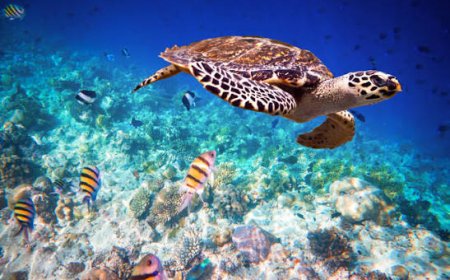
The article explores the Caribbean islands and territories that contain UNESCO-recognized natural World Heritage sites, showing that the region's natural heritage extends far beyond beaches and resorts. UNESCO currently lists major natural properties in Belize, Cuba, Dominica and Saint Lucia, while Jamaica's Blue and John Crow Mountains is recognized as a mixed natural and cultural World Heritage property. Belize's Belize Barrier Reef Reserve System is one of the region's most important marine sites. It includes seven protected areas, offshore atolls, mangrove cayes, lagoons and extensive reef habitats. The system supports hundreds of fish species, coral species and threatened marine animals including sea turtles and manatees.

The Caribbean is often associated with beaches, coral reefs, cruise ports and tropical weather, but its natural heritage goes far beyond the coastline. Across the region, volcanic mountains, rainforest, marine ecosystems, limestone terraces, mangrove forests and rare island species have earned international recognition. Several Caribbean countries and islands are home to UNESCO World Heritage properties whose natural values are considered important not only locally but globally.

UNESCO World Heritage status is not simply a tourism label. A natural World Heritage property must demonstrate Outstanding Universal Value under the World Heritage Convention. In the Caribbean, these sites show how much biological and geological diversity can exist within relatively small islands and coastal territories. They also demonstrate why conservation is increasingly important as the region faces climate change, hurricanes, coastal development, invasive species and pressure from tourism.
The main Caribbean natural World Heritage examples include the Belize Barrier Reef Reserve System, Morne Trois Pitons National Park in Dominica, Pitons Management Area in Saint Lucia, and two major natural properties in Cuba: Alejandro de Humboldt National Park and Desembarco del Granma National Park. Jamaica's Blue and John Crow Mountains is also important because it is a mixed World Heritage property, recognized for both natural biodiversity and cultural heritage.
1. Belize: A World-Class Barrier Reef System
Belize is one of the strongest destinations in the Caribbean for travelers interested in marine nature. The Belize Barrier Reef Reserve System was inscribed on the UNESCO World Heritage List in 1996. Rather than being a single location, it is a connected system of seven protected areas extending across the country's coastal waters.
UNESCO describes the property as including the largest barrier reef in the Northern Hemisphere, along with offshore atolls, hundreds of sand and mangrove cayes, coastal lagoons and estuaries. The seven components include Bacalar Chico National Park and Marine Reserve, Blue Hole Natural Monument, Half Moon Caye Natural Monument, South Water Caye Marine Reserve, Glover's Reef Marine Reserve, Laughing Bird Caye National Park and Sapodilla Cayes Marine Reserve.
For visitors, the scale of this ecosystem is one of its most important features. The property contains different types of reef formations, including fringing reefs, patch reefs, barrier reefs and offshore atolls. The famous Blue Hole is another geological feature within the wider system, while the cayes provide habitat for seabirds, marine turtles and other wildlife.
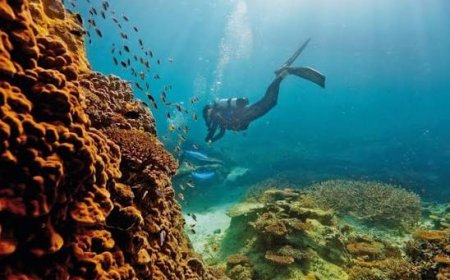
UNESCO records more than 500 fish species, 65 species of reef-building coral and hundreds of mollusc species within the reserve system. The area also provides habitat for threatened species such as the West Indian manatee, green turtle, hawksbill turtle, loggerhead turtle and American crocodile.
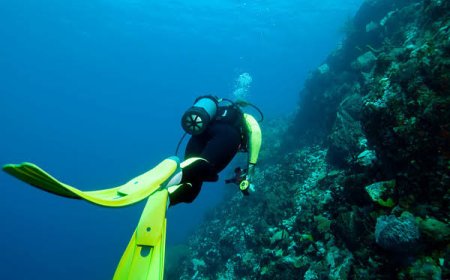
This makes Belize especially interesting for travelers who want a UNESCO experience that takes place largely underwater. Snorkelling, diving and boat trips can provide access to different sections of the reef, although visitors need to follow local conservation rules and avoid damaging coral or disturbing wildlife.
2. Dominica: Morne Trois Pitons National Park
Dominica has earned a reputation for its mountains, rainforest and volcanic landscapes, and its UNESCO-listed Morne Trois Pitons National Park is at the center of that natural identity.
The park was inscribed as a natural World Heritage property in 1997. It covers about 6,857 hectares, or roughly nine percent of Dominica's land area. The landscape includes steep volcanic mountains, deep valleys, tropical forests, lakes, rivers, hot springs, fumaroles and volcanic features.
The park's centerpiece is Morne Trois Pitons, a volcanic complex rising above 1,300 meters. UNESCO identifies it as one of five active volcanic centers within the property. The landscape has developed through continuing geological processes, creating a mixture of volcanic piles, steep slopes and geothermal areas.
One of the most recognizable features is Boiling Lake. The surrounding Valley of Desolation contains fumaroles, hot springs, bubbling mud ponds and streams affected by geothermal activity. These features make the park valuable not only for scenery but also for geological research.
Water is another major part of the landscape. Boeri Lake and Freshwater Lake are among the natural lakes within the park, while numerous rivers and streams begin in the protected highlands before flowing toward the coast. This makes the mountains important for ecosystems well beyond the boundaries of the World Heritage property.
The biological value is equally significant. UNESCO describes the park as containing one of the rare largely intact forest areas remaining in the Insular Caribbean. Different forest types occur along the island's steep elevation and climate gradients, supporting endemic plants, reptiles, amphibians and birds. Dominica's Imperial Parrot and Red-necked Parrot are among the notable species associated with the island's forests.
For travelers, Dominica offers a different experience from the classic Caribbean beach holiday. Hiking, rainforest exploration, waterfalls and geothermal landscapes are central to the island's appeal. Visitors should plan carefully because some trails are physically demanding and weather conditions can change quickly in mountainous terrain.
3. Saint Lucia: The Volcanic Landscape of the Pitons
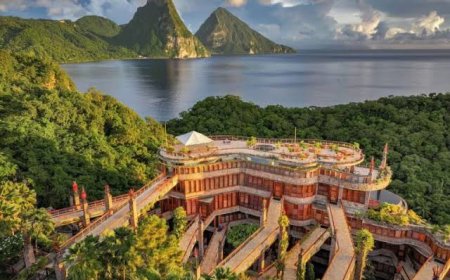
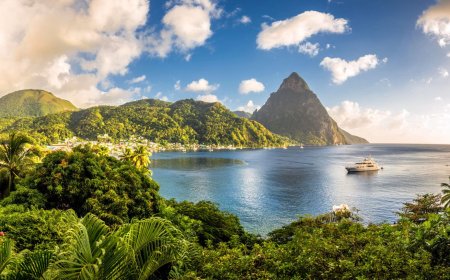
Few Caribbean natural landmarks are as recognizable as Saint Lucia's Gros Piton and Petit Piton. These twin volcanic formations form the core of the Pitons Management Area, which became a UNESCO World Heritage Site in 2004.
The property covers 2,909 hectares, including both land and marine areas. Gros Piton rises to approximately 770 meters, while Petit Piton reaches about 743 meters. They are connected by the Piton Mitan ridge and form part of the Soufriere Volcanic Centre.
The importance of the site goes well beyond the famous view. The landscape contains volcanic domes, explosion craters, lava flows, pyroclastic deposits and other features that demonstrate the geological history of the island. The area also contains geothermal activity, including fumaroles and hot springs around the Soufriere region.
The marine environment is an important part of the property. UNESCO notes that coral reefs cover more than 60 percent of the marine area within the management zone. Surveys have recorded a wide variety of fish, corals, molluscs, sponges and other marine organisms. Hawksbill turtles are found in the coastal waters, while larger marine animals occur farther offshore.
The terrestrial environment is also diverse. Tropical moist forest dominates, with subtropical wet forest, dry forest and wet elfin woodland occurring in different areas. UNESCO records numerous plant species on Gros Piton and the surrounding ridge, including rare tree species.
The Pitons are therefore a useful example of how one World Heritage property can combine geology, forests, coastal ecosystems and marine biodiversity.
For visitors, the Soufriere area provides opportunities to experience several parts of the site in a relatively compact region. Hiking, marine activities and visits to geothermal areas can all form part of a trip, but the area is also a working landscape with residents and private land. UNESCO notes that the management system attempts to balance conservation with local resource use and settlement.
4. Cuba: Alejandro de Humboldt National Park
Cuba has some of the Caribbean's most important natural World Heritage properties. One of the most significant is Alejandro de Humboldt National Park, located in the Nipe-Sagua-Baracoa mountain region of eastern Cuba.
The park was inscribed in 2001 and is recognized for its exceptional biodiversity. UNESCO describes it as the largest and best-conserved remnant of forested mountain ecosystems in the Caribbean and identifies it as one of the most biologically diverse tropical island sites in the world.
The geology of the region plays an important role in this biodiversity. Some of the rocks underlying the park contain conditions that are difficult for plants to tolerate. Over time, species adapted to these conditions, contributing to the development of unusual and highly localized plant communities.
This has resulted in a high level of endemism. In simple terms, many species found in the park occur naturally only in Cuba or in very restricted areas. UNESCO identifies the park as particularly important for the conservation of endemic plants, while vertebrate and invertebrate endemism is also high.
The size of the property is significant as well. UNESCO's current geographical data lists approximately 71,140 hectares for the property.
Travel to this part of Cuba is more about nature exploration than conventional resort tourism. The mountains, forests, rivers and coastal areas provide opportunities for visitors interested in hiking, bird watching, botany and ecological tourism.
The park also illustrates why conservation in island ecosystems is important. When species evolve in isolation, they can become highly specialized. That makes them valuable scientifically but potentially vulnerable to habitat changes, invasive species and climate-related pressures.
5. Cuba: Desembarco Del Granma National Park
Cuba's second major natural World Heritage property is Desembarco del Granma National Park, located around Cabo Cruz in southeastern Cuba. UNESCO inscribed it in 1999.
Unlike Alejandro de Humboldt, which is particularly notable for biodiversity and mountain forests, Desembarco del Granma is strongly associated with geology and geomorphology.
The property contains a remarkable series of uplifted marine terraces and limestone formations. UNESCO considers the site a globally significant example of ongoing geological and geomorphological processes. Its coastal cliffs and terraces provide evidence of how land and sea have interacted over long periods.
The park lies within a tectonically active zone associated with the boundary between the Caribbean and North American plates. Its landscape therefore offers an unusually clear example of geological forces shaping a Caribbean coastline.
The property covers approximately 32,576 hectares, with a buffer zone of about 9,287 hectares according to UNESCO's geographical data.
For travelers, the attraction is the combination of rugged coastline, cliffs, terraces, caves and natural landscapes. It is not the type of destination where the main experience is simply sitting on a beach. Instead, the park appeals to visitors interested in geology, hiking, coastal landscapes and the natural history of Cuba.
6. Jamaica: Blue and John Crow Mountains
Jamaica deserves a place on this list, but with an important clarification. The Blue and John Crow Mountains is a mixed World Heritage property, meaning its UNESCO recognition combines natural and cultural values rather than being classified purely as a natural site.
Inscribed in 2015, the property covers about 26,252 hectares of tropical montane rainforest in eastern Jamaica. The mountains range from approximately 850 meters to 2,256 meters above sea level, producing different ecological conditions and forest types.
Its natural importance is substantial. UNESCO identifies the property as part of the Caribbean Islands biodiversity hotspot and notes its high level of plant endemism. The property contains more than 1,300 recorded flowering plant species, including hundreds of Jamaican endemics, with some species restricted to the World Heritage property itself.
The mountains are also important for birds and amphibians. Species associated with the area include the Jamaican Blackbird, Jamaican Peak Frog and other threatened or restricted-range species. The property also provides habitat for migratory birds.
But nature cannot be separated from the area's human history. The mountains provided refuge to Maroons, communities formed by formerly enslaved Africans who resisted the colonial system. Trails, settlements, lookout points and other remains form part of the Nanny Town Heritage Route. UNESCO recognizes this cultural history alongside the area's natural values.
This makes Blue and John Crow Mountains particularly useful for travelers who want to understand the relationship between Caribbean landscapes and Caribbean history. The forest was not simply a wilderness separate from people. It provided food, shelter, medicine and strategic protection and became part of Maroon cultural identity.
7. What Makes Caribbean Natural World Heritage Sites Different?
One reason these sites are interesting is that they represent very different forms of natural heritage. Belize demonstrates the importance of marine ecosystems. Dominica represents volcanic mountains, rainforest and geothermal activity. Saint Lucia combines volcanic geology, forest and coral reefs. Cuba provides examples of both highly endemic mountain ecosystems and dramatic geological formations. Jamaica demonstrates how biodiversity and cultural history can exist within the same protected landscape.
Together, they challenge the idea that the Caribbean is primarily a beach destination. The region contains complex ecosystems that developed through isolation, volcanic activity, changing sea levels, geological movement and long periods of biological evolution. Small differences in altitude, rainfall and geology can create very different habitats within a relatively short distance.
That is especially important on islands. Species with small geographic ranges may not have many alternative habitats if environmental conditions change. Conservation of forests, reefs, wetlands and coastal ecosystems therefore has implications beyond tourism.
8. Tourism and Conservation Must Work Together
UNESCO status can increase interest in a destination, which creates both opportunities and risks. More visitors can support hotels, guides, restaurants, transport companies and local communities. Tourism revenue can also contribute to conservation when it is managed properly.
At the same time, popular natural sites can face pressure from visitor numbers, construction, waste, water demand and physical damage to sensitive ecosystems.
Climate change adds another challenge. UNESCO's current Small Island Developing States programme specifically highlights climate change as an increasing threat to World Heritage properties in island nations.
Caribbean destinations are particularly exposed to changes in temperature, rainfall, sea level and extreme weather. Coral reefs face warming and other stresses, while forests can be affected by drought, storms, invasive species and changing ecological conditions.
For visitors, responsible tourism therefore matters. Staying on marked trails, following marine conservation rules, avoiding contact with coral, not removing natural objects and using local guides when appropriate are simple actions that can reduce pressure on these environments.
9. Planning a Caribbean UNESCO Nature Trip
A UNESCO-focused Caribbean trip requires more planning than a standard resort vacation. These properties are often spread across large areas, and some are remote or mountainous.
Belize is particularly suitable for travelers interested in diving and snorkelling. Dominica is a stronger choice for hiking, rainforest and volcanic landscapes. Saint Lucia works well for travelers who want to combine mountains, marine activities and a more developed tourism infrastructure. Cuba offers a wider range of natural environments, particularly for travelers interested in biodiversity and geology. Jamaica's Blue and John Crow Mountains are especially interesting for visitors who want to combine natural exploration with Caribbean history.
Travelers should also check local access rules before visiting. World Heritage status does not mean every part of a site is freely accessible. Some areas require guides, permits or specific transportation arrangements.
The best experience usually comes from treating these places as protected landscapes rather than simply attractions to photograph.
What's Your Reaction?
 Like
0
Like
0
 Dislike
0
Dislike
0
 Love
0
Love
0
 Funny
0
Funny
0
 Angry
0
Angry
0
 Sad
0
Sad
0
 Wow
0
Wow
0