






















Best Spots to See Sea Turtles
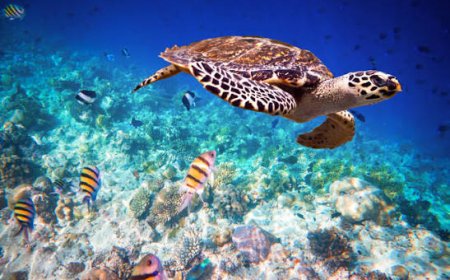
The Caribbean is one of the world's important regions for sea turtle nesting, feeding and migration, making it a strong destination for wildlife-focused travellers. Different islands offer different experiences, from daytime snorkelling with green and hawksbill turtles to night-time observation of nesting leatherbacks. Barbados is one of the best all-round destinations. Hawksbills generally nest from April to November, while leatherbacks nest mainly from February to July. Green turtles can also be seen close to shore along parts of the west coast.

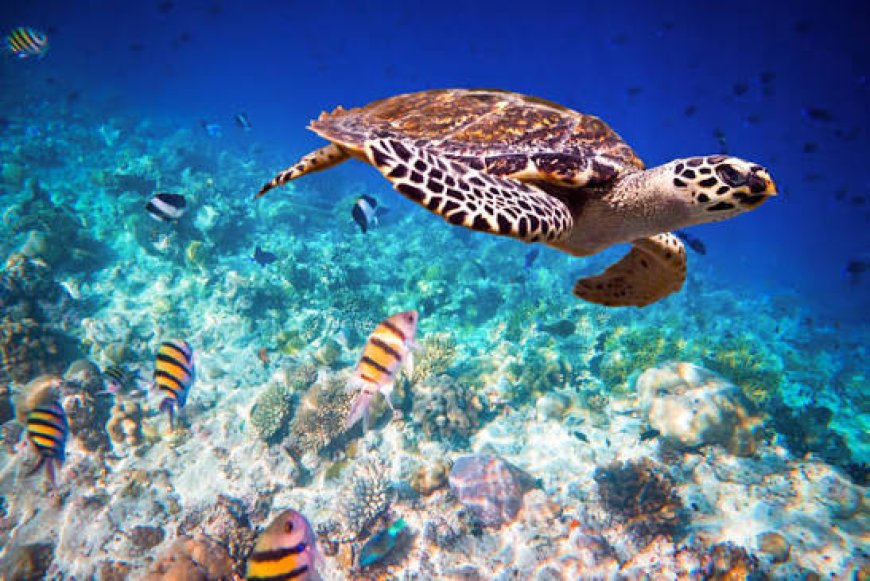
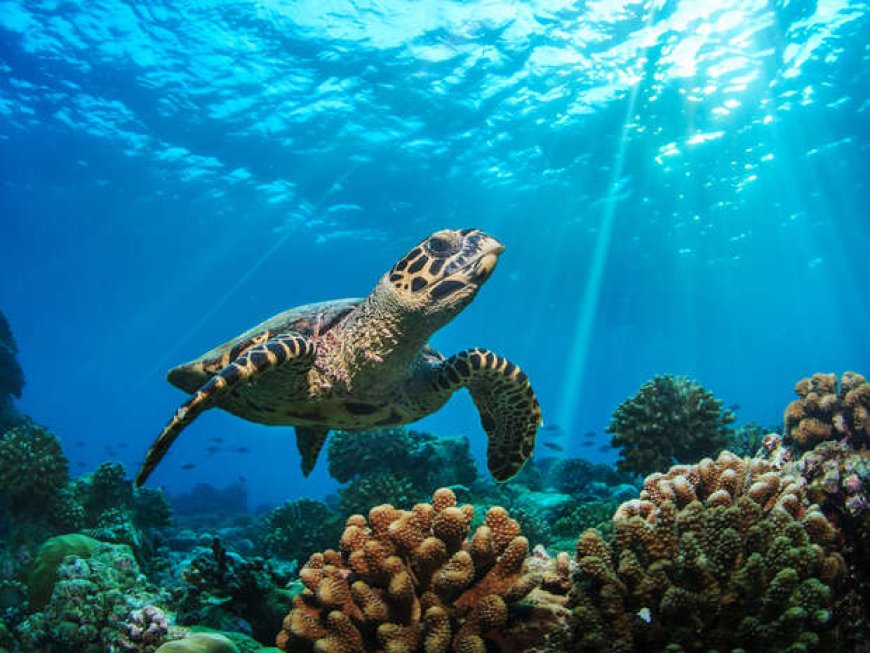
Seeing a sea turtle in the wild is one of those travel experiences that can change the way you look at the ocean. You may be swimming in warm Caribbean water one moment and suddenly notice a green turtle moving slowly across a sea grass bed below you. On another night, you may stand quietly on a protected beach while a leatherback turtle, weighing hundreds of kilograms, comes out of the sea to lay her eggs.

The Caribbean is one of the world's important regions for sea turtles. Several species use its waters for feeding, migration and nesting, including green turtles, hawksbills, leatherbacks and loggerheads. Trinidad and Tobago is particularly important for leatherbacks, while Barbados has significant hawksbill nesting activity. Bonaire supports green, hawksbill and loggerhead turtles, and islands such as Saint Lucia, Grenada, Aruba and others provide important nesting and feeding habitat.
For travelers, however, there is an important difference between seeing turtles underwater and seeing them nesting on a beach. Snorkelling trips can offer relatively easy daytime encounters, while nesting requires careful planning, seasonal timing and strict rules designed to prevent disturbance.
The best turtle destination therefore depends on what you want to see. If you want to swim with turtles, Barbados and Bonaire are strong choices. If your priority is watching leatherbacks nest, Trinidad and Tobago deserves special attention. If you want a combination of nesting beaches, conservation and Caribbean scenery, Saint Lucia, Grenada and Aruba are worth considering.
Understanding the Sea Turtles of the Caribbean
Before choosing a destination, it helps to understand the animals themselves.
The green turtle is commonly seen in shallow Caribbean waters, especially around sea grass beds. Despite its name, its shell is not necessarily green. The name comes largely from the colour of its body fat, which historically was an important reason the species was hunted.
Hawksbill turtles are generally associated with coral reefs and rocky habitats. Their narrow, pointed beak allows them to reach food from crevices in reef structures. They are especially important in the Caribbean and western Atlantic. NOAA identifies the Caribbean as one of the world's major regions for hawksbill populations, and Barbados is among the places with significant hawksbill nesting.
Leatherbacks are completely different in appearance. They do not have the hard shell associated with green and hawksbill turtles. Instead, their backs are covered by a leathery skin and flexible structure. They are the largest living sea turtle species. Adult leatherbacks can travel enormous distances between feeding and nesting areas, and Trinidad and Tobago supports one of the largest remaining leatherback nesting populations in the Atlantic.
Loggerheads also occur in the region, although they are less commonly the main attraction at Caribbean snorkelling locations.
These differences matter when planning a trip. A destination famous for green turtles in shallow water may not be the right place if your dream is to see a leatherback nesting at night.
Barbados: One of the Best All-Round Turtle Destinations
Barbados is one of the easiest Caribbean destinations for travelers who want both snorkelling and nesting opportunities.
The island supports hawksbill and leatherback nesting populations. According to the Barbados tourism authority, hawksbills nest mainly on the west and south coast’s from April through November, while leatherbacks use beaches on the east and south coast’s primarily from February through July.
This gives Barbados a relatively long turtle-watching calendar.
For underwater encounters, Carlisle Bay is one of the most recognized locations. The bay is popular with snorkelers and boat operators, and turtles can often be seen in the area. Visit Barbados also identifies Hopetown, Dover Beach and Drill Hall among the island's turtle-watching locations.
Carlisle Bay is particularly convenient because visitors can combine turtle snorkeling with other marine activities. The area is accessible from Bridgetown and the south coast, and several operators run snorkelling and sailing trips.
The west coast is also useful for travelers interested in green turtles. Visit Barbados notes that juvenile green turtles are commonly encountered around the west coast, including areas near Mount Stand fast.
Barbados is also a good destination for travelers who want conservation to be part of the experience. The Barbados Sea Turtle Project monitors nesting activity and operates a public turtle hotline for reports involving nesting, hatching or injured turtles.
For nesting, timing is critical. Leatherbacks are most relevant from roughly late winter through July, while hawksbill activity continues later into the year. Travelers should never assume that a turtle will appear simply because they visit during nesting season. Wildlife encounters remain unpredictable.
Carlisle Bay, Barbados: Best for Daytime Turtle Encounters
If your main goal is to swim or snorkel near turtles rather than watch nesting, Carlisle Bay is an excellent starting point.
The water conditions can be suitable for snorkelling, although conditions change with weather, wind and currents. Boat tours frequently include turtle encounters as part of a larger trip.
The most important rule is to let the turtle control the interaction. Do not chase it, grab it, ride it or block its path to the surface.
A turtle needs to breathe air, so repeatedly surrounding one can interfere with normal behaviour. Even if the animal appears calm, that does not mean it wants to be touched.
A good encounter may last only a few minutes. The turtle may swim away, disappear into deeper water or move toward another feeding area. That is normal wildlife behaviour.
Trinidad and Tobago: The Place for Leatherback Nesting
For travelers who specifically want to see leatherback turtles nesting, Trinidad and Tobago is one of the most important destinations in the Caribbean.
The country's northeast coast contains major leatherback nesting beaches, including Grande Riviere and Matura. Government information has identified the annual nesting season as March through August, with protected beaches and regulations governing access for turtle viewing.
Grande Riviere is particularly well known. Trinidad's Institute of Marine Affairs identifies the area as having very high nesting density, with large numbers of leatherbacks arriving during the season.
This is a very different experience from snorkelling.
A nesting female may spend a considerable amount of time moving from the waterline to a suitable location, digging a body pit and then excavating a deeper nest. Once she begins the egg-laying process, trained guides can allow visitors to observe from a controlled distance.
The experience can be physically demanding. Visitors may need to walk on sand at night and remain outside for extended periods. Weather can also be hot, humid or wet.
But the opportunity is exceptional because leatherbacks are enormous animals with a very different appearance from the smaller turtles commonly seen while snorkelling.
Trinidad and Tobago's turtles are legally protected, and nesting beaches may have controlled access. Visitors should use authorized guides and follow current local rules rather than attempting to walk onto nesting beaches independently.
Grande Riviera: A Major Leatherback Nesting Site
Grande Riviera is one of the names travelers should know when researching Caribbean turtle trips.
The beach is located on Trinidad's northern coast and has a long history of leatherback research and conservation.
During the nesting season, turtles come ashore after dark. Some nights may produce several encounters, while other nights can be quieter. This is why visitors should plan more than one evening if seeing a nesting turtle is the main purpose of the trip.
A responsible tour will explain turtle behaviour before visitors approach the beach. Guides should control lighting, visitor movement and distance from the turtle.
Photography is often possible, but flash photography can be restricted because artificial light may disturb turtles or affect their behaviour.
The most memorable part of the experience may not be getting a perfect photograph. It may be sitting quietly and watching the turtle complete a process that has been repeated by its species for millions of years.
Matura Beach, Trinidad: Conservation and Turtle Watching
Matura is another important leatherback nesting area on Trinidad's northeast coast.
The beach has been associated with organized conservation and turtle-watching programs. National Geographic has documented turtle-watching at Matura and highlighted the role that carefully managed tourism can play in supporting conservation. The key word is carefully managed.
A nesting turtle is not an attraction in the same way as a scheduled performance. She cannot be told where to go or when to appear. She may abandon a nesting attempt if she is disturbed.
For that reason, visitors should follow the guide's instructions even if it means standing farther away than expected.
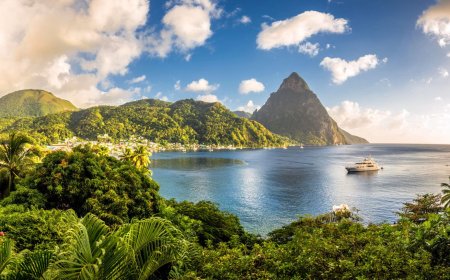
Saint Lucia: Long Nesting Season and Creole Coastlines
Saint Lucia is another strong choice for travelers interested in nesting turtles.
The government of Saint Lucia states that sea turtles routinely nest and hatch on the country's beaches from March through November. It also specifically warns visitors not to interfere with nesting turtles, eggs or hatchlings.
Grand Anse Beach is particularly significant for leatherback nesting. The island also supports other turtle species.
Saint Lucia offers an advantage for travelers who want to combine wildlife with a broader Caribbean vacation. You can spend part of the trip exploring beaches, rainforest and local communities while reserving an evening for a turtle experience during the nesting season.
However, travelers should not walk onto nesting beaches at night without knowing the local rules.
Saint Lucia's regulations prohibit interference with nesting turtles and eggs. Visitors are also advised to avoid lights, touching hatchlings and driving vehicles on nesting beaches.
This is especially important because hatchlings can become confused by artificial lights. Instead of moving toward the sea, they may move toward buildings, roads or other light sources.
Grenada: Levera Beach and Turtle Conservation
Grenada's Levera Beach is another important location for travelers interested in nesting turtles.
The north-eastern part of Grenada is less developed than some of the island's major resort areas, making the turtle experience feel more connected to natural habitat.
Levera is associated with leatherback nesting, and turtle conservation has become an important part of the area's environmental management.
The best time to plan a nesting-focused visit depends on current local monitoring and species activity. Travelers should check with local conservation organizations or authorized guides before arriving.
Grenada is also an interesting destination for travelers who want to combine turtle watching with other nature activities. The island is known for its spice agriculture, gardens and marine environments, so a wildlife trip can easily become part of a broader nature-focused vacation.
Bonaire: Excellent for Snorkelling and Turtle Conservation
Bonaire is one of the strongest choices in the Caribbean for travelers who want to see turtles underwater.
The island's waters support green turtles, hawksbills and loggerheads. Sea Turtle Conservation Bonaire has worked on research, monitoring and education since 1991.
Bonaire is particularly interesting because turtles can be encountered throughout the year. The island's sea grass areas provide feeding habitat for green turtles, while reef areas support other species.
Lac Bay is an important feeding area for green turtles because of its sea grass habitat. Klein Bonaire is also an important nesting location, particularly for hawksbill and loggerhead turtles.
Visitors can also participate in conservation-related activities. Current information from Bonaire's tourism site describes nest patrol opportunities on Klein Bonaire during the nesting season. These activities can involve several hours of walking and monitoring rather than simply watching turtles from a boat.
This is an important distinction. A conservation patrol may be more educational than a conventional snorkeling tour because participants learn about nests, tracks and monitoring methods.
Klein Bonaire: A Strong Choice for Nature-Focused Travelers
Klein Bonaire is a small uninhabited island located off Bonaire.
Its beaches provide important nesting habitat, and its surrounding waters are used by marine turtles.
Travelers visiting Bonaire can combine a boat trip with snorkeling and conservation activities. Depending on the season and current programs, visitors may also have opportunities to learn how researchers monitor nests.
The island has limited facilities compared with developed tourist beaches, so travelers should plan carefully and bring water, sun protection and appropriate footwear.
Most importantly, do not assume that a conservation patrol guarantees a turtle sighting. Wildlife monitoring is not a staged tour, and the absence of a turtle is still valuable information for researchers.
Aruba: Eagle Beach and Turtle Hatchlings
Aruba is another popular destination for turtle watching, especially during nesting and hatching season.
Eagle Beach is one of the island's best-known nesting beaches. Current 2026 information indicates that nesting activity occurs from spring into the later part of the year, with hatchlings appearing roughly 60 to 70 days after eggs are laid.
Active nests may be marked or protected so that beach users do not accidentally step on them.
This is one reason visitors should avoid moving ropes, signs or protective barriers. They are not simply beach decorations. They are used to protect eggs from people, vehicles and other threats.
Aruba's relatively developed tourism infrastructure makes it convenient for travelers who want to combine turtle watching with hotels, restaurants and other activities.
However, convenience also creates a conservation challenge. More people on beaches mean more artificial light, foot traffic and potential disturbance.
If you visit Eagle Beach during nesting season, keep your distance from marked nests and avoid shining lights toward the beach or ocean at night.
Bocas del Toro, Panama: A Caribbean Alternative
Although Panama is not an island destination, its Caribbean coast offers another important turtle-watching option.
Bocas Del Toro is known for sea turtle conservation and nesting activity. Panama's tourism authority identifies the area as an important hawksbill nesting location and reports more than 1,500 registered nests per year.
The region also has important leatherback nesting beaches. Playa Chiriquí is identified as a major leatherback nesting location, with nesting occurring from approximately mid-February through July.
Bocas Del Toro can therefore be attractive to travelers who want a Caribbean experience that includes wildlife and rainforest rather than a traditional resort island.
The area combines beaches, mangroves, forests, marine habitats and local communities, creating opportunities for more than just turtle watching.
Tortuguero, Costa Rica: A Major Caribbean Coast Turtle Destination
Costa Rica's Caribbean coast is another important place for sea turtle travelers.
Tortuguero National Park is recognized by Costa Rica's tourism authority as the country's most important sea turtle nesting area, particularly between March and October. The region is accessible by boat or plane rather than by ordinary road travel.
Tortuguero is particularly well known for its combination of sea turtle habitat and rainforest.
Visitors may encounter turtles as part of guided nighttime nesting programs, but access is controlled to reduce disturbance.
The destination is particularly suitable for travelers who want a wildlife-focused trip rather than a conventional beach holiday.
A trip can combine turtle watching with boat excursions through rainforest channels, bird watching and exploration of the national park.
When Is the Best Time to See Sea Turtles?
There is no single Caribbean turtle season.
Different species nest at different times, and the dates vary between locations.
Leatherback nesting often begins earlier in the year. NOAA states that leatherback nesting in the United States and Caribbean generally occurs from March through July.
Hawksbill and green turtle nesting can continue later into the year. Barbados, for example, reports hawksbill nesting from April through November.
Saint Lucia reports nesting and hatching from March through November.
Bonaire's current tourism information identifies May through October as the main egg-laying period, with hatching continuing later.
Therefore, travelers should choose the destination first and then check the local nesting calendar.
If your trip is scheduled for March or April, Trinidad and Tobago, Saint Lucia, Barbados and parts of Central America's Caribbean coast may be particularly interesting for leatherback activity.
If you travel during the middle of the year, the range of possibilities becomes broader.
Late summer and autumn can be useful for hawksbill and green turtle activity in several locations.
Nesting Turtles and Snorkelling Turtles Are Different Experiences
Many travelers make the mistake of treating all turtle watching as the same activity.
It is not.
Snorkelling usually happens during daylight. You may see turtles feeding, resting or swimming. The encounter can last only a few minutes.
Nesting happens primarily at night. The female turtle is focused on reproduction, and disturbance can have serious consequences.
A snorkelling turtle may swim away from you.
A nesting turtle may abandon the beach if she feels threatened.
That is why nighttime turtle watching requires much stricter behavior.
How to Watch Turtles Responsibly
The simplest rule is to keep your distance.
Never touch a wild sea turtle unless an authorized conservation professional specifically instructs you to do so for a legitimate research or rescue purpose.
- Do not feed turtles.
- Do not chase them underwater.
- Do not surround them with multiple swimmers.
- Do not block their route to the surface.
- Do not shine flashlights directly at nesting females.
- Does not use flash photography when guides or local regulations prohibit it.
- Never touch eggs or hatchlings.
- Do not remove shells, eggs or other turtle-related material from beaches.
- Avoid walking over marked nests.
- And never drive a vehicle onto a nesting beach where vehicles are prohibited.
Saint Lucia's government specifically warns visitors against handling hatchlings, touching eggs, using lights around nesting turtles and driving on nesting beaches.
These rules are not designed to spoil the experience. They are designed to ensure that visitors can continue seeing turtles in the future.
Why Artificial Light Is a Serious Problem
Light pollution is one of the most important issues associated with turtle nesting tourism.
Newly hatched turtles naturally move toward the brightest horizon, which historically was usually the reflection of the night sky over the ocean.
Modern beaches may have hotels, roads, restaurants, homes and vehicles producing artificial light.
A hatchling can become confused and crawl inland instead of toward the sea.
That can increase the risk of dehydration, exhaustion, predation or being killed by vehicles.
This is why turtle-friendly beaches may use special lighting, curtains or other measures during nesting season.
As a visitor, the easiest contribution is simple: turn off unnecessary lights and follow local instructions.
Should You Book a Guided Turtle Tour?
- For nesting, the answer is usually yes.
- A trained guide knows how to approach the beach without disturbing turtles and can explain what the turtle is doing.
- Guides also understand local regulations and can tell visitors when they need to move back.
- For snorkelling, a guide is not always necessary, but it can improve the experience by taking you to known feeding areas and explaining how to behave around turtles.
- Choose operators that emphasize conservation rather than promising guaranteed close encounters.
- A company that advertises that visitors will definitely touch or hold turtles should be treated with caution.
- Responsible operators understand that wild animals cannot be guaranteed on demand.
What Should You Bring?
For a daytime snorkelling trip, bring a mask, snorkel, reef-appropriate footwear if needed, drinking water and sun protection.
For a nighttime nesting experience, comfortable walking shoes are more useful than flip-flops. A lightweight rain jacket can also be helpful depending on the destination.
- Use red light only if the local guide or conservation program allows it and tells you how to use it.
- Avoid bringing large bags onto nesting beaches.
- Keep your phone on silent.
- And most importantly, be prepared to wait.
- Wildlife watching requires patience.
Best Destinations Based on the Type of Experience You Want
If your priority is swimming with turtles, Barbados and Bonaire are among the strongest choices.
If you want leatherback nesting, Trinidad and Tobago should be high on your list.
If you want a long nesting season, Saint Lucia offers a broad March-to-November window.
If you want hawksbill nesting and snorkelling, Barbados is particularly interesting.
If you want conservation-focused activities, Bonaire provides opportunities to learn about monitoring and nest patrols.
If you want a quieter nature experience, Grenada's Levera area is worth researching.
If you want turtle watching combined with a developed beach holiday, Aruba is convenient.
If you want wildlife combined with rainforest, Tortuguero on Costa Rica's Caribbean coast is a strong option.
If you want Caribbean coast wildlife and tropical forest, Bocas del Toro in Panama is another destination to consider.
Planning a Turtle-Watching Vacation in 2026
The best turtle trip begins with the species you want to see.
Do not simply search for "best turtle beach" and book the cheapest available tour.
First decide whether you want snorkelling, nesting, hatchlings or conservation education.
Then identify the season.
After that, check the current local rules.
This matters because turtle protection regulations can change, beaches can be closed during nesting periods and conservation organizations may limit access.
Travelers should also understand that weather can affect turtle-watching activities. Heavy rain, rough seas and strong winds can make snorkelling unsafe or affect access to nesting beaches.
If turtles are the primary reason for your trip, staying for several nights is better than scheduling a single viewing attempt.
The more time you allow, the more opportunities you have for natural encounters.
Why Sea Turtle Tourism Can Help Conservation
Tourism is sometimes criticized for putting pressure on wildlife, but properly managed turtle tourism can also create an economic reason to protect nesting beaches.
When local communities earn income from responsible turtle tours, guides, accommodation, transportation and conservation programs, the animals can become an important part of the local economy.
The model works only when tourism does not overwhelm the animals.
Large groups crowding a nesting turtle are not responsible wildlife tourism.
Small groups following conservation rules can be very different.
Bonaire's conservation work, Barbados' monitoring program and Trinidad and Tobago's protected nesting beaches demonstrate how research, education and tourism can intersect.
The best travel experience is therefore not necessarily the closest encounter.
Sometimes the best experience is watching from a distance while knowing that your visit is not interfering with the animal.
What's Your Reaction?
 Like
0
Like
0
 Dislike
0
Dislike
0
 Love
0
Love
0
 Funny
0
Funny
0
 Angry
0
Angry
0
 Sad
0
Sad
0
 Wow
0
Wow
0