































Plant-Based Takes on Classic Caribbean Dishes
Plant-Based Takes on Classic Caribbean Dishes explores how traditional Caribbean ingredients and cooking methods can be adapted into vegetarian and vegan meals without losing their regional identity. Caribbean cuisine already relies heavily on ingredients such as beans, peas, plantains, cassava, breadfruit, coconut, pumpkin, okra, leafy greens and other vegetables, so many plant-based meals are rooted in existing food traditions rather than being entirely modern creations. The article highlights Jamaican Ital cooking, which can include rice and peas, callaloo, vegetable dishes, lentil and bean stews, soups and fresh produce. Jamaica's official tourism site specifically notes the country's wide range of vegan and vegetarian foods and describes Ital cuisine as a natural-food tradition that can be vegan or vegetarian.

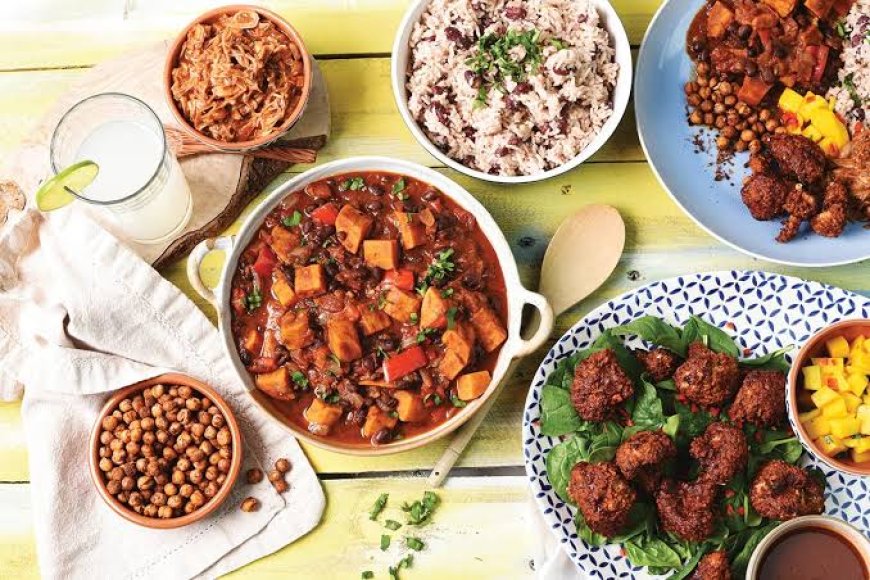
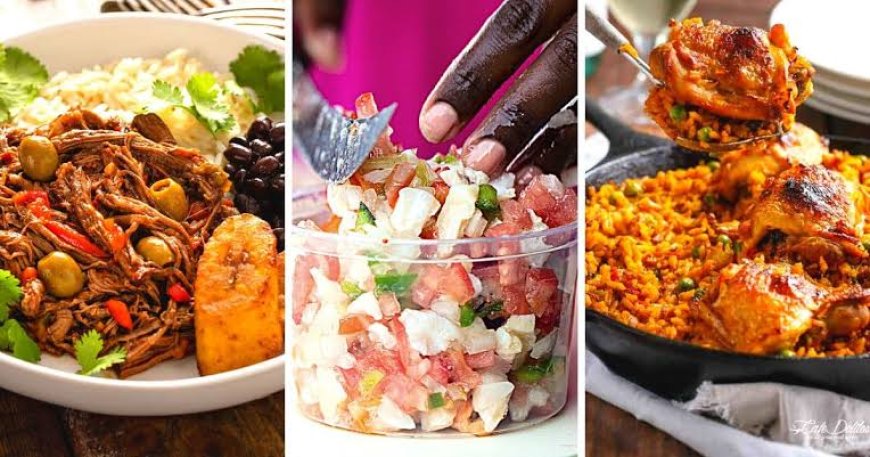
Caribbean food is often associated with jerk chicken, curry goat, fried fish, salt fish and other meat or seafood dishes. But that picture is incomplete. Across Jamaica, Trinidad and Tobago, Barbados, Puerto Rico, the Dominican Republic, the Bahamas and other Caribbean destinations, plant foods have always played an important role in everyday cooking.

Rice, peas, beans, corn, cassava, plantains, breadfruit, yams, sweet potatoes, pumpkin, okra, coconut, callaloo, peppers, herbs and tropical fruits appear in countless traditional meals. Some dishes are already plant-based, while others can be adapted without losing the basic character of the original recipe.
This makes Caribbean cuisine particularly interesting for travelers following vegan or vegetarian diets. A plant-based Caribbean meal does not have to mean replacing meat with a processed substitute. In many cases, the better approach is to start with ingredients that have long been part of Caribbean cooking and build the dish around them.
The modern plant-based movement is adding new ideas to this tradition. Restaurants, resorts, food businesses and home cooks are creating vegetable patties, mushroom-based jerk dishes, lentil stews, chickpea curries, plant-based versions of Caribbean street foods and dairy-free desserts. At the same time, traditional foods such as Jamaican Ital cooking, rice and peas, callaloo, vegetable roti and bean-based dishes already provide a strong foundation.
The important thing is to understand the difference between a dish that is traditionally plant-based and a modern adaptation. Not every Caribbean dish becomes vegan simply because meat is removed. Stocks, butter, cheese, condensed milk, mayonnaise and other animal-derived ingredients can still be present. Travelers should therefore ask about the complete preparation.
Why Caribbean Cuisine Works So Well for Plant-Based Eating
Caribbean cooking developed through many cultural influences, including African, Indigenous, European and South Asian traditions. The result is not one single cuisine but a collection of island and regional food traditions.
Plant ingredients are central to many of these traditions because they are practical, locally available and versatile. Root vegetables can be boiled, roasted, fried or added to soups. Beans and peas can become stews or rice dishes. Coconut can provide richness in place of dairy. Plantains can be fried, boiled or mashed. Cornmeal can be used for dumplings, porridges and other dishes.
A 2026 overview of naturally vegan Caribbean dishes highlights rice and peas, coconut rice and beans, Bahamas peas and rice, Trinidad corn soup, Ital stew, dahl and several vegetable dishes as examples of foods that do not require animal-product substitutions.
This is an important point for travelers. Plant-based Caribbean food is not simply a new trend created for tourists. Many of the ingredients and dishes already belong to the region's food culture.
Jamaican Ital Cooking
One of the clearest examples is Ital cuisine, associated with Rastafari communities in Jamaica.
Ital cooking places emphasis on natural, plant-based foods and fresh ingredients. Traditional Ital meals can include vegetables, legumes, grains, fruits, herbs and root vegetables. Visit Jamaica describes Ital cuisine as a vegetarian tradition that celebrates fresh fruits and vegetables, with herbs and spices used for flavour.
Not every Ital meal follows exactly the same recipe. Some cooks use salt, while others avoid it. Some dishes may be vegetarian rather than strictly vegan. Travelers should therefore confirm ingredients if they avoid all animal products.
For visitors, Ital food can be one of the easiest ways to experience Jamaican cooking without treating vegan food as a separate category.
A plate might contain rice and peas, steamed vegetables, callaloo, plantain, yam, pumpkin or a bean-based stew. The meal can be filling without relying on meat substitutes.
Plant-Based Jerk
Jerk is one of Jamaica's best-known cooking styles. Traditionally, jerk seasoning and cooking techniques are associated with meat such as chicken and pork.
A plant-based version changes the main ingredient while keeping the seasoning approach.
Mushrooms, jackfruit, tofu, seitan, eggplant, cauliflower and firm vegetables can all be used in modern interpretations. The important part is the seasoning and cooking method rather than trying to make a vegetable taste exactly like chicken.
Jerk seasoning commonly involves ingredients such as pimento, thyme, Scotch bonnet pepper, scallions, garlic, ginger and other spices. The precise mixture varies between cooks.
A plant-based jerk plate can therefore contain jerk-seasoned mushrooms or jackfruit with rice and peas, festival, steamed cabbage and plantain.
The result is recognizable as a Caribbean-inspired meal without pretending that the vegetable ingredient is identical to meat.
Jamaican Rice and Peas
Rice and peas is one of the easiest classic Caribbean dishes to incorporate into a plant-based meal.
In Jamaica, the dish is commonly prepared with rice, kidney beans, coconut milk and aromatics. Naturally vegan versions are widely recognized, although recipes can vary between households and restaurants.
For a vegan traveler, the main question is not usually the beans or rice. It is how the dish has been prepared.
Ask whether chicken stock, butter or other animal products have been added.
A restaurant may describe a dish as "vegetarian" but still use dairy or animal-based stock.
When prepared with coconut milk and vegetable seasoning, rice and peas can provide carbohydrates, plant protein and fat in one familiar Caribbean side dish.
It also works well with vegetables, plantain and bean-based stews.
Ackee without Saltfish
Ackee and saltfish is one of Jamaica's most recognizable dishes. The traditional version combines ackee with salted cod and ingredients such as onion, tomato, peppers and seasonings.
The plant-based adaptation focuses on the ackee while replacing or removing the fish.
Some cooks simply serve seasoned ackee with vegetables. Others use ingredients such as hearts of palm, mushrooms or other plant foods to provide a different texture.
The key is to describe the result honestly. It is a plant-based interpretation of ackee and saltfish rather than traditional ackee and saltfish.
Ackee itself is an important Jamaican food and can work well in a plant-based breakfast or main course when prepared with vegetables and appropriate seasoning.
Callaloo: A Caribbean Vegetable Staple
Callaloo is another excellent example of how Caribbean cooking can naturally support plant-based meals.
The word can refer to leafy greens and also to prepared dishes, and its meaning and ingredients vary between islands.
In Trinidad and Tobago, callaloo is commonly prepared as a cooked dish using ingredients such as taro leaves, okra, pumpkin, coconut milk, onion, garlic and Scotch bonnet pepper.
This version is naturally cantered on vegetables.
Other Caribbean preparations differ. Travelers should therefore avoid assuming that every dish called callaloo is identical.
A plant-based callaloo can be served with rice, provisions, dumplings or plantain.
It also demonstrates an important feature of Caribbean cooking: vegetables are not always treated as a small side dish. They can form the foundation of the meal.
Trinidadian Vegetable Roti
Trinidad and Tobago has a strong Indo-Caribbean food tradition, and roti is central to it.
Traditional roti meals may include curry chicken, goat or other animal-based fillings, but vegetarian and vegan versions are also common.
Chickpeas, potatoes, pumpkin, channa, spinach, eggplant and other vegetables can be cooked with curry spices and wrapped in roti.
This is not an artificial combination. Legume and vegetable curries have long been part of Indo-Caribbean cooking.
A simple plant-based roti can combine chickpeas, potato, pumpkin and herbs with a flatbread.
For travelers, this can be an affordable and filling meal, especially when purchased from local restaurants rather than expensive resort dining rooms.
Doubles
Doubles is a famous Trinidadian street food made with two pieces of fried bara bread filled with curried channa, or chickpeas, and topped with sauces and other ingredients.
The basic channa filling is plant-based, although individual vendors may use different sauces or toppings.
Doubles demonstrates how a street-food dish can already fit into a plant-based diet without major modification.
The traveler still needs to ask about the toppings. Some sauces may contain dairy or other ingredients depending on the vendor.
The best approach is simple: ask what is in the channa, Bara and sauces before ordering.
Choka and Sada Roti
Choka is another useful example of Trinidadian plant-based cooking.
Vegetables such as tomato, eggplant or other produce are roasted, mashed and seasoned. They can be served with soda roti, a simple flatbread.
Modern vegan versions of Trinidadian choka and sada roti have received attention because they show how ordinary vegetables can become a substantial meal through roasting, seasoning and technique.
The method is simple but effective.
Roasting develops sweetness and smoky notes in the vegetables. Herbs, garlic, onion, pepper and spices provide additional flavour. The roti gives the meal structure and makes it filling.
For home cooks, this is also one of the easier Caribbean dishes to recreate outside the region.
Caribbean Curry with Chickpeas
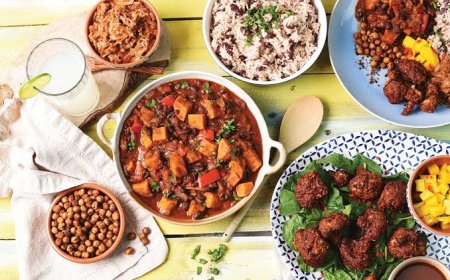
Curry is an important part of several Caribbean food traditions, particularly in places with strong South Asian influence. A plant-based Caribbean curry can use chickpeas, lentils, potatoes, pumpkin, cauliflower, eggplant or mixed vegetables. The exact spice mixture differs by island and household.
One important distinction is that Caribbean curry is not simply Indian curry transplanted unchanged. Local ingredients, cooking methods and cultural history have shaped different versions. Chickpea curry with roti is therefore both practical plant-based food and part of the wider Indo-Caribbean culinary story.
Plantain as a Main Ingredient
Plantain is one of the most useful ingredients for plant-based Caribbean cooking. It can be green or ripe, and the stage of ripeness changes the taste and texture. Green plantain is firmer and starchier. Ripe plantain becomes softer and sweeter. It can be fried, boiled, baked or incorporated into other dishes. Plantain works as a side dish but can also become part of a larger plate with beans, vegetables and rice.
Across the Caribbean, the same ingredient can appear in different forms. For example, Puerto Rican Morongo is based on mashed fried plantains, while in Barbados fried plantain may be served alongside dishes such as couscous. This is why travelers should explore island-specific preparations rather than treating "Caribbean food" as one standardized cuisine.
Breadfruit
Breadfruit is another important Caribbean starch. It can be boiled, roasted, fried or incorporated into different meals. Its texture makes it useful as an alternative to potatoes or other starchy foods. In Jamaica, breadfruit is commonly eaten alongside vegetables and other traditional foods. For a plant-based traveler, roasted or boiled breadfruit can become part of a substantial meal when combined with beans, callaloo or other vegetables. Breadfruit also reflects the Caribbean's long history of adapting crops and cooking methods to local conditions.
Bammy and Cassava
Bammy is a Jamaican cassava flatbread with Indigenous Caribbean roots. Visit Jamaica lists bammy as a traditional cassava-based accompaniment alongside Jamaican dishes. Cassava itself is an important root crop throughout the Caribbean. Bammy can be served with vegetables, beans or other plant-based dishes. Travelers should still ask how the bammy is prepared because recipes can vary. The wider story is more important: cassava-based foods connect modern Caribbean cooking with Indigenous food traditions that existed before European colonization.
Jamaican Festival
Festival is Jamaican fried dough made with flour, cornmeal and other basic ingredients. It is commonly served alongside fish and meat, but the dough itself can be plant-based. This makes festival a useful side for vegan travelers. It can be paired with plant-based jerk, steamed cabbage, callaloo or other vegetables. Because it is fried, however, ask about the frying oil if you are concerned about shared cooking equipment or cross-contact.
Caribbean Stewed Peas
- Stewed peas are another dish that can be adapted easily.
- Kidney beans or other legumes are cooked slowly with vegetables, herbs and spices.
- Traditional recipes can include meat, so travelers should ask how the dish was prepared.
- A plant-based version can use coconut milk, pumpkin, carrots, thyme, scallion, garlic and other vegetables to create a thick stew.
- This is exactly where plant-based cooking can work with Caribbean culinary traditions rather than against them.
- The goal is not to remove meat from every dish and call it vegan. The goal is to rebuild the dish around legumes and vegetables that already belong in the cooking tradition.
Caribbean Pumpkin Soup
- Pumpkin is widely used in Caribbean cooking.
- It appears in soups, stews, curries and side dishes.
- A plant-based pumpkin soup can use pumpkin or squash, coconut milk, thyme, scallion, ginger, garlic, pepper and other vegetables.
- Some traditional soups contain meat or dumplings made with ingredients that may vary.
- The vegan version can focus on pumpkin, legumes and root vegetables.
- The result is filling and suitable for a cool evening or rainy day, while still using familiar Caribbean ingredients.
Trinidad Corn Soup
Trinidad corn soup is another dish that can work well in a plant-based format. Corn is combined with herbs, vegetables and spices, and some versions include dumplings or legumes. A 2026 review of naturally vegan Caribbean food identifies Trinidad corn soup among traditional dishes that can be prepared without animal products.
This is particularly interesting for travelers because soup is often treated as a side or starter in many cuisines, while Caribbean versions can be substantial enough to function as a meal.
Vegetable Pelau
- Pelau is a popular one-pot Caribbean dish associated especially with Trinidad and Tobago.
- Traditional versions can contain chicken or other meat.
- A plant-based version can use pigeon peas, chickpeas, mushrooms, carrots, pumpkin, peas and other vegetables.
- The important part is the one-pot cooking technique and seasoning.
- Caramelized sugar, herbs, spices, coconut milk and vegetables can provide a deep base without requiring meat.
- This is an excellent example of a classic dish that can be adapted while keeping its basic identity.
Caribbean Rice and Beans
- Rice and beans appear in many forms across the Caribbean.
- The name, bean type and cooking method change from island to island.
- Some versions are prepared with coconut milk. Others use tomato, herbs, spices or different types of beans.
- For plant-based travelers, these dishes can provide a reliable foundation.
- Add vegetables, plantain, avocado or salad, and the meal becomes more complete.
- Rice and beans also provide an important practical advantage for travelers: they are usually affordable and widely available.
Dominican Moro
Moro is a Latin Caribbean rice-and-beans preparation found in the Dominican Republic and other parts of the region. Different beans can be used, and recipes vary. A plant-based moro can be served with avocado, plantain, salad or vegetables. Travelers should ask whether meat stock or other animal ingredients were used. In local restaurants, the same dish may be prepared differently from one kitchen to another.
Puerto Rican Mofongo: A Plant-Based Interpretation
Mofongo is traditionally made from fried green plantains that are mashed with garlic and other ingredients. Traditional versions can contain pork or other meat products. A plant-based interpretation can use mushrooms, vegetables or other ingredients instead. The plantain base itself provides the dish's defining texture.
The important thing is to describe the dish as a vegan or plant-based mofongo rather than assuming every mofongo is vegan. This distinction helps travelers avoid accidental consumption of animal products.
Plant-Based Caribbean Patties
The Caribbean patty has many regional and cultural variations. Jamaican patties are especially well known, with traditional fillings such as beef, chicken or other savoury mixtures. Vegetable patties have become increasingly common. Fillings can include lentils, chickpeas, callaloo, vegetables, pumpkin or seasoned soy.
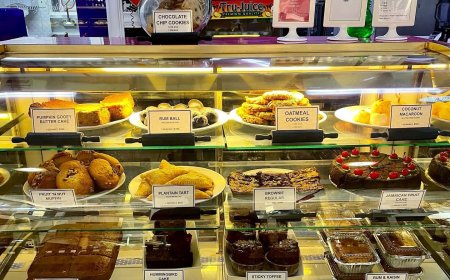
Visit Jamaica describes the Jamaican patty as a major part of the island's food culture, with patty shops and bakeries serving the snack throughout the island. When ordering a vegan patty, ask whether the pastry contains butter or another dairy ingredient. A filling can be completely plant-based while the pastry is not.
Macaroni Pie without Dairy
Macaroni pie is strongly associated with several Caribbean food traditions, especially Barbados and Trinidad and Tobago. Traditional versions normally contain cheese and therefore are not vegan.
A plant-based interpretation can use dairy-free cheese, cashew cream, nutritional yeast or a vegetable-based sauce. But this is a modern adaptation rather than a traditional vegan dish. That distinction matters because plant-based travelers often want both authenticity and dietary safety. There is nothing wrong with a modern version. The important thing knows what you are eating.
Caribbean Coleslaw and Salads
Vegetable sides can be some of the easiest plant-based foods to find. Cabbage, carrot, cucumber, tomato, lettuce, avocado, peppers and tropical fruits can be combined into salads and slaws. The main concern is dressing. Mayonnaise-based sauces contain eggs unless specifically made with vegan ingredients. Ask whether the dressing contains mayonnaise, dairy or honey. A simple lime or vinegar dressing is usually easier to verify.
Coconut as a Dairy Alternative
- Coconut is one of the most useful ingredients in Caribbean plant-based cooking.
- Coconut milk can add richness to rice, soups, stews and curries.
- Coconut cream can be used in desserts.
- Fresh coconut can be served as a snack or added to fruit dishes.
- However, coconut milk does not automatically make a dish vegan.
- A coconut-based stew can still contain chicken, fish or meat.
- Always check the complete ingredient list.
Tropical Fruit as Part of the Meal
Caribbean fruit is not limited to dessert.
Mango, pineapple, papaya, guava, soursop, passion fruit, coconut and other fruits can appear in breakfasts, salads, sauces and drinks.
Fruit can also provide a practical snack for travelers who are moving between destinations.
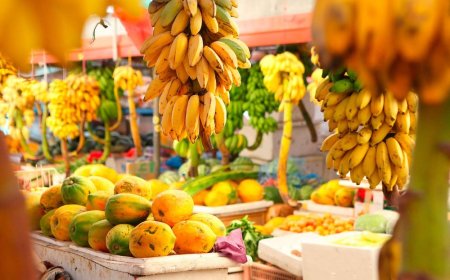
Fresh fruit markets and local produce stalls can be particularly useful for visitors following plant-based diets.
But travelers should follow local food-safety advice, especially when buying cut fruit or food that has been sitting unrefrigerated.
Vegan Versions of Caribbean Sauces
Sauces and condiments can make a major difference.
Jerk sauce, pepper sauces, tamarind sauces, mango sauces, herb sauces and citrus-based dressings can add flavour to simple vegetables and grains.
However, packaged sauces can contain ingredients that travelers may not expect.
Honey, dairy, fish sauce and other animal-derived ingredients can occasionally appear.
If you have a strict vegan diet, check labels or ask the restaurant.
Plant-Based Food at Caribbean Resorts
All-inclusive resorts have become more accommodating to vegetarian and vegan travelers, but the quality and range of options varies.
Do not assume that a buffet labelled "vegetarian" is automatically vegan.
Ask the chef or restaurant staff about ingredients.
At a buffet, cross-contact can also be an issue. Serving utensils may be shared between dishes.
If your dietary restriction is based on allergy rather than preference, communicate this clearly before eating.
For travelers who simply follow a vegan diet, many resorts can often prepare vegetables, rice, beans, plantain or other dishes on request.
Giving the kitchen advance notice can make the experience easier.
Eating Plant-Based at Local Restaurants
Local restaurants can provide some of the best opportunities to experience Caribbean plant-based food.
Instead of asking only for "vegan food," ask about dishes based on beans, chickpeas, callaloo, pumpkin, plantain, rice, provisions or vegetables.
This gives the cook a better idea of what you are looking for.
For example, in Jamaica you might ask about Ital dishes.
In Trinidad and Tobago, ask about channa, vegetable roti, choka or vegetable-based dishes.
In other islands, ask about local beans, rice dishes, plantains and vegetable preparations.
The specific language will vary, but the principle is the same: ask about traditional plant-based ingredients rather than demanding a meat substitute.
Why Local Ingredients Matter
Plant-based Caribbean cooking is not only about removing animal products.
It is also about using local ingredients.
Breadfruit, cassava, plantain, pumpkin, okra, callaloo and local legumes tell a different story from imported vegan meat products.
Imported substitutes can be useful, especially for restaurants trying to provide familiar foods to tourists.
But traditional ingredients often provide a stronger connection to the destination.
For travelers interested in food culture, choosing local plant-based dishes can make the trip more meaningful.
Modern Caribbean Vegan Restaurants
The Caribbean plant-based food scene is also changing outside traditional cooking.
Chefs are developing menus that combine Caribbean ingredients with contemporary plant-based techniques.
- Mushrooms may be seasoned like jerk meat.
- Jackfruit can be used in sandwiches.
- Cashew-based sauces can replace dairy.
- Plant-based patties can appear alongside traditional bakery items.
- Restaurants may also use locally grown vegetables and tropical fruits in new combinations.
- This creates a new layer of Caribbean cuisine without replacing traditional food.
Sustainability and Plant-Based Caribbean Food
Plant-based dining can also connect with discussions about local agriculture and food systems.
Choosing locally grown vegetables, fruits and legumes can reduce dependence on imported foods in some circumstances.
However, "plant-based" does not automatically mean environmentally sustainable.
An imported food transported over long distances can have a different environmental impact from locally grown produce.
Travelers interested in sustainable eating should ask where ingredients come from.
Supporting local farms, markets and small food businesses can also keep more food spending within local communities.
Respect the Difference between Tradition and Adaptation
One of the most important rules for food travelers is cultural accuracy.
A vegan version of a classic dish can be delicious, but it should not erase the original dish's history.
For example, removing saltfish from ackee and calling the result traditional vegan ackee and saltfish is not necessarily accurate.
It is better to describe it as a plant-based interpretation.
This language respects both traditional cooks and modern plant-based chefs.
The same applies to jerk, mofongo, pelau, macaroni pie and other dishes.
How Travelers Can Order More Confidently
- The easiest strategy is to ask three questions.
- First, "Does this contain meat or fish?"
- Second, "Does it contain milk, butter, cheese or eggs?"
- Third, "Is the sauce or stock also plant-based?"
- These questions cover many hidden sources of animal products.
- If you are allergic rather than vegan, explain the allergy clearly and ask about cross-contact.
- Do not assume that a dish is safe simply because it does not visibly contain meat.
Plant-Based Caribbean Breakfasts
Breakfast can be surprisingly easy for vegan travelers.
Fresh fruit, avocado, plantain, bread, porridge, vegetable dishes and beans can provide options.
Cornmeal porridge can sometimes contain milk, so ask whether coconut milk or plant milk is used.
Vegetable roti, choka and other savoury dishes can also work depending on the island.
A simple breakfast of fruit, plantain, beans and vegetables can be both filling and culturally appropriate.
Plant-Based Caribbean Street Food
Street food requires more attention because ingredients and cooking equipment are often less standardized.
Doubles is one of the best-known plant-based-friendly options in Trinidad and Tobago.
Festival dough can be plant-based, but it may be fried in oil shared with animal products.
Vegetable patties can be available in Jamaica, but pastry ingredients should be checked.
Roasted corn, fresh fruit and certain vegetable snacks can also provide simple options.
When in doubt, ask the vendor.
Cooking Caribbean Food at Home
Travelers do not need access to Caribbean islands to explore plant-based versions of these dishes.
A basic home pantry can include rice, kidney beans, chickpeas, coconut milk, plantains, pumpkin, sweet potato, cornmeal, cassava products, thyme, scallions, garlic, ginger and hot peppers.
- These ingredients can be combined in many ways.
- For example, rice and beans can become a main meal with roasted plantain and cabbage.
- Chickpeas can become a curry served with roti.
- Pumpkin and coconut can become soup.
- Callaloo or other greens can be cooked with garlic, onion and pepper.
- The result does not need to imitate meat.
- The ingredients already provide enough variety.
The Role of Spices
Plant-based Caribbean food depends heavily on seasoning.
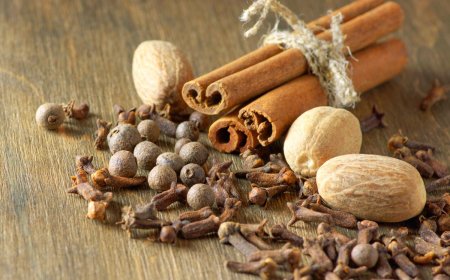
Thyme, allspice or pimento, ginger, garlic, scallion, Scotch bonnet pepper, black pepper, nutmeg, cinnamon, cloves and curry spices appear in different combinations across the region.
The exact blend changes from island to island.
This is one reason plant-based adaptations can work so well.
Removing meat does not remove the herbs, spices, cooking techniques and sauces that create the dish's identity.
Getting the Texture Right
- One challenge in plant-based Caribbean cooking is texture.
- Beans provide creaminess.
- Plantains provide starch and sweetness.
- Mushrooms provide a firm texture.
- Jackfruit can provide a shredded texture.
- Eggplant absorbs seasoning.
- Breadfruit gives a dense, starchy bite.
- Cassava and yam provide structure.
Using the right ingredient for the right role is usually more successful than simply replacing every meat ingredient with tofu.
The Future of Plant-Based Caribbean Food
The plant-based Caribbean food scene is likely to continue developing.
Traditional dishes provide a strong foundation, while modern restaurants are experimenting with new ingredients and techniques.
This creates opportunities for both local cooks and tourism businesses.
Hotels can provide plant-based menus without abandoning Caribbean identity.
Restaurants can highlight traditional legumes, vegetables and grains rather than relying entirely on imported meat substitutes.
Food tours can include Ital cooking, vegetable curries, local markets and traditional plant-based dishes.
Travelers can support this development by asking for local ingredients and choosing businesses that take dietary requirements seriously.
What's Your Reaction?
 Like
0
Like
0
 Dislike
0
Dislike
0
 Love
0
Love
0
 Funny
0
Funny
0
 Angry
0
Angry
0
 Sad
0
Sad
0
 Wow
0
Wow
0