
















Art Exhibits Focused on Caribbean History
Art Exhibits Focused on Caribbean History explores how museums and galleries use paintings, photographs, sculptures, historical objects, installations and contemporary art to explain the Caribbean's complex past. These exhibitions help visitors understand the region beyond beaches and tourism by connecting art with Indigenous cultures, colonization, slavery, emancipation, migration, independence, religion, music, identity and environmental change. Slavery and emancipation are another major theme. Exhibitions increasingly use personal stories and historical objects to explain the human experience behind plantation economies. The Cayman Islands National Museum opened Freedoms Imagined; Freedoms Won in May 2026, focusing on the documented lives of enslaved women Elizabeth Jane Trusty and Long Celia.

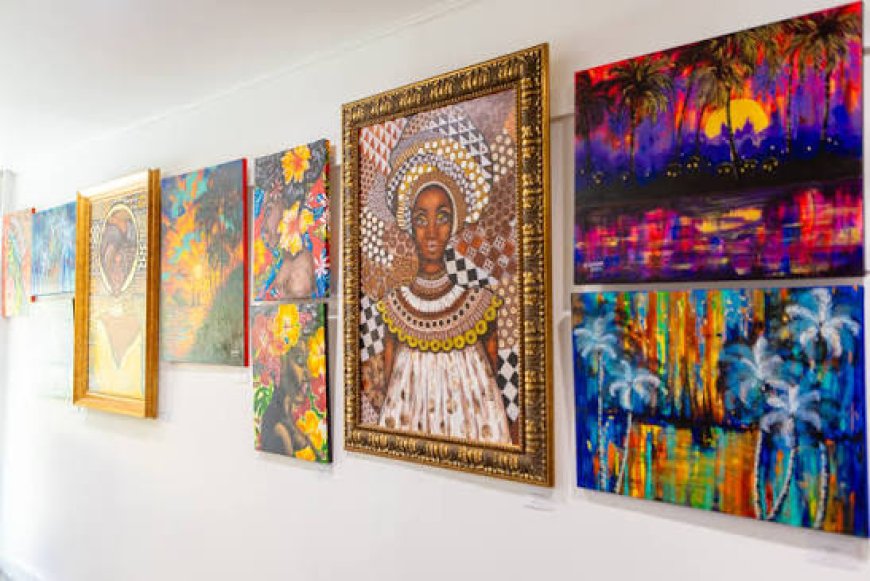
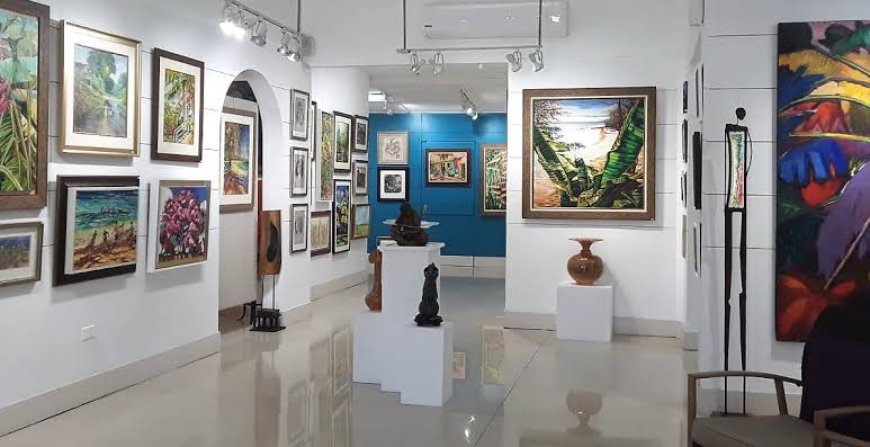
Art exhibitions focused on Caribbean history offer visitors a different way to understand the region. Instead of learning only through textbooks, dates and historical documents, visitors can explore paintings, photographs, sculptures, textiles, crafts, maps, objects and contemporary installations that connect the past with everyday Caribbean life. These exhibitions can explain Indigenous societies, European colonization, the transatlantic slave trade, African cultural influences, migration, resistance, independence, religion, carnival, labor and the development of modern Caribbean identities.

The Caribbean is not a single cultural or historical story. It is a region made up of many islands and mainland territories with different colonial experiences, languages, political systems and cultural traditions. Spanish, British, French, Dutch and Danish influence can be found in different parts of the region, while African, Indigenous, European, Asian and Middle Eastern communities have all contributed to Caribbean societies. Art exhibitions are particularly useful because they can present these different experiences together without reducing the region to one narrative.
In 2026, museums and galleries across the Caribbean continue to use exhibitions to examine history, identity and social change. The National Gallery of Jamaica, for example, is presenting Of Wood and Water from June 14 to September 13, 2026. The exhibition takes its title from the Taíno name for Jamaica and brings together works from the Scotia bank corporate collection and the gallery's permanent collection. The gallery is also presenting ARAVARA, an audiovisual exhibition examining time, political history and ideas of progress across the Caribbean.
The National Gallery of the Cayman Islands provides another useful example. Its Evolutions: Continuity & Change in Caymanian Art traces the artistic and social development of the Cayman Islands from traditional crafts and early intuitive artists through realism, modernism and contemporary art. The exhibition connects changes in art with economic development, immigration, environmental concerns and changing cultural identity.
These exhibitions demonstrate why Caribbean history and art are closely connected. A painting of a landscape can reveal ideas about colonial society. A photograph can document changes in a working community. A traditional craft can preserve knowledge passed between generations. Contemporary artwork can question how colonial history continues to influence the present.
Why Art Is Important for Understanding Caribbean History
Historical records often tell us what happened through official documents, government records, newspapers and written accounts. Art can provide another type of evidence. It can show how people experienced their surroundings, how communities represented themselves and how artists responded to political and social change.
This is particularly important in Caribbean history because many communities did not always have equal control over the production of official historical records. Paintings, photographs, crafts and oral traditions can therefore help museums present perspectives that may be missing or underrepresented in conventional historical accounts.
Art can also make complicated subjects easier to understand. A visitor may not remember every date associated with colonialism, but a photograph, sculpture or painting depicting plantation life, migration or resistance can create a stronger connection with the subject.
The most useful historical art exhibitions do not simply display old objects. They explain the context behind them and encourage visitors to ask questions about who created the work, who was represented, who controlled the narrative and how that history is understood today.
Indigenous Caribbean History through Art
Any discussion of Caribbean history should begin before European arrival. Indigenous peoples lived throughout the Caribbean for thousands of years before Christopher Columbus arrived in 1492.
The Smithsonian's National Museum of the American Indian notes that Native communities in the Caribbean were diverse and connected through networks of travel and exchange. Taíno chiefdoms extended across parts of Hispaniola, Puerto Rico, Cuba and other islands, while objects such as ceremonial duhos demonstrate cultural connections and long-distance exchange.
Museum exhibitions can bring this history to life through pottery, carvings, ceremonial objects, archaeological materials and reconstructed cultural information.
These objects are important because they challenge the idea that Caribbean history began with European colonization. Indigenous societies had their own political structures, religious practices, agricultural systems, trade networks and artistic traditions long before European ships arrived.
Modern exhibitions increasingly place Indigenous history earlier in the narrative instead of treating it as a short introduction to colonial history.
The Taíno Heritage of the Caribbean
The Taíno are particularly important to the historical understanding of several Caribbean islands.
Taíno communities developed sophisticated societies and maintained networks across the region. Their material culture included ceramics, stone objects, and woodwork and ceremonial items.
Modern Caribbean artists and cultural institutions continue to explore Taíno heritage. Contemporary exhibitions may use traditional symbols, materials or historical references to discuss identity and cultural survival.
The National Gallery of Jamaica's 2026 Of Wood and Water is a useful example because its title refers to Jamaica's Taíno name. The exhibition uses that historical reference as a starting point for considering Jamaica as a place shaped by time and changing forces.
This approach shows how museums can connect ancient history with contemporary Caribbean identity rather than treating Indigenous culture as something that ended centuries ago.
Colonialism and Caribbean Art
European colonization transformed Caribbean societies. Spanish, British, French, Dutch and other European powers established colonies across the region. Plantation economies developed, land ownership changed and European political and economic systems were imposed. Art from the colonial period can reveal how these societies were represented.
Portraits of wealthy plantation owners, paintings of estates, maps, botanical illustrations and religious artwork can all provide information about colonial life. At the same time, museums increasingly examine these works critically by asking whose perspective they represent.
A plantation painting may appear to be a peaceful landscape, but the same landscape could have depended on enslaved labour. This is why modern exhibitions often provide additional historical information alongside older artworks.
The History of Enslavement
The transatlantic slave trade is central to Caribbean history. Millions of Africans were forcibly transported to the Americas, and Caribbean plantation economies became heavily dependent on enslaved labour.
Art exhibitions can approach this history through portraits, plantation records, and photographs from later periods, archaeological objects, maps, textiles, contemporary installations and works created by artists addressing the legacy of slavery.
The subject can be difficult, but museums have an important responsibility to present it accurately and with context. Contemporary Caribbean artists often explore how slavery continues to influence identity, family histories, race, land ownership, language and cultural traditions. This makes historical exhibitions relevant not only to understanding the past but also to understanding present-day Caribbean societies.
African Cultural Influence
African influence can be found throughout Caribbean music, dance, religion, food, language, visual art and community traditions.
Art exhibitions can demonstrate this influence through masks, textiles, sculpture, photography, carnival costumes and contemporary artworks.
African traditions did not simply disappear when people were transported to the Caribbean. Communities adapted cultural practices under extremely difficult conditions and created new forms that became part of Caribbean societies.
Religious traditions such as those associated with Haitian Vodou, Cuban Santería and other Afro-Caribbean spiritual practices can also appear in museum exhibitions.
These exhibitions need careful explanation because religious objects and practices can easily be misunderstood when removed from their cultural context.
Resistance and Freedom
Caribbean history is also a history of resistance. Enslaved people resisted through revolts, escape, community organization, cultural preservation and other forms of opposition. Later generations continued struggles for political rights, independence, labour rights and social equality.
Art can communicate these stories through portraits of historical figures, photographs, posters, political prints and contemporary works. Museums can also explore how artists themselves participated in political movements.
The relationship between art and resistance is particularly visible in Caribbean carnival traditions, music and public performance, where cultural expression has sometimes provided a way to challenge political and social restrictions.
Haiti and the Haitian Revolution
Haiti holds a central place in Caribbean history because of the Haitian Revolution, which began in 1791 and resulted in Haiti becoming independent in 1804.
Art exhibitions about Haiti may explore the revolution, colonial society, African heritage, independence and the development of Haitian visual culture.
Paintings and sculptures can also examine how Haiti has been represented internationally and how Haitian artists have challenged outside perceptions of the country.
Historical exhibitions can help visitors understand that Haiti's history cannot be separated from the broader history of slavery, colonialism and Atlantic politics.
Jamaica's Artistic History
Jamaica has one of the region's strongest institutional histories of collecting and exhibiting national art. The National Gallery of Jamaica houses early, modern and contemporary Jamaican art and also holds smaller Caribbean and international collections. Its programme includes permanent displays, thematic exhibitions, retrospectives, solo exhibitions and other temporary projects. The gallery's history also shows how ideas about Jamaican art have changed.
Its earlier exhibitions focused heavily on the development of modern Jamaican art, while later historical research expanded the discussion to include colonial art, Indigenous history and other cultural influences.
A significant example was Five Centuries of Art in Jamaica, held in 1976. The exhibition surveyed Jamaican art from the 16th through the 20th centuries and represented an important attempt to establish a broader history of Jamaican art. This demonstrates that even the way museums organize history can change over time.
Caymanian History through Art
The Cayman Islands offer another interesting example of how art can document social change. The National Gallery of the Cayman Islands describes the formal history of visual art in the territory as relatively young compared with its much longer recorded history. Its collection includes traditional craft, early intuitive artists, Caymanian modernism, realism and contemporary art.
The current Evolutions exhibition places these different periods into a broader historical narrative. It examines how rapid economic growth, immigration, environmental change and the erosion of traditional culture influenced Caymanian identity.
This approach is valuable because it shows that history does not stop at independence or the colonial period. Economic development and social change are also historical processes.
Traditional Caribbean Crafts
Traditional crafts are an important part of Caribbean historical exhibitions. Basketry, weaving, wood carving, pottery, thatch work, boat building and other crafts can reveal how people used local materials and passed practical knowledge between generations. Craft objects can also tell stories about economic life.
For example, a traditional fishing-related object can provide information about maritime communities. Household crafts can reveal how families used local resources. Clothing and textiles can show cultural connections and changes in social customs.
The National Gallery of the Cayman Islands includes traditional and contemporary craft within its collection, including silver thatch traditions.
Photography as Historical Evidence
Photography has become one of the most useful tools for documenting Caribbean social history. Photographs can record streets, homes, workplaces, festivals, political events, family life and changing landscapes. Unlike a painting, a photograph often provides a direct visual record of a particular moment, although photographs also reflect the choices of the photographer.
The National Gallery of the Cayman Islands has used photography in historical exhibitions, including Cayman on Camera: Our Story in Photographs, which presented a photographic account of Caymanian history. Photography can be particularly useful for younger visitors because it creates a direct visual connection between historical events and familiar places.
Carnival as a Historical Art Form
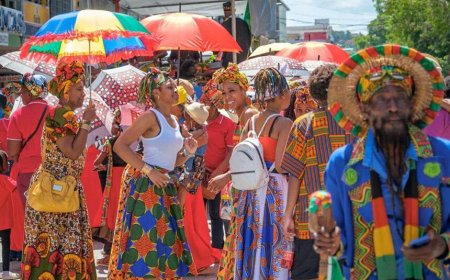
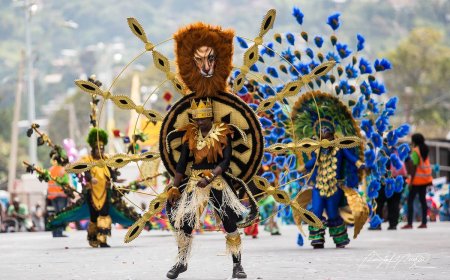
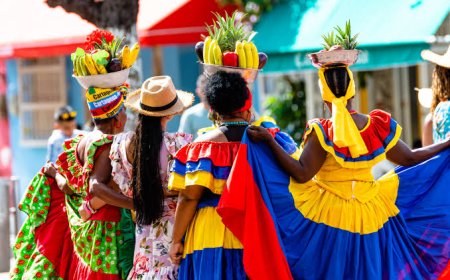
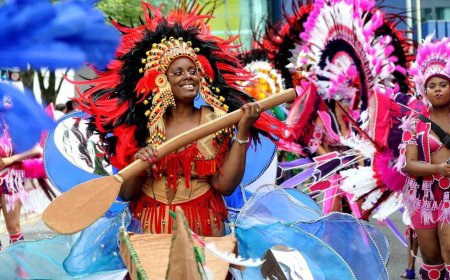
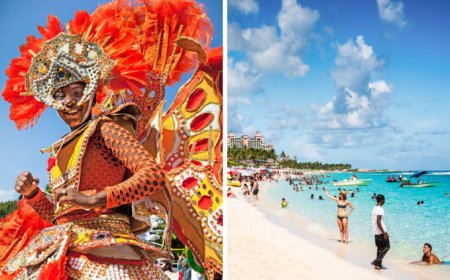
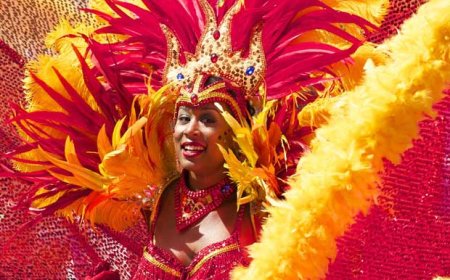
Carnival is one of the clearest examples of how art, history and community identity intersect in the Caribbean. Costumes, masks, body paint, music, dance and performance all contribute to carnival. These traditions have complex historical roots involving African cultural practices, European carnival traditions, colonial society and later political and cultural developments.
Carnival is therefore more than entertainment. It can be understood as a form of public cultural expression. The history of Caribbean carnival also shows how communities transformed inherited traditions into new forms of cultural identity.
Museums and galleries sometimes present costumes, photographs and performance documentation to help visitors understand this history.
Migration and the Caribbean
Migration has shaped Caribbean societies for centuries. People moved between islands, to mainland countries and to Europe, North America and other parts of the world. Economic opportunities, political conditions, education and family connections all influenced migration. Art exhibitions can explore migration through photography, portraits, letters, maps, textiles and contemporary installations.
The Caribbean diaspora is especially important because Caribbean culture now exists far beyond the islands themselves. London, Toronto, New York, Miami and other cities have large Caribbean communities that continue to influence music, food, fashion, literature and visual art.
Caribbean Art and the Diaspora
Caribbean artists living outside the region often explore questions of home, memory and identity. Their work may combine Caribbean traditions with influences from the countries where they live. This creates a complex idea of Caribbean identity.
A Jamaican artist living in Britain may create work about Jamaican family history and British society at the same time. A Haitian artist living in the United States may address Haitian history while responding to American political and social conditions.
Art exhibitions can bring these perspectives together and show that Caribbean history extends beyond geographical borders.
Art and Independence
The 20th century brought major political changes across the Caribbean. Countries gained independence at different times, while some territories maintained relationships with European states or developed different constitutional arrangements. Artists responded to these changes through paintings, posters, sculptures, photography and public art. National identity became an important theme.
Artists began to ask what it meant to be Jamaican, Barbadian, Trinidadian, Bahamian, Guyanese or part of another Caribbean nation.
Exhibitions focused on independence can therefore show how visual culture helped shape ideas about the new nation.
Political Art and Social Change
Caribbean artists have often addressed political issues. Topics may include inequality, labour, migration, colonial legacies, environmental change, race and national identity. Modern exhibitions increasingly include contemporary works alongside historical objects to show how older events continue to influence current debates.
This approach is visible in the National Gallery of the Cayman Islands' Archipelago, the fourth Cayman Islands Biennial, which ran from October 2025 to February 2026. The exhibition brought together 76 artworks by 60 artists or collectives and considered social, political, environmental and identity-related changes affecting Caymanian society and the wider Caribbean.
The Importance of Museums in Preserving History
Museums play an important role in protecting artworks and historical objects for future generations.
Preservation is not simply about keeping an old painting in good condition. Museums also document where an object came from, who created it, when it was produced and how it relates to broader historical events. Good museum collections can therefore become research resources.
The National Gallery of the Cayman Islands, for example, maintains a permanent collection covering multiple periods of Caymanian visual culture and provides educational resources around its exhibitions.
Why Temporary Exhibitions Matter
Permanent collections provide continuity, but temporary exhibitions allow museums to examine particular subjects in greater depth. A temporary exhibition might focus on one artist, a historical period, photography, migration, carnival, Indigenous heritage or environmental change.
Temporary exhibitions also allow museums to borrow works from private collections and other institutions. This can provide visitors with access to objects that are not normally displayed.
The National Gallery of Jamaica's 2026 exhibition programme demonstrates this approach, with temporary exhibitions running alongside its permanent galleries.
Contemporary Artists Reinterpret History
One of the most interesting developments in Caribbean art is the way contemporary artists reinterpret historical subjects. Instead of simply recreating historical scenes, artists may use video, photography, installation, sculpture, digital media or mixed materials.
They may investigate family history, colonial archives, migration, environmental change or cultural memory. This allows history to be questioned rather than simply presented as a fixed story. Visitors may see an old photograph next to a contemporary artwork that responds to it. The relationship between the two works can encourage visitors to think about how historical events continue to affect modern life.
Exhibitions about Colonial Archives
Archives are increasingly important to contemporary historical exhibitions. Old maps, letters, photographs, shipping records, newspapers and government documents can provide evidence about colonial society. Artists sometimes use these materials in new artworks.
An old map, for example, can become part of an installation examining borders, ownership and colonial control. A historical photograph can be enlarged or digitally altered to explore who was represented and who was absent. This type of exhibition connects historical research with contemporary artistic practice.
Art Can Correct Incomplete Historical Narratives
Historical narratives have often been shaped by people with political or economic power. Art exhibitions can provide opportunities to expand those narratives. Museums can include Indigenous perspectives, African-Caribbean experiences, women's histories, working-class communities and migrant stories alongside more traditional accounts of political leaders and wealthy families.
This does not mean removing historical facts. It means presenting a broader range of evidence and experiences. The result can be a more complete understanding of Caribbean history.
Women's Histories in Caribbean Art
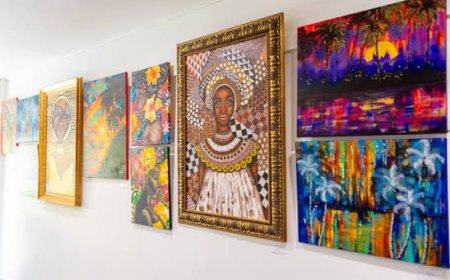
Women have played major roles in Caribbean families, communities, economies and cultural movements. Yet their experiences have sometimes received less attention in conventional historical accounts. Art exhibitions can help address this gap through portraits, photographs, domestic objects, textiles and works created by women artists.
The National Gallery of the Cayman Islands previously presented Island of Women: Life at Home during Our Maritime Years, an exhibition focused on women's lives in the Cayman Islands during an earlier period of maritime history. Such exhibitions demonstrate how everyday life can become an important part of historical research.
Environmental History through Art
The Caribbean's relationship with the sea and natural environment is another important historical theme. Traditional fishing communities, agriculture, forests, coral reefs and coastal settlements have all influenced Caribbean life. Contemporary artists increasingly address environmental change, development and climate risks.
The National Gallery of the Cayman Islands' Evolutions exhibition, for example, connects changes in Caymanian art with environmental distress as well as economic and social transformation. This demonstrates how art can document environmental history as well as political history.
Why These Exhibitions Matter to Travelers
- For travelers, visiting a Caribbean art exhibition can add context to the places they see outside the museum.
- A visitor may walk through an old town without understanding why its architecture looks European.
- A historical exhibition can explain colonial settlement and trade.
- A visitor may attend carnival without knowing about its deeper cultural history.
- A museum exhibition can provide that context.
- This makes art museums valuable additions to Caribbean travel itineraries, especially for travelers interested in culture rather than only beaches and resorts.
How to Get More from a Caribbean Art Exhibition
Visitors can make the experience more meaningful by reading the introductory information before looking closely at individual works.
It is useful to ask simple questions: Who created this artwork? When was it created? What was happening in society at that time? Who is represented? Who is missing? What materials were used? Why did the museum choose to display the work? These questions turn a museum visit into an active historical investigation.
Visitors should also pay attention to exhibition labels because curators often provide information that cannot be understood simply by looking at the artwork.
Look Beyond Famous Artists
A common mistake is to focus only on famous Caribbean artists. Important historical information can also be found in anonymous works, traditional crafts, photographs, household objects and community archives. A handmade object may tell us more about everyday life than an expensive painting. Historical exhibitions are often strongest when they combine different kinds of evidence.
Caribbean History Is Connected Across Islands
Another important point is that Caribbean history does not fit neatly into individual national borders. People, goods, languages and cultural traditions have moved between islands for centuries. Artists also travelled and exchanged ideas.
An exhibition in Jamaica may help explain cultural developments in Trinidad and Tobago. A Caymanian exhibition may include connections with Jamaica. Haitian art may reveal connections with Africa, France, the United States and neighbouring Caribbean countries.
The Caribbean should therefore be understood as a network rather than a collection of isolated islands.
The Role of Digital Exhibitions
Digital technology is also changing access to Caribbean art. Museums can create virtual tours, online collections, digital archives and educational programmes. This is especially useful for people who cannot travel to the islands. The National Gallery of the Cayman Islands, for example, provides a virtual tour and maintains an online collection that allows visitors to explore works by category and artist. Digital access also helps researchers and students compare artworks from different institutions.
Education and Young Visitors
Art exhibitions focused on history can be particularly useful for students. A classroom lesson may explain colonialism, migration or independence through text. A museum can provide visual evidence that makes those subjects easier to understand.
Interactive displays, guided tours, workshops and educational programmes can make exhibitions more accessible to younger audiences. The National Gallery of the Cayman Islands currently lists educational activities including art clubs, volunteer programmes and online Cayman art-history learning opportunities.
What Travelers Should Expect
- Visitors should remember that Caribbean art museums vary considerably.
- Some institutions are large national galleries with extensive collections.
- Others are smaller community museums or cultural centres.
- Some exhibitions focus mainly on traditional art, while others emphasize contemporary artists.
- Opening hours, admission fees, photography policies and exhibition schedules can change, so travelers should check the institution's official website before visiting.
- For example, the National Gallery of the Cayman Islands currently lists free admission and opening hours of Monday through Saturday from 10 a.m. to 5 p.m.
A Growing Interest in Historical Memory
- One reason historical art exhibitions remain important is that society continually reconsidered how they remember the past.
- New research can change interpretations.
- Previously overlooked artists can receive greater attention.
- Museums can discover new information about an object.
- Communities can ask questions about how colonial collections were acquired.
- Contemporary artists can challenge older interpretations.
- As a result, a historical exhibition should not necessarily be considered the final word on a subject. It is part of an ongoing conversation.
Caribbean Art and Identity Today
- The history presented in museums is closely connected to modern Caribbean identity.
- Music, food, language, religion, architecture, clothing and festivals all have historical roots.
- Visual artists frequently combine these elements in contemporary work.
- This makes Caribbean art particularly useful for understanding how different cultural influences have been combined rather than simply replacing one another.
- African, Indigenous, European and Asian influences can exist together in the same community and sometimes within the same artwork.
Why Art History Matters for the Future
- Preserving Caribbean art is also about preserving knowledge for future generations.
- Physical objects can deteriorate. Traditional skills can disappear. Historical photographs can be damaged or lost. Oral memories can disappear as older generations pass away.
- Museums, galleries and cultural institutions help protect these materials.
- At the same time, contemporary artists continue adding new chapters to the historical record.
- The result is not a fixed collection of old objects but an evolving record of Caribbean society.
What's Your Reaction?
 Like
0
Like
0
 Dislike
0
Dislike
0
 Love
0
Love
0
 Funny
0
Funny
0
 Angry
0
Angry
0
 Sad
0
Sad
0
 Wow
0
Wow
0