
































Surf Schools With All-Inclusive Packages
All-inclusive surf school packages combine surfing lessons with accommodation and, depending on the provider, equipment rental, meals, transfers, yoga, fitness sessions, excursions and other activities. They are especially useful for beginners because they simplify planning and provide access to instructors who understand local surf conditions and safety requirements. The article explains how to compare packages based on number and duration of lessons, instructor-to-student ratio, equipment quality, accommodation, meals, transportation, safety standards and weather policies. It also discusses different options for beginners, intermediate surfers, families and solo travellers.


Surfing holidays have changed a lot in recent years. Travelers who once booked a hotel separately, found a surf instructor after arriving, rented a board from a beach shop, and arranged meals on their own can now choose a simpler option: an all-inclusive surf school or surf camp package.

These packages combine several parts of a surf holiday into one booking. Depending on the school, a package may include accommodation, daily surf lessons, surfboard and wetsuit rental, airport or local transfers, breakfast or other meals, video analysis, yoga, fitness sessions, excursions, and access to other activities. The exact combination varies widely, so travelers should always check what "all-inclusive" means before paying.
For beginners especially, this type of trip can make the first surfing experience much easier. Instead of spending the first day trying to understand where to rent equipment or which beach is appropriate for learning, the traveler arrives at a place where the accommodation, instruction, equipment and daily schedule are already organized.
The concept is also becoming popular with intermediate surfers, solo travelers, couples, families and groups of friends. Some camps focus heavily on surfing, while others combine surfing with yoga, fitness, wellness, local sightseeing and social activities.
In 2026, travelers have more choices than ever, but that does not mean every package offers the same value. The best choice depends on the quality of the instruction, safety standards, wave conditions, accommodation, food, equipment and the number of surf sessions actually included.
What Is an All-Inclusive Surf School Package?
An all-inclusive surf school package is a travel package that combines surfing instruction with some or most of the services needed during a surf holiday.
A basic package might include five or seven nights of accommodation, several surf lessons and use of a surfboard. A more comprehensive package may add breakfast, lunch and dinner, airport transfers, daily transportation to surf breaks, wetsuit rental, video coaching, yoga classes and excursions.
The term "all-inclusive" should not automatically be interpreted as meaning that everything is free after arrival. In the surf industry, different schools use the term differently. One camp may include three meals a day but charge separately for airport transfers. Another may include unlimited board rental but only five instructor-led lessons. A third may include accommodation and surfing but not meals.
This is why travelers should read the package description carefully.
A good booking page should explain the number of nights, number of lessons, lesson duration, equipment included, meal plan, room type, transfers and any additional activities. If these details are unclear, travelers should contact the school before booking.
What Usually Comes With an All-Inclusive Surf Package?
The biggest advantage is convenience. Instead of managing multiple reservations, travelers can organize most of the trip through one provider.
Accommodation is normally the first major component. Surf schools may operate hostels, surf houses, guesthouses, boutique hotels or dedicated surf resorts. Budget packages often use shared dormitories, while more expensive programs offer private rooms, private bathrooms and upgraded accommodation.
The location matters almost as much as the room itself. A cheap surf camp located far from the beach may require daily transportation, while a slightly more expensive camp within walking distance of a beginner beach could actually provide better value.
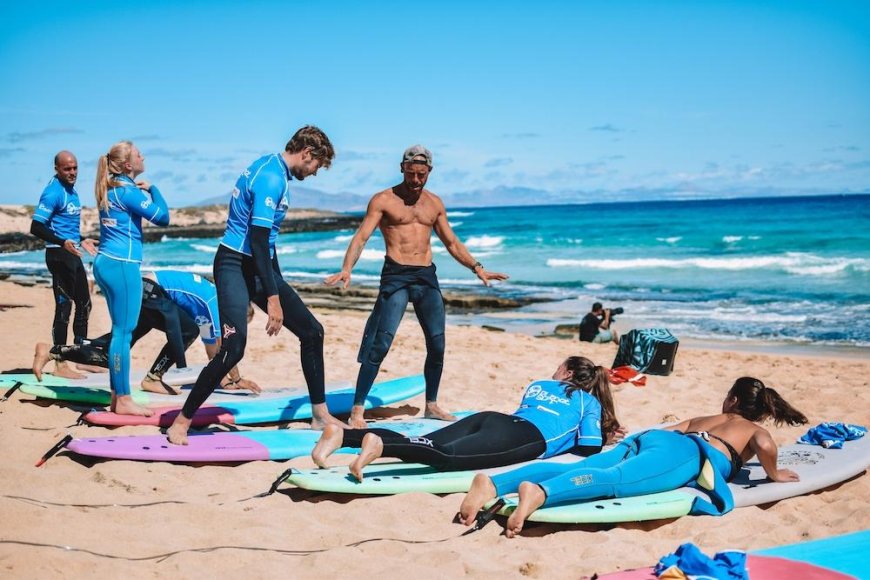
Surf lessons are the central part of the package. Beginner programs commonly start with beach safety, board handling, paddling, standing technique and basic wave knowledge. Students normally practice on smaller waves suitable for learning before progressing to more challenging conditions.
The number of lessons varies. Some packages offer one lesson each day, while others schedule several sessions during a stay. Travelers should check whether the advertised number refers to actual instructor-led sessions or simply access to equipment.
Equipment is another important inclusion. Beginner packages often provide a soft-top or foam board because these boards are generally more stable and forgiving for new surfers. Depending on the destination and water temperature, the school may also provide wetsuits, rash guards, leashes and other basic equipment.
Some schools provide equipment only during lessons. Others allow guests to use boards outside lesson hours. This difference can have a major effect on the value of the package.
Accommodation and Surfing Should Be Connected
One of the strongest reasons to choose a surf camp is that accommodation and surfing are organized around each other.
A typical day may begin early because morning conditions are often suitable for lessons. Guests may have breakfast, meet their instructor, travel to the surf beach, complete a lesson, return to the accommodation and have time to rest before another activity.
This structure is particularly useful for beginners who do not yet know how to judge surf conditions.
Experienced surfers often check wind direction, tide, swell size, wave period and local conditions before choosing a break. Beginners do not have the knowledge to make those decisions safely. A responsible surf school should help students understand when and where they should surf.
This is one reason instructor quality matters more than the number of activities advertised in a package.
The International Surfing Association, or ISA, has an instructor development program covering safety, risk management, beginner equipment, coaching methods and skill development. The ISA says its Surf Level 1 certification is intended for instructors teaching beginners and early intermediate surfers.
Travelers should therefore look beyond marketing language and ask about instructor qualifications and water-safety training.
Why Beginners Benefit From All-Inclusive Surf Camps
Learning to surf is physically demanding. A beginner has to learn how to paddle, balance, read waves, position the board, stand up and remain aware of other surfers.
Trying to learn these skills while also organizing transportation, equipment and meals can make the holiday unnecessarily complicated.
An all-inclusive surf school removes many of those problems.
The instructor already knows the local beach. The equipment is usually available on site. The group meets at a scheduled time. Transportation may already be arranged. After the lesson, the traveler can return to the accommodation without having to search for another service provider.
There is also a social benefit.
Many surf camps are designed around shared experiences. Guests eat together, attend group lessons, join yoga classes and spend time talking about the day's waves. This can be particularly useful for solo travelers.
Recent traveler discussions show that some people specifically look for surf camps where meals and activities are included because they want both structured surfing and opportunities to meet other travelers. At the same time, travelers also report differences in equipment condition, cleanliness and coaching quality between camps, showing why reviews should be checked carefully.
Surf Packages for Complete Beginners
A beginner should not choose a surf school simply because it offers the lowest price.
The first priority should be safety and appropriate instruction.
A beginner program should start on a beach and in conditions suitable for learning. Students should receive information about currents, surf etiquette, falling safely and what to do if separated from their board.
The instructor-to-student ratio is also important. A very large group may mean less individual attention.
For someone surfing for the first time, a package with five well-organized lessons can be more valuable than a package advertising ten sessions with limited instructor contact.
Beginners should also ask whether the school separates students according to ability.
Someone who has never stood on a surfboard should not necessarily be placed in the same group as someone who can already catch green waves and turn independently.
The ISA's instructor pathway specifically addresses beginner and early-intermediate coaching, equipment, safety and skill development. Its water-safety program also focuses on surf-zone risk assessment, rescue techniques and emergency response.
Packages for Intermediate Surfers
Intermediate surfers need something different.
They may not need daily basic lessons, but they can benefit from video analysis, guided surf sessions, transport to different breaks and coaching focused on technique.
An intermediate package might include surf guiding rather than traditional beginner lessons. The coach may help the traveler choose suitable waves, improve positioning, work on turns and understand local breaks.
Some camps also provide video feedback. A coach records a surf session and later explains what the surfer is doing correctly and where technique can be improved.
This can be more useful than simply spending additional hours in the water without feedback.
Intermediate surfers should also ask what level the school considers "intermediate." The definition can differ significantly from one camp to another.
Family-Friendly Surf Packages
Surf camps can work well for families, but parents need to check age requirements.
Some schools accept children from a young age, while others only take teenagers or adults. Family programs may use smaller boards, shallow-water instruction and separate groups based on age and ability.
Parents should ask whether children are supervised throughout the lesson, whether safety equipment is supplied and whether private family instruction is available.
Accommodation is another important issue. A shared dormitory may be suitable for young adults but uncomfortable for a family with small children.
Family packages may therefore be more expensive than standard surf camps because private rooms, private bathrooms and smaller teaching groups cost more.
Surf Camps for Solo Travelers
Solo travelers are one of the strongest audiences for surf camps.
A solo traveler does not have to organize every part of the trip independently. The camp provides a ready-made social environment.
Guests may share breakfast, attend group surf sessions, join evening activities and explore the destination together.
This does not mean every surf camp is highly social. Some are focused on serious training and give guests more privacy. Others are designed around communal meals and group activities.
Before booking, solo travelers should check the type of accommodation, group size and daily schedule.
If social interaction is important, a small surf house with shared meals may be more suitable than a large hotel-style property.
If privacy is more important, a private room within a surf camp may provide a better balance.
Surf and Yoga Packages
Surf and yoga packages have become common because the two activities fit naturally into a travel schedule.
Surfing requires paddling, balance, mobility and core strength. Yoga can be used as a complementary activity for stretching and recovery.
A typical package may include morning surfing and an afternoon or evening yoga session. Some camps also include meditation, mobility work or fitness classes.
Travelers should remember that yoga is generally an additional activity rather than a substitute for surf instruction.
If surfing is the main goal, the number and quality of surf lessons should remain the most important consideration.
Food in All-Inclusive Surf Camps
Food is one area where the meaning of "all-inclusive" varies greatly.
Some packages include breakfast only. Others include breakfast and lunch, while premium programs may provide three meals per day.
Meals may be communal and prepared specifically for active travelers. Menus often include rice, vegetables, eggs, fruit, grains, seafood, chicken or other protein sources depending on the destination.
Travelers with dietary requirements should contact the camp before booking rather than assuming the kitchen can accommodate every request.
Vegetarian, vegan, gluten-free and allergy-sensitive meals may be available, but the level of preparation differs from one property to another.
Travelers should also check whether drinks, snacks and restaurant meals are included.
A package can appear expensive until meals are calculated separately. On the other hand, a low-priced package may become considerably more expensive after adding lunch, dinner and transportation.
Equipment: What Is Really Included?
Equipment is one of the most important details to check.
A typical beginner package may include a surfboard and leash. In colder destinations, wetsuit rental may also be included.
Some camps provide different board sizes according to the student's progression. Others provide one standard board for the entire stay.
The condition of the equipment matters.
Surfboards should be properly maintained, leashes should be in usable condition and wetsuits should fit correctly. Poorly fitting equipment can make learning harder and can create unnecessary safety problems.
Traveler reviews sometimes highlight equipment condition as a major factor in the quality of a surf camp experience.
Ask whether equipment is included for the entire day or only during lessons.
This small difference can significantly change the value of a package.
Airport Transfers and Local Transportation
Transportation is another service commonly included in premium surf packages.
A surf school may offer airport pickup, return transfer and transportation between the camp and different surf beaches.
This is especially useful in destinations where beginner surf beaches are not located directly next to the accommodation.
However, travelers should check whether transfers are private or shared and whether transportation is available for every surf session.
A package may advertise "transfers included" while referring only to airport transfers.
That is not necessarily a problem, but it should be understood before booking.
How Surf Schools Choose the Right Beach
Surf conditions change every day.
The best beginner beach on Monday may not be the best place on Wednesday because of wind, tide or swell conditions.
Professional surf instructors monitor local conditions and choose locations according to the ability of the group.
This is particularly important for beginners.
Travelers should be cautious of schools that promise a specific number of waves every day or guarantee that students will stand up during every lesson. Surfing depends on natural conditions, and weather and ocean conditions cannot be controlled.
A good school should explain this clearly.
Safety Should Come Before the Package Price
Surfing is an outdoor water sport, and even beginner waves require awareness.
Students should be taught basic surf etiquette, safe falling, board control and awareness of other surfers.
They should also understand local hazards such as rocks, reefs, currents, shallow water and changing weather.
The ISA and International Lifesaving Federation have developed a water-safety course for surf and SUP instructors covering rescue techniques, emergency response and surf-zone safety. The ISA describes this as a global minimum water-safety standard for instructors within its coaching pathway.
The Surfing Federation of India also lists ISA/ILS water-safety training covering ocean awareness, rip-current identification, rescue techniques and emergency response.
Travelers do not need to become safety experts before joining a surf camp, but they should choose a school that treats safety as part of the lesson rather than as an afterthought.
Choosing the Right Destination
The destination should match the traveller’s surfing level.
Beginners usually benefit from sandy beaches, manageable waves, consistent instruction and easy access to equipment.
Intermediate surfers may prefer destinations with several breaks at different levels.
Advanced surfers may specifically choose a destination because of reef breaks, point breaks or larger swells.
The best-known surf destination is not necessarily the best destination for a first lesson.
A beach famous for powerful waves can be excellent for experienced surfers but inappropriate for someone who has never surfed.
This is why travelers should search for the phrase "beginner surf conditions" rather than simply "best surf destination."
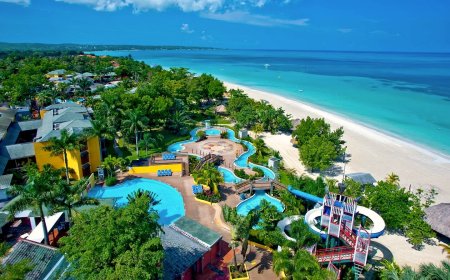
Caribbean Surf Schools with All-Inclusive Options
The Caribbean is often associated with beaches, resorts and warm-water holidays, and several islands also have established surf communities.
Surfing conditions vary considerably across the region. The Atlantic-facing sides of some islands receive stronger winter swells, while other locations have more sheltered conditions.
Puerto Rico, Barbados, the Dominican Republic and several other Caribbean destinations have surf schools and surf camps, although the availability of fully all-inclusive packages varies by location.
Travelers should distinguish between a conventional all-inclusive resort that offers surfing as an optional activity and a dedicated surf camp where surfing is the main focus.
A resort may provide one introductory lesson and equipment rental, while a surf camp may provide daily coaching and transportation to different breaks.
For travelers whose main goal is learning to surf, the dedicated surf camp may provide better instruction even if the resort offers more general facilities.
India and South Asia as Surf Camp Destinations
India has also developed a growing surf-school scene, particularly along parts of the Karnataka, Tamil Nadu, Goa and Kerala coasts.
Surf camps around Mulki and other coastal areas offer packages combining accommodation, surf instruction and meals.
Current traveler discussions in 2026, for example, mention five-day surf-course packages around Mulki that combine lessons, hostel accommodation and meals, although prices and inclusions vary by school and date.
The Surfing Federation of India also provides information about ISA courses and water-safety training in India, showing that internationally aligned surf-instructor education is available in the country.
For Indian travelers, domestic surf camps can be particularly attractive because international flights are not required and a short five- or seven-day trip can be enough for an introductory course.
How Much Do All-Inclusive Surf Packages Cost?
There is no single standard price.
Cost depends on destination, season, accommodation type, number of lessons, instructor ratio, food, transfers and length of stay.
Budget surf camps may use shared accommodation and include a limited number of lessons. Mid-range packages can include private rooms, meals and daily coaching. Premium surf resorts can cost significantly more and may combine private instruction with high-end accommodation and additional activities.
Travelers should compare the total package rather than only the advertised nightly rate.
For example, a package costing more per night may include three meals, equipment, daily lessons and transportation. A cheaper accommodation-only booking may require separate payments for all of these services.
The most useful comparison is therefore the total cost per day of the actual experience.
What "Unlimited Surfboard Rental" Really Means
Some surf camps advertise unlimited board rental.
This sounds attractive, but travelers should check the conditions.
The equipment may only be available during opening hours. It may be limited to certain boards. It may also depend on surf conditions.
Some schools restrict independent surfing to guests who have completed a certain level of instruction.
This is reasonable from a safety perspective.
Beginners should not assume that having access to a surfboard means they are ready to surf independently in every location.
How Long Should You Stay?
A weekend can provide an introduction, but a longer stay usually gives beginners more time to develop skills.
A five- to seven-day package is a practical starting point for many travelers.
The first lesson is often about becoming comfortable in the water. The next sessions can focus on standing, catching small waves and improving positioning.
Weather can also interfere with surfing plans.
If the trip is only two days long and one day has poor conditions, the traveler may have very little opportunity to learn.
A week gives the school more flexibility to move lessons around changing conditions.
For travelers travelling specifically to improve their surfing, 10 to 14 days can provide more time for progression.
What to Pack for an All-Inclusive Surf Trip
Most surf camps provide the major equipment, but travelers still need personal items.
Bring swimwear, quick-drying clothing, sunscreen, sunglasses, a reusable water bottle and comfortable clothes for evenings.
A rash guard can be useful in warm-water destinations, although some schools provide one.
Travelers should also bring personal medication, toiletries and any preferred protective equipment.
If the school provides wetsuits, ask about the thickness required for the destination and season.
Do not assume that all equipment is included simply because the package is described as all-inclusive.
Read Reviews, but Read Them Properly
Online reviews can be very useful, but travelers should look for patterns rather than relying on one extremely positive or negative review.
Pay attention to repeated comments about instructor quality, cleanliness, food, equipment condition, transport and communication.
Recent reviews are particularly important because surf camps can change management, staff or facilities.
A property that received excellent reviews several years ago may operate differently today.
Traveler discussions can also reveal practical issues that are not obvious from official descriptions, such as whether meals are communal, how groups are organized or how much time guests actually spend in the water.
Questions to Ask Before Booking
Before paying for an all-inclusive surf package, travelers should confirm the exact inclusions.
Ask how many surf lessons are included, how long each lesson lasts, how many students are placed in each group and whether equipment is included outside lesson times.
Ask what type of accommodation is provided and whether the room has a private bathroom.
Confirm which meals are included and whether special diets can be accommodated.
Ask about airport transfers and transportation to surf beaches.
Find out what happens if weather or ocean conditions prevent a lesson.
A responsible school should have a clear policy for weather-related cancellations.
Also ask about instructor qualifications, safety procedures and the experience level required for each group.
These questions can prevent unpleasant surprises after arrival.
What Happens on a Typical Surf Camp Day?
A typical surf-camp day starts earlier than a normal beach holiday.
Guests may wake around sunrise, eat a light breakfast and prepare for the first surf session.
The instructor checks the conditions and takes the group to the selected beach.
The lesson may begin with a safety briefing and warm-up. Beginners often practice technique on the beach before entering the water.
The group then moves into the surf for practical instruction.
After the session, guests return to the camp, eat and rest.
The afternoon may include free time, yoga, mobility training, sightseeing or another surf session.
Evenings are generally more relaxed.
This schedule makes an all-inclusive surf camp different from a conventional resort vacation. The holiday is built around learning and physical activity rather than simply relaxing beside a pool.
Is an All-Inclusive Surf Camp Worth It?
For the right traveler, yes.
It can be particularly worthwhile for first-time surfers, solo travelers, and people with limited vacation time and anyone who prefer having the logistics handled in advance.
It may not be the best choice for an experienced surfer who already owns equipment, knows the local breaks and prefers independent travel.
The biggest benefit is not necessarily saving money. It is reducing the number of decisions the traveler has to make.
One booking can cover accommodation, instruction, equipment, meals and transportation.
That convenience has real value.
However, convenience should never replace research.
A poorly managed surf camp can still provide a disappointing experience even when the package looks attractive online.
What's Your Reaction?
 Like
0
Like
0
 Dislike
0
Dislike
0
 Love
0
Love
0
 Funny
0
Funny
0
 Angry
0
Angry
0
 Sad
0
Sad
0
 Wow
0
Wow
0